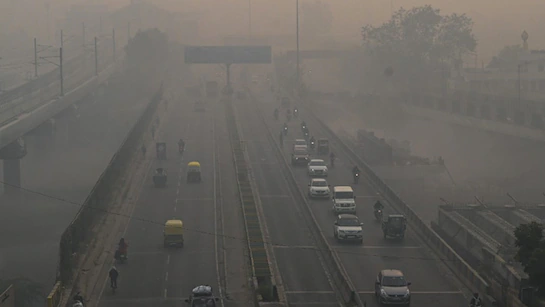
Delhi and its surrounding National Capital Region began Wednesday under a thick blanket of fog, with air quality slipping sharply into the ‘very poor’ category across multiple monitoring stations. The combination of stagnant winter air, high particulate concentration and low visibility disrupted daily routines, reinforcing concerns about the capital’s recurring vulnerability to seasonal pollution episodes and their wider economic and public health implications.
Early morning readings from air quality monitors across the city indicated a sharp build-up of fine particulate matter, with several dense residential and commercial zones recording pollution levels well beyond safe thresholds. Key transport corridors and civic landmarks were enveloped in haze, reducing visibility and slowing vehicular movement during peak commuting hours. For a city heavily dependent on road-based mobility, such conditions often translate into productivity losses, delayed logistics and increased accident risk.
Data from pollution control authorities showed that large swathes of east, west and north Delhi remained in the ‘very poor’ bracket, while only a handful of peripheral areas registered marginally lower pollution levels. Environmental researchers point out that such spatial variation reflects differences in traffic density, construction activity and local wind patterns, but does little to ease the overall exposure risk for residents who commute across zones daily. Meteorological conditions played a critical role in the deterioration. Dense fog, coupled with calm winds, limited the dispersion of pollutants, allowing emissions from vehicles, construction dust and nearby industrial clusters to accumulate close to ground level. Weather officials indicated that similar conditions could persist intermittently, as winter systems continue to dominate northern India’s climate pattern.
Urban health experts warn that repeated exposure to high pollution during winter months disproportionately affects children, older adults and outdoor workers. Short-term impacts include respiratory distress and eye irritation, while long-term exposure has been linked to chronic illnesses that place additional strain on urban healthcare systems. The economic cost of pollution-related health outcomes, analysts note, often remains under-accounted in city planning discussions.
The episode also highlights structural challenges in Delhi’s urban development model. Despite incremental improvements in emissions monitoring and emergency response, planners argue that the city’s reliance on private vehicles, ongoing construction and limited green buffers continues to exacerbate winter pollution cycles. Investments in cleaner public transport, walkable neighbourhoods and low-emission construction practices are increasingly seen as essential components of climate-resilient urban growth.
Weather forecasts suggest the possibility of light rain and gusty winds over parts of the region, which could offer temporary relief by dispersing pollutants. However, environmental specialists caution that episodic weather-driven improvements do not address the underlying causes of air quality deterioration.
As Delhi navigates another winter marked by fog and smog, the challenge for policymakers lies in translating short-term advisories into long-term action. Strengthening regional coordination, accelerating clean energy adoption and integrating air quality goals into urban infrastructure planning will be critical if the capital is to reduce its annual cycle of pollution-driven disruption and build a healthier, more resilient urban environment.
Delhi NCR Air Quality Slips Amid Dense Fog