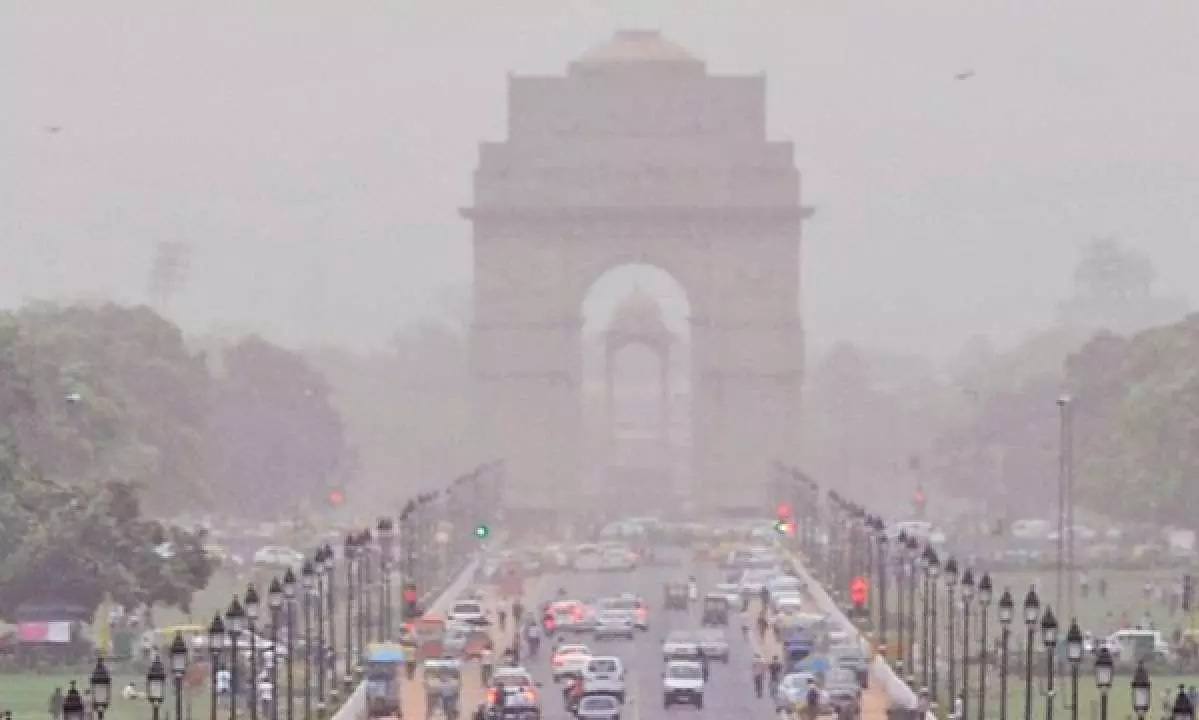
Delhi–NCR has once again been identified as India’s most severe air pollution hotspot, with a recent expert assessment submitted to the Supreme Court underscoring how rapid urban expansion, fossil fuel dependence and unfavourable winter weather continue to overwhelm regulatory efforts. The findings matter far beyond public health, exposing structural gaps in transport planning, energy transition and climate-resilient urban design across one of the world’s fastest-growing metropolitan regions.
The committee noted that Delhi–NCR sits at the centre of a dense emissions belt spanning the Indo-Gangetic Plain, a region that supports over 40 per cent of India’s population while accounting for more than a third of national emissions. Within this airshed, Delhi itself contributes roughly one-third of local pollution sources, yet nearly two-thirds of fine particulate matter detected in the city originates from outside its boundaries. This transboundary dynamic complicates governance, making city-level fixes insufficient without coordinated regional action.
Urban planners point to unbalanced growth as a core driver. While housing, commercial districts and infrastructure corridors have expanded at scale, investments in public transport, last-mile connectivity and clean mobility have lagged behind. As a result, private vehicle dependence has intensified, locking in higher emissions. Construction and demolition activity tied to real estate development has further raised ambient dust levels, especially in peripheral growth zones where enforcement remains uneven.
Energy use patterns also remain carbon-heavy. Despite progress in renewable capacity, a large share of domestic heating, industrial processes and freight transport still relies on fossil fuels. Experts say that without accelerating electrification and decentralised clean energy systems, air quality gains will remain marginal. “Air pollution here is not a seasonal anomaly; it is an urban systems failure,” said a senior environmental policy analyst.
Winter meteorology compounds these structural issues. Low wind speeds, frequent temperature inversions and persistent fog trap pollutants close to the surface, creating what scientists describe as a regional airshed crisis. The committee outlined two distinct winter phases: an early period dominated by agricultural residue burning and a later phase marked by stagnant atmospheric conditions that prevent dispersion. During the second phase, emissions remain broadly constant, but secondary aerosol formation intensifies, driving severe smog episodes.
For residents, the consequences are both social and economic. Health costs rise sharply during peak pollution months, while productivity losses affect construction workers, transport operators and outdoor service workers. Schools face closures, and low-income households, often living closer to traffic corridors and industrial clusters, bear a disproportionate burden. Although the number of “severe” pollution days has declined modestly since 2018, meaningful improvements are largely confined to the monsoon season. This underscores the limits of emergency measures and court-mandated curbs that address symptoms rather than systemic causes.
Urban economists argue that the path forward lies in aligning air quality management with long-term city-building strategies. Expanding zero-emission public transport, enforcing dust-control norms at construction sites, accelerating clean energy adoption and strengthening inter-state coordination are seen as critical. “Delhi NCR air pollution is a governance challenge as much as an environmental one,” said an urban infrastructure consultant. As Delhi–NCR continues to grow, the report’s findings reinforce the urgency of shifting towards people-first mobility, responsible real estate development and climate-resilient infrastructure. Without structural reform, experts warn that seasonal smog will remain a recurring constraint on the region’s liveability and economic competitiveness.
Delhi NCR Air Crisis Deepens Urban Risks