Delhi Namo Bharat Achieves 160 Kmph Connecting Meerut Under Hour
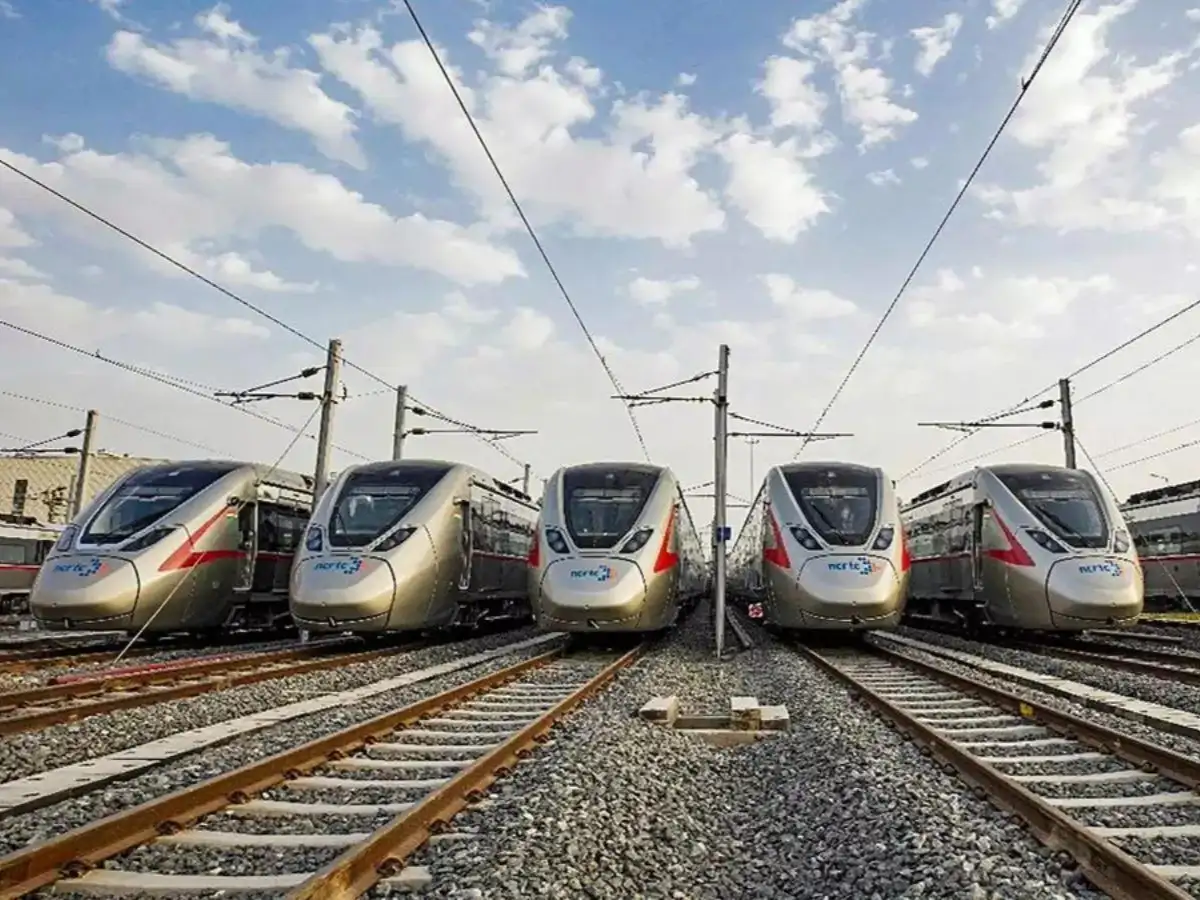
Delhi’s newly operational Namo Bharat Regional Rapid Transit System (RRTS) has emerged as India’s fastest train service, reaching speeds of 160 km/h on the 55-kilometre stretch between New Ashok Nagar and Meerut South.This landmark development positions Namo Bharat above earlier semi-high-speed services, reducing travel time between Delhi and Meerut to under an hour while offering a sustainable, efficient alternative to road transport.
Officials from the National Capital Region Transport Corporation (NCRTC) explained that this operational corridor forms part of a larger 82.15 km Delhi-Meerut RRTS route, encompassing 16 stations from Sarai Kale Khan to Modipuram. The system is designed to balance speed with commuter convenience, using strategically spaced stations to allow maximum acceleration over longer stretches while maintaining frequent service intervals of 15 minutes.
Constructed with modern aerodynamic trainsets manufactured at Alstom’s Savli facility in Gujarat, Namo Bharat integrates advanced automation and safety protocols, including Automatic Train Protection, Automatic Train Control, and Automatic Train Operation systems. These features ensure consistent high-speed performance while optimising energy efficiency, in alignment with sustainable transport objectives and reduced carbon emissions.Integration with regional transit networks has been a key planning element. The proposed 23-km Meerut Metro line will connect seamlessly with Namo Bharat stations, enabling last-mile connectivity and promoting equitable access to high-speed transport options. Officials highlighted that the system’s design aligns with zero-net-carbon principles, using electric traction to minimise environmental impact while supporting rapid urbanisation.
Since its initial 17-km priority section launch in October 2023, over 1.5 crore passengers have benefited from reduced commuting times, signalling significant public adoption. Experts overseeing RRTS operations emphasised that Namo Bharat represents a new transport category bridging traditional rail and metro systems, offering longer-distance rapid transit with minimal stops, suitable for high-demand regional corridors.
The project is jointly owned by the Government of India and the states of Delhi, Uttar Pradesh, Haryana, and Rajasthan. Officials indicated that full operationalisation will strengthen regional mobility, alleviate congestion on existing highways, and provide reliable, safe, and gender-inclusive commuting options, contributing to sustainable city planning in the National Capital Region.With ongoing phases nearing completion, Namo Bharat is expected to transform regional travel patterns, enhance urban-rural connectivity, and serve as a model for future high-speed, eco-friendly commuter networks across India.