


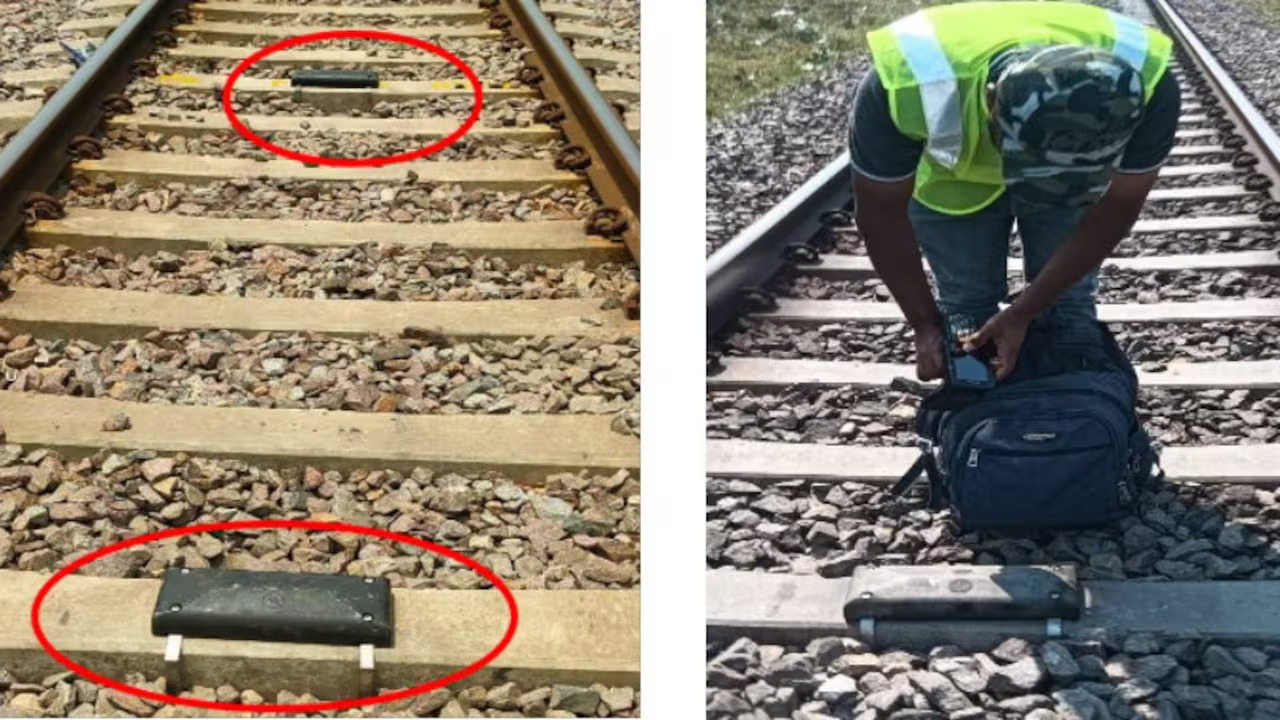
Indian Railways has commenced the implementation of its most advanced indigenous train protection technology—Kavach 4.0—on the Mathura–Kota section of the crucial Delhi–Mumbai corridor. The development marks a critical upgrade for one of the busiest rail corridors in the country, aiming to enhance operational security and reduce human error risks.
Kavach, meaning “armour”, is an Automatic Train Protection (ATP) system designed and developed in India under the banner of the Atmanirbhar Bharat initiative. The newly deployed 4.0 version brings in significant technological enhancements that support high-speed rail movement while strengthening system reliability during adverse weather conditions such as fog or heavy rain. According to senior railway officials, the system uses Radio Frequency Identification (RFID) tags placed at one-kilometre intervals and signal junctions to continuously track the location and speed of trains. This real-time data is transmitted through a robust network of fibre optic cables and telecom towers, enabling seamless communication between moving trains and central command centres.
Kavach 4.0 integrates directly with train braking systems, allowing automatic deceleration or emergency halts without driver intervention in case of signal violations or track obstructions. Loco pilots are provided with on-cabin digital dashboards that relay vital operational updates, minimising dependency on trackside signals which often become unreadable during low-visibility conditions. Certified to Safety Integrity Level 4 (SIL4)—the highest global benchmark for rail safety—the system supports train operations at speeds up to 160 kmph. Its technical architecture demands telecom-grade infrastructure, which Indian Railways has begun deploying at scale. Officials revealed that over 5,800 km of optical fibre and 619 telecom towers now form the communication backbone of the network.
To date, the Kavach system has been installed across more than 4,000 km of railway lines, covering 708 stations and 1,100-plus locomotives. Over 30,000 railway staff members have been trained for safe and efficient usage of the technology, ensuring human oversight is supported by smart automation. Experts in railway technology and sustainable urban mobility describe this development as not just a safety upgrade, but a critical transition towards intelligent and resilient rail systems. With India looking to scale up high-speed rail and reduce carbon dependency in long-distance transport, systems like Kavach play an integral role in building infrastructure that is smart, safe, and future-ready.
While the full deployment across the Delhi–Mumbai corridor will take time, this rollout sets a precedent for advanced indigenous technology leading railway modernisation. It underscores the potential of made-in-India innovation to serve both domestic safety needs and global export ambitions.
Also Read : Mumbai Suburbs Report 7100 Pothole Complaints This Monsoon
