Delhi Mumbai Expressway to cut travel time, boost growth by 2027
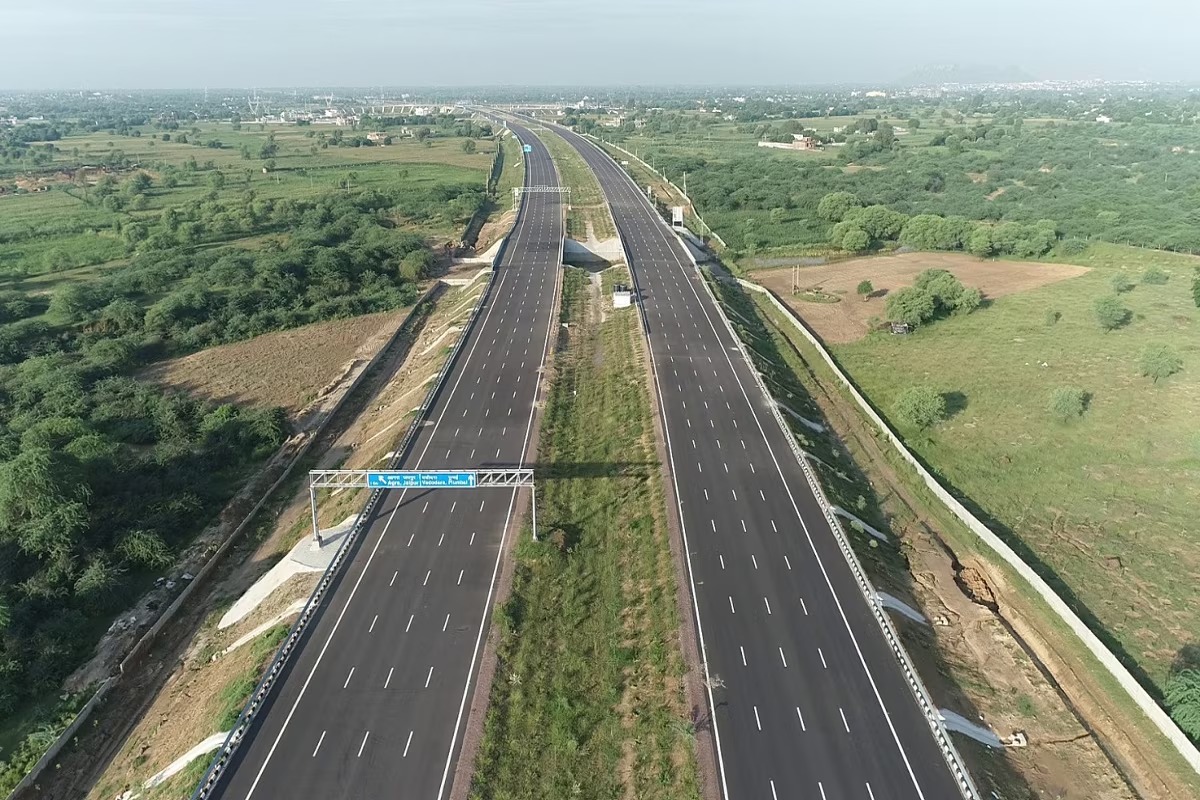
The Delhi Mumbai Expressway, India’s most ambitious greenfield highway project, is nearing a transformative phase with over 80% of construction completed. Stretching 1,380 km across six states, the corridor is set to halve travel time between the two financial hubs, cutting journeys from 24 hours to just 12. Once operational in 2027, the project is expected to redefine logistics efficiency, reduce carbon emissions and unlock new real estate opportunities along its route.
The expressway, developed at a cost of nearly ₹1 lakh crore, has been designed as an eight-lane corridor, expandable to twelve lanes. It incorporates sustainability features, including solar-powered lighting, rainwater harvesting at 500-metre intervals, and two million trees with drip irrigation. Officials highlight that this green infrastructure could save 32 crore litres of fuel annually and prevent 850 million kg of carbon emissions, positioning the project as a benchmark in climate-conscious urban planning.
Progress is visible in multiple sections. The 160-km Sohna–Dausa stretch opened last year, cutting Delhi-Jaipur travel time to just two hours. Recently, the 67-km Bandikui spur further eased connectivity between Delhi and Jaipur, bypassing congestion on NH-48. With a nearly complete tunnel near Kota, travel between Gurgaon and Vadodara is expected to reduce to 10–12 hours, signalling the expressway’s growing impact on regional mobility.The expressway’s design goes beyond transport efficiency. Wildlife corridors, including five animal overpasses and underpasses near Ranthambore and Mukundra reserves, mark India’s first attempt to integrate biodiversity protection into major highway construction.
Officials confirm that these structures preserve natural migration patterns, making the project a rare case of infrastructure coexisting with conservation.Connectivity will extend to other national corridors through spurs to Jewar International Airport, Jawaharlal Nehru Port in Mumbai and the proposed Chennai-Surat Expressway. A dedicated electric lane for trucks and buses is also in the pipeline, expected to slash logistics costs by 70%. This forward-looking feature is being closely watched by global investors keen on India’s transition towards sustainable freight transport.
Real estate has already responded to the expressway’s momentum. Land values along the Gurgaon-Sohna and Sohna-Dausa stretches have surged by nearly 70% in three years. Experts point out that Sohna is emerging as a major residential and commercial hub, with several group housing projects approved under affordable housing schemes. Similar demand is rising across Rajasthan, Madhya Pradesh, Gujarat and Maharashtra, where warehousing and logistics parks are set to cluster around interchange points.For the urban commuter, the Delhi Mumbai Expressway promises speed, safety and sustainability. For businesses and investors, it offers a chance to be part of India’s most transformative mobility corridor. And for policymakers, it is an opportunity to demonstrate how infrastructure can accelerate economic growth while addressing ecological concerns.