


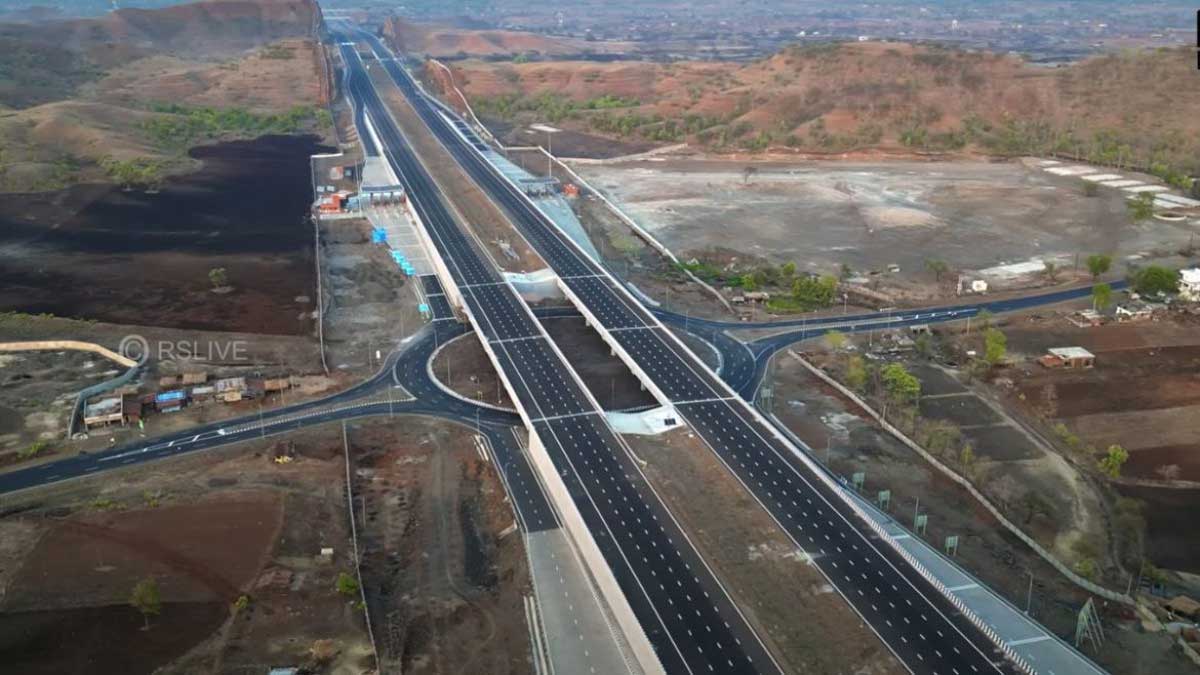
The Delhi-Mumbai Expressway nears completion, signalling a transformative shift in high-speed, sustainable travel.
With major sections already operational, the expressway has reduced the travel time between Gurugram and Vadodara from over 20 hours to just 10, making long-distance road transport faster, safer, and greener. Stretching 1,386 kilometres and cutting across six states, this ₹95,000 crore mega-project is not just a milestone in connectivity—it’s a blueprint for future-ready infrastructure. Designed to accommodate speeds of up to 120 kmph, the expressway promises to reduce the full Delhi-Mumbai road journey from the current 24 hours via NH-48 to just 12 hours. This dramatic time saving stands to benefit not only individual travellers but also logistics and freight operations, reducing fuel costs, transit stress, and carbon emissions.
The expressway spans Delhi, Haryana, Rajasthan, Madhya Pradesh, Gujarat, and Maharashtra, and is set to significantly ease the burden on National Highway 48—one of the busiest corridors in the country. With express lanes, state-of-the-art rest stops, and smart tolling systems, the route is designed for efficiency, reducing idle time and energy consumption for both private and commercial vehicles. But beyond speed and scale, what truly sets this infrastructure apart is its environmental and social consciousness. The National Highways Authority of India (NHAI) has integrated sustainable technologies into the expressway’s construction and operations. Among its most notable features are dedicated wildlife corridors and underpasses, especially near the sensitive Mukundra Hills Tiger Reserve. These crossings, coupled with noise barriers and eco-friendly design protocols, are aimed at preserving biodiversity and limiting disruption to natural habitats.
Additionally, solar-powered lighting, rainwater harvesting systems, and green landscaping make the corridor a model of zero-net-carbon ambitions. The expressway also supports electric vehicle mobility, with infrastructure planned for EV charging stations, reinforcing India’s push towards clean transport. The Delhi-Mumbai Expressway represents more than just civil engineering prowess; it embodies a vision of mobility aligned with the needs of a growing, urbanising nation. By linking economic hubs and improving access to remote regions, it is poised to stimulate regional development, create jobs, and bring equitable growth to underdeveloped areas along its path.
For India’s urban and transport planners, the expressway stands as proof that speed and sustainability can go hand in hand. As more phases come online, it is expected to reshape the way India moves—offering a cleaner, quicker, and more connected future for all.
Also Read: https://urbanacres.in/electronics-hub-rises-near-yamuna-expressway/
