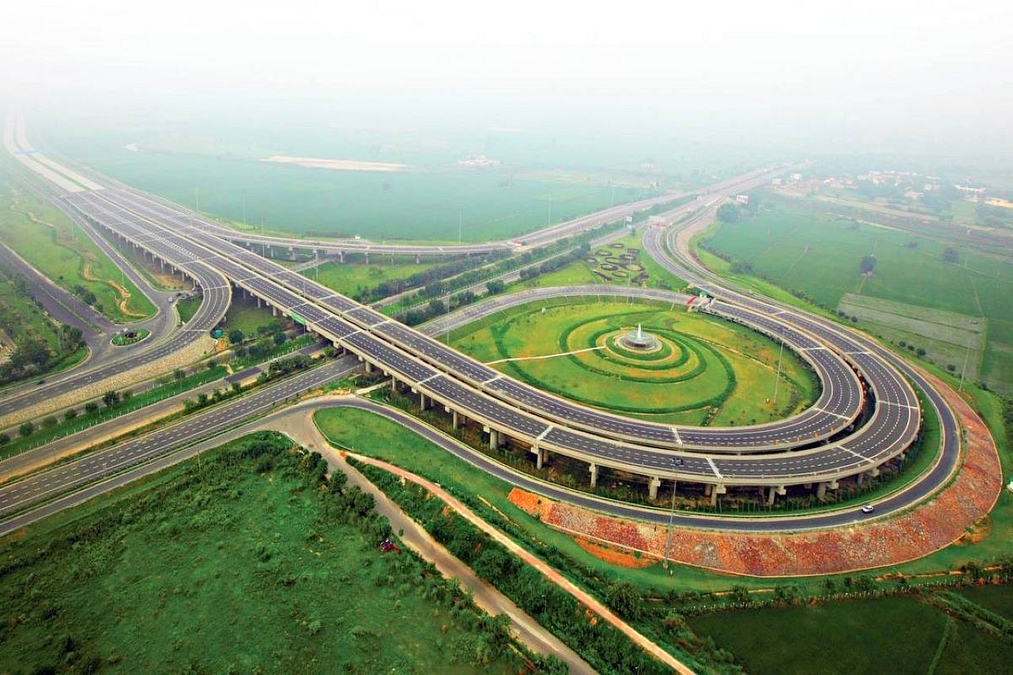
The country’s most ambitious road corridor has taken a decisive turn towards user-sensitive pricing, with toll charges on sections of the Delhi–Mumbai Expressway revised sharply downward in a move that could recalibrate both long-distance mobility and freight economics across western and northern India. The decision, approved by central authorities, applies primarily to stretches still undergoing construction or widening.
For road users, the immediate impact is straightforward: lower out-of-pocket travel costs. For the infrastructure ecosystem, however, the implications run deeper, touching on how India prices partially operational assets and how it balances capital recovery with user experience on mega projects. Transport policy specialists explain that under conventional tolling norms, motorists often pay near-full rates even when highways remain incomplete or constrained by diversions. The latest recalibration alters that logic. On select stretches of the Delhi Mumbai Expressway, tolls have been brought down by as much as half, reflecting the reduced service levels available during construction phases. In practical terms, charges that were earlier set at roughly three-fifths of standard rates have now been aligned closer to one-third.
This change is particularly significant for logistics and freight operators, who form the backbone of traffic on the corridor. The expressway is envisioned as a high-speed spine connecting manufacturing clusters, agri-markets, ports and consumption centres across Delhi, Rajasthan, Gujarat, Madhya Pradesh and Maharashtra. Even marginal savings per trip can translate into meaningful reductions in supply-chain costs when scaled across thousands of vehicle movements daily. Urban economists note that toll pricing directly influences route selection, fuel consumption and congestion patterns. Lower tolls on partially open stretches may help distribute traffic more evenly, preventing overloading of older national highways and urban arterial roads. In turn, this reduces idling, emissions and wear on city infrastructure linking fiscal policy on highways to broader climate resilience outcomes.
There is also a real estate and development angle. Improved affordability of travel along the expressway is expected to strengthen the case for logistics parks, industrial estates and satellite townships emerging along the corridor. Developers often assess not just physical connectivity but also the recurring cost of access when choosing investment locations. In that sense, toll reform becomes a subtle but powerful planning tool. However, experts caution that user relief must be carefully balanced with financial sustainability. Mega expressways involve high capital expenditure and long-term maintenance commitments. Reduced tolls during construction phases may defer revenue recovery, requiring tighter project management and realistic traffic forecasting once full operations begin.
Government officials have indicated that the revised toll structure is temporary and will be reviewed as more segments become fully functional. This signals a shift towards dynamic pricing where tolls evolve with infrastructure quality rather than remaining static across a project’s life cycle. For private motorists, the change makes long-distance travel more attractive even amid ongoing works, potentially encouraging a modal shift away from shorter, fragmented routes. For commercial fleets, it reinforces the expressway’s role as the preferred freight artery between two of India’s most economically vital regions. As India continues to invest heavily in expressways and logistics corridors, the Delhi Mumbai Expressway toll adjustment may well serve as a template for how infrastructure pricing can be made more responsive, equitable and aligned with sustainable urban and economic growth.
Delhi Mumbai corridor toll relief boosts mobility