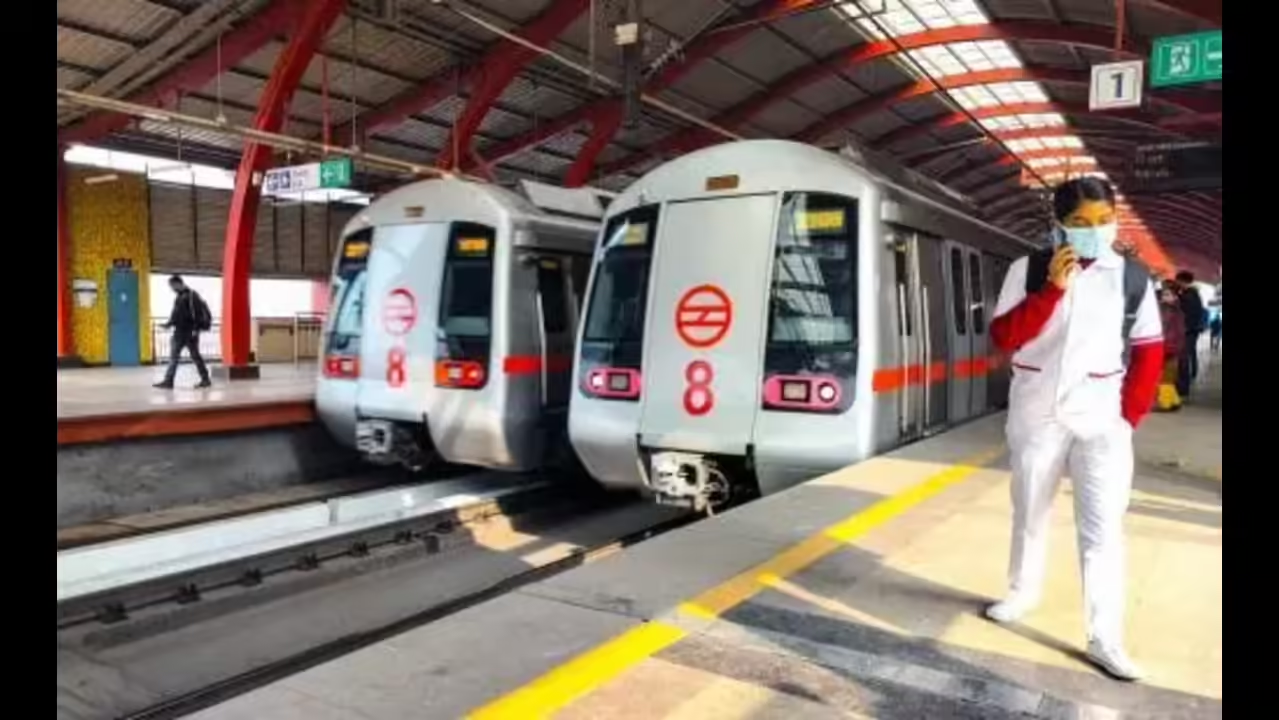
Delhi’s mass transit network has completed a system-wide deployment of air-cleaning infrastructure across all elevated metro stations, marking one of the city’s most extensive pollution-mitigation efforts within public transport spaces. The initiative spans 143 elevated stations operated by the Delhi Metro Rail Corporation and reflects a shift toward embedding environmental controls directly into everyday urban infrastructure.
The project matters beyond commuter comfort. Elevated metro corridors often run alongside arterial roads where vehicular emissions, dust resuspension, and construction activity converge. By targeting these locations, the intervention addresses pollution at points of highest daily human exposure, particularly for commuters, vendors, and nearby residents. Urban planners say such measures signal a move from episodic pollution responses to permanent, location-specific controls within city systems. According to officials familiar with the rollout, the network now operates 131 mist spray systems and 12 anti-smog guns. Stations located along major roads account for a significant share of the installations, while off-road stations have been equipped where conditions allow. Anti-smog guns were deployed at structurally constrained sites where misting systems could not be integrated into existing station design, ensuring coverage without major retrofitting.
The scale of the programme is notable for its execution timeline. Installation accelerated over the past two months, culminating in full coverage ahead of the originally planned schedule. For a transit system handling millions of passenger journeys daily, uninterrupted operations during installation were critical. Transport experts note that such execution capacity strengthens confidence in future climate-oriented retrofits across legacy infrastructure. From an environmental standpoint, the initiative complements broader efforts to curb particulate matter in dense urban zones. While mist sprays and anti-smog guns are not substitutes for emission reduction at source, they are increasingly viewed as mitigation tools that can reduce localised dust and particulate concentration in high-footfall areas. Their effectiveness is maximised when combined with cleaner vehicle fleets, road dust management, and construction regulation.
The programme also integrates urban design considerations. Artwork has been completed on 50 metro pillars across multiple corridors, using themes drawn from ecology and cultural heritage. While largely aesthetic, planners argue that visual upgrades contribute to safer, more inclusive public spaces by improving visibility and civic engagement around transit infrastructure. For the real estate and commercial ecosystem surrounding metro corridors, cleaner station environments carry economic implications. Improved air quality and upgraded public spaces can enhance footfall, support transit-oriented development, and raise the attractiveness of mixed-use projects near stations an important factor as cities seek compact, low-carbon growth patterns.
Looking ahead, urban policy specialists suggest that the next step lies in transparent performance monitoring. Publishing data on particulate reduction, maintenance costs, and energy use would help assess how Delhi Metro air pollution control measures perform over time. As Indian cities grapple with worsening air quality, the programme offers a template one that links public transport, climate resilience, and everyday urban life in a measurable way.
Delhi Metro upgrades elevated stations for cleaner air