


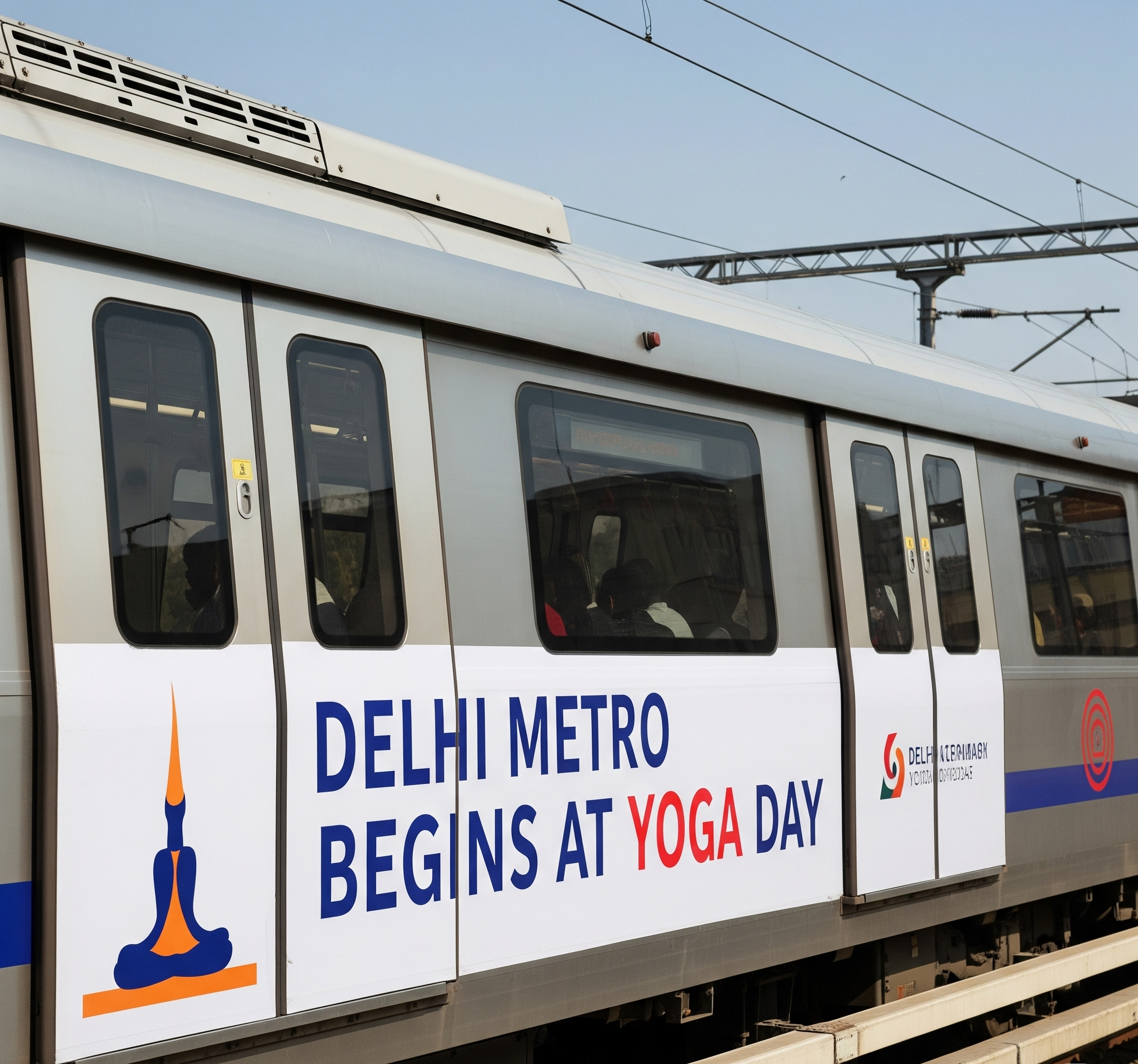
Delhi Metro Rail Corporation (DMRC) will commence services from 4 AM across all originating stations on June 21. This strategic shift in operating hours is aimed at supporting the movement of yoga participants heading to public parks, cultural centres, and designated open spaces across the National Capital Region.
The metro’s early start comes in alignment with nationwide events marking the 11th edition of International Day of Yoga. Scheduled for Saturday, this year’s celebrations are centred on the theme “Yoga for One Earth, One Health,” reinforcing the integral connection between personal well-being and planetary harmony. According to officials from the Delhi Metro, services on all lines will run at a 30-minute interval from 4 AM until normal scheduling resumes. This extension ensures that thousands of yoga enthusiasts — from citizens and students to public servants and civic volunteers — can reach early morning sessions being organised between 6:30 AM and 7:45 AM as part of the centralised mass yoga demonstration.
This annual exercise, known as the Yoga Sangam, will unfold simultaneously at over one lakh locations across India. The coordinated programme follows the Common Yoga Protocol (CYP) — a standardised sequence of yoga postures and breathing exercises designed by wellness experts and endorsed by health institutions for universal accessibility. Urban transport experts have lauded the Delhi Metro’s role in enabling equitable access to such national events. “Public transport plays a key role in supporting inclusive civic participation, especially when timed with events that promote well-being and environmental balance,” noted a sustainable mobility analyst. “The decision to extend early hours reflects how transport policy can complement public health objectives.”
Notably, the early metro operation reduces dependency on private transport modes — a critical step in curbing peak-hour emissions, decongesting roads, and enhancing the carbon neutrality of mass civic events. In a metropolis like Delhi, where air quality and urban congestion remain persistent challenges, supporting non-motorised and low-emission travel becomes especially vital. International Yoga Day, since its inception in 2015, has grown into a global celebration of ancient Indian wellness practices. Recognised by the United Nations and celebrated in over 180 countries, the event is both a cultural showcase and a soft-power vehicle for India. At its heart, however, is a universal philosophy — one that connects the health of individuals with the health of society and the environment.
Officials from the Ministry of AYUSH and Delhi’s civic authorities have confirmed that multiple venues across the capital will host yoga sessions as part of the coordinated campaign. Parks such as Lodhi Garden, Nehru Park, and various community grounds in residential colonies are expected to witness significant footfall. To accommodate this, civic bodies are working closely with the DMRC, DTC, and other agencies to streamline public mobility, manage crowd movement, and provide essential amenities. Digital platforms and public information systems will also play a key role in alerting citizens about real-time metro schedules, gate openings, and crowd advisories. In past years, delayed arrivals and over-crowded entry points were noted as pain points. However, this year, authorities have introduced real-time service alerts through official apps and mobile platforms to ease navigation for first-time or occasional metro users.
More broadly, the synchronised celebration also speaks to a wider urban aspiration — the need for cities to evolve into ecosystems that prioritise health, mobility, and sustainability. Events such as Yoga Day, when mapped with responsible transport planning and zero-emission logistics, set a precedent for how large cities can synchronise public health with environmental stewardship. As Delhi continues to battle extreme weather, pollution spikes, and increasing mental health challenges, yoga is not merely a symbolic gesture but a crucial intervention. Its benefits — from improved respiratory function and stress relief to stronger immunity and mental clarity — are increasingly supported by empirical research, making it a vital part of holistic urban health planning.
While the national event will be led from Visakhapatnam this year, the decentralised execution across cities like Delhi reflects a broader shift toward community-rooted civic participation. Whether it is a group of schoolchildren in East Delhi, senior citizens in West Delhi, or working professionals in Noida, the accessibility to yoga sessions will be significantly enabled by the early availability of metro services. By acting as a mobility enabler, the Delhi Metro is once again positioning itself as more than just a transit system. It is participating in a larger urban dialogue — one that values sustainability, access, and collective well-being. On a day that celebrates balance and unity, this early start is more than symbolic — it is structural support for a city learning to move in harmony with its people and planet.
As Delhi prepares for yet another dawn of collective wellness, the early morning hum of the metro trains may well serve as a fitting prelude — steady, inclusive, and aligned with the rhythm of a healthier tomorrow.
Also Read : Mumbai Braces for Heavy Rain Under Orange Alert
