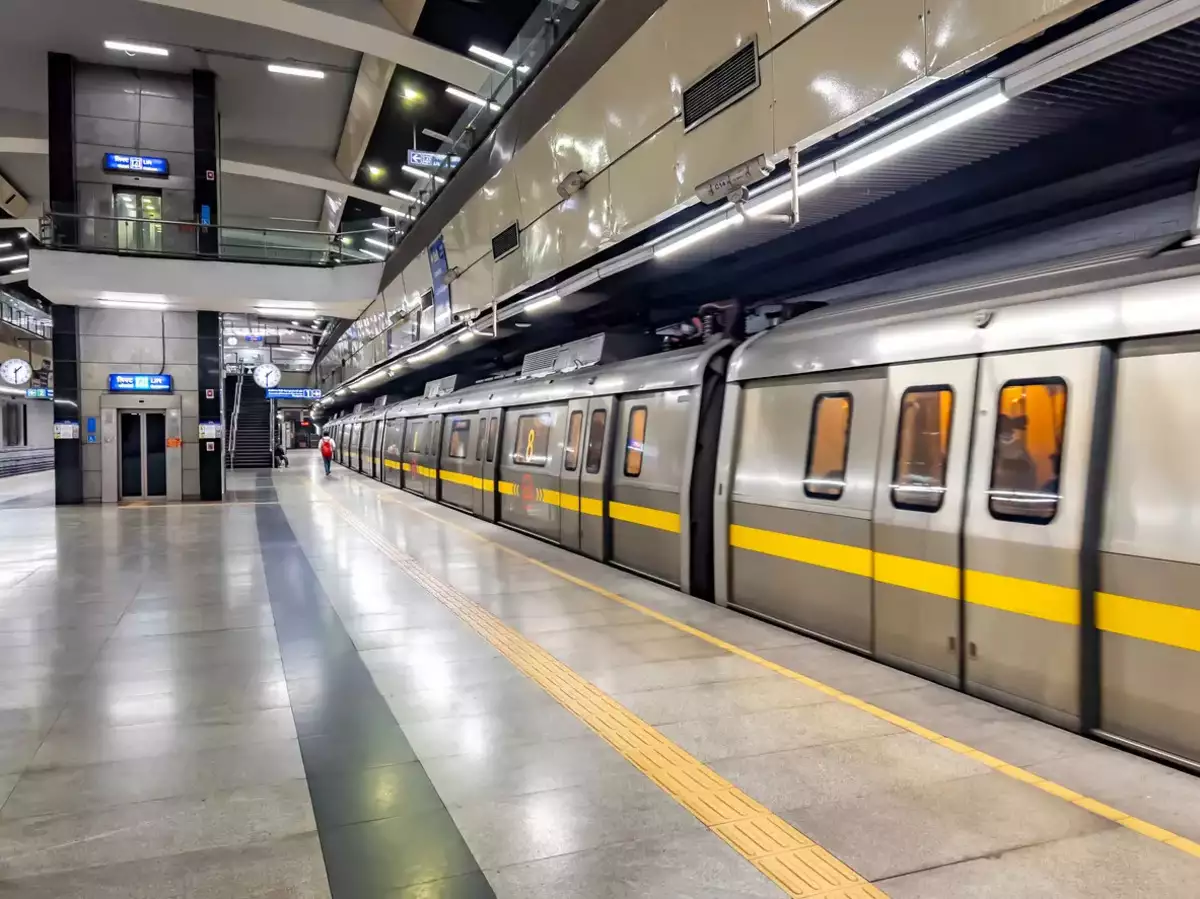
The Delhi Metro Rail Corporation (DMRC) has announced plans to launch India’s first-ever metro corridor designed to operate with three-coach trains.
This corridor, part of the Phase-IV expansion project, will stretch from Lajpat Nagar to Saket G Block, with an expected completion date in 2028. This innovative approach focuses on enhancing last-mile connectivity and facilitating seamless interchanges with existing metro lines, catering specifically to high-density, short-distance travel corridors where conventional multi-coach trains may not be as efficient. A senior DMRC official highlighted that the decision to adopt a three-coach configuration is rooted in the need for cost-effective, agile, and high-frequency metro services. “This design allows us to optimise operational efficiency while accommodating a substantial number of daily commuters,” the official explained.
Spanning just eight kilometres, this corridor will feature eight strategically located stations: Lajpat Nagar (interchange with the Pink and Violet lines), Andrews Ganj, GK-1, Chirag Delhi, Pushpa Bhawan, Saket Court, Pushpa Vihar, and Saket G Block (interchange with the Golden Line). Despite its relatively short length, the corridor is expected to significantly improve access to key residential and commercial hubs, reducing commute times and enhancing urban mobility. The project was officially inaugurated in March 2024, with the foundation stone laid by a prominent government official, marking the start of construction activities. The design prioritises passenger convenience, integrating modern amenities, eco-friendly infrastructure, and sustainable operational practices aligned with the broader vision of creating smart, green cities.
Experts in urban transport view this development as a strategic step towards addressing the evolving challenges of Delhi’s metropolitan landscape. With increasing urbanisation and rising commuter numbers, the three-coach model offers flexibility in managing peak-hour congestion, especially in densely populated areas where space constraints limit the feasibility of larger train configurations. Incorporating sustainable practices, the DMRC has committed to using energy-efficient technologies and eco-friendly materials in the corridor’s construction. This aligns with India’s broader sustainability goals, including the push for zero-net carbon emissions in urban infrastructure. Additionally, the corridor will integrate advanced signalling systems to ensure safety and operational efficiency.
The new line’s design also reflects a forward-thinking approach to urban mobility, with features such as improved station layouts for better accessibility, gender-neutral facilities, and provisions for differently-abled passengers. These measures are part of a broader commitment to creating inclusive, equitable, and accessible public transport systems across the city. In terms of operational efficiency, the three-coach trains are expected to offer faster turnaround times, reduced maintenance costs, and greater flexibility in scheduling services. This model is particularly suitable for corridors with moderate passenger volumes, where traditional longer trains might lead to unnecessary delays and operational bottlenecks.
Furthermore, the corridor will serve as a critical link between key commercial areas, residential neighbourhoods, and other transport networks, fostering integrated urban mobility solutions. It is anticipated to complement other metro lines, easing the burden on heavily congested routes and offering commuters more diverse travel options. As construction progresses, the DMRC is focusing on ensuring minimal disruption to the city’s daily activities, employing advanced construction technologies and methods to expedite the process. The completion of this corridor is expected to set a precedent for future metro expansions in India, showcasing innovative urban transport solutions tailored to the unique needs of modern cities.
With this development, Delhi is poised to strengthen its position as a leader in sustainable urban mobility, setting new benchmarks for smart, efficient, and eco-friendly public transportation in the country.
Delhi Metro to Launch First 3 Coach Corridor