


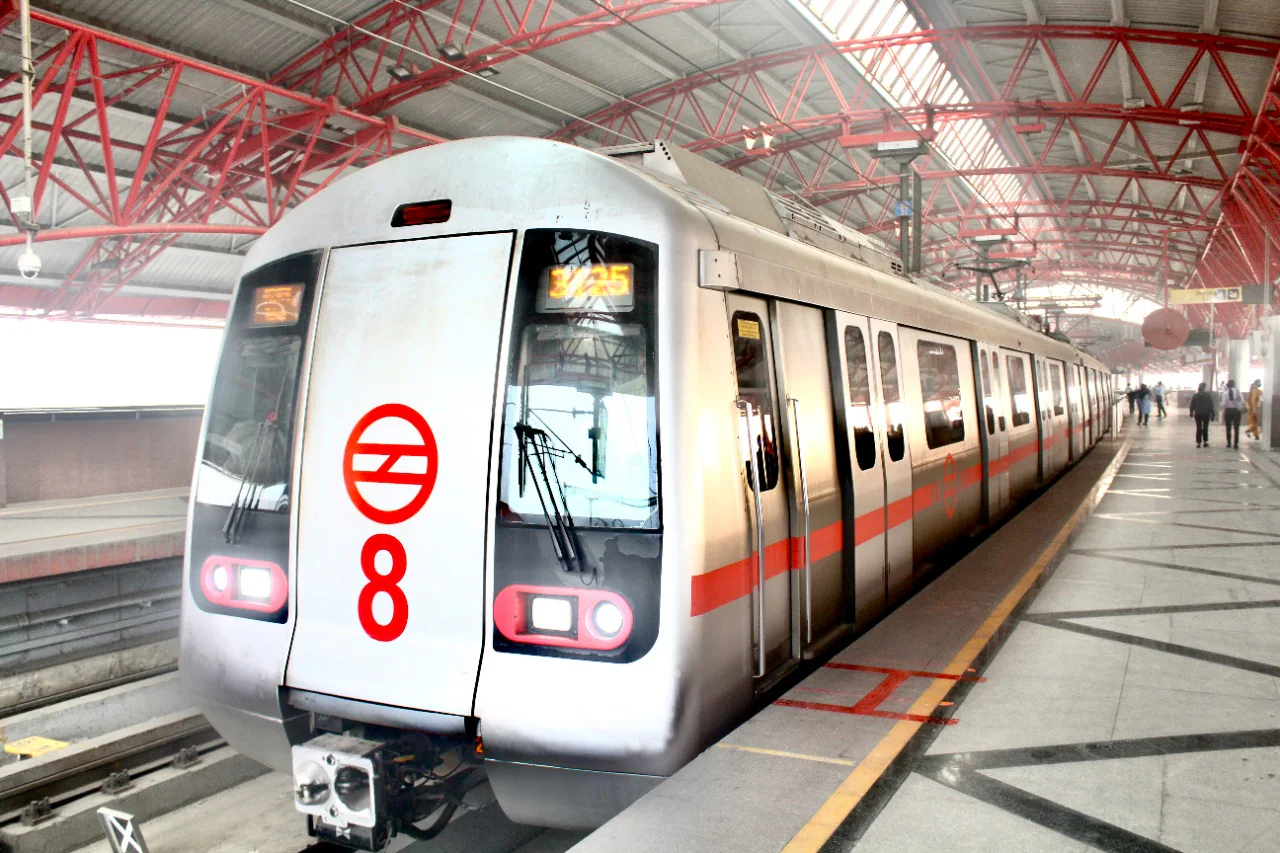
Delhi Metro is preparing to induct 312 new coaches under its Phase IV expansion, marking a decisive step towards sustainable, high-capacity, and technology-driven public transport in the capital. Designed for driverless operations and featuring eco-friendly engineering, the new coaches are expected to redefine the commuter experience once safety clearances are completed.
The first corridor of Phase IV, the Majlis Park to Maujpur stretch, is slated to become operational later this year. Officials confirmed that the coaches have successfully undergone rigorous testing, including braking trials and oscillation checks conducted by national safety authorities. Once approved by the Commissioner of Metro Railway Safety, these trains will be deployed into passenger service. The procurement contract, awarded in 2022, was secured by a leading transport manufacturer with operations in India. Importantly, over 90 per cent of the components for these coaches are being produced indigenously, strengthening the government’s “Make in India” initiative and signalling a boost for local manufacturing ecosystems.
Each train will consist of six coaches designed for full driverless functionality. The interiors have been engineered with larger information screens, mobile charging points, and noise reduction features to enhance passenger comfort. High-resolution CCTV cameras have been integrated across all coaches for robust surveillance, while a distinct tri-colour theme has been incorporated for quick identification and monitoring from central control systems. Engineered to run at speeds of up to 95 kmph, the coaches will operate at a regulated maximum of 85 kmph, ensuring efficiency while maintaining energy balance. Officials highlighted that sustainable construction was a priority, with materials selected carefully to minimise the carbon footprint and meet international environmental benchmarks.
Deployment will be strategically divided: 144 coaches for the Janakpuri West–RK Ashram Marg extension of the Magenta Line, 90 for the Majlis Park–Maujpur stretch of the Pink Line, and 78 for the new Aerocity–Tughlakabad Golden Line. Together, these allocations aim to meet the capital’s rising demand for accessible and high-capacity public transport. Currently, Delhi Metro operates 350 trains covering 394 kilometres across 289 stations, serving millions daily. With the Phase IV expansion, the network is set to grow further, promising not only reduced road congestion but also a tangible step towards reducing vehicular emissions in one of the world’s most polluted cities.
Urban transport experts suggest that beyond mere expansion, these new coaches represent a structural shift in the city’s mobility vision—prioritising safety, inclusivity, and environmental sustainability. As Delhi grapples with rapid urbanisation and climate concerns, the induction of these 312 driverless, eco-conscious coaches signals that mass transit can remain at the forefront of equitable and low-carbon urban living.
Also Read : Bengaluru Metro faces backlash over additional charges on passenger luggage allowance
