


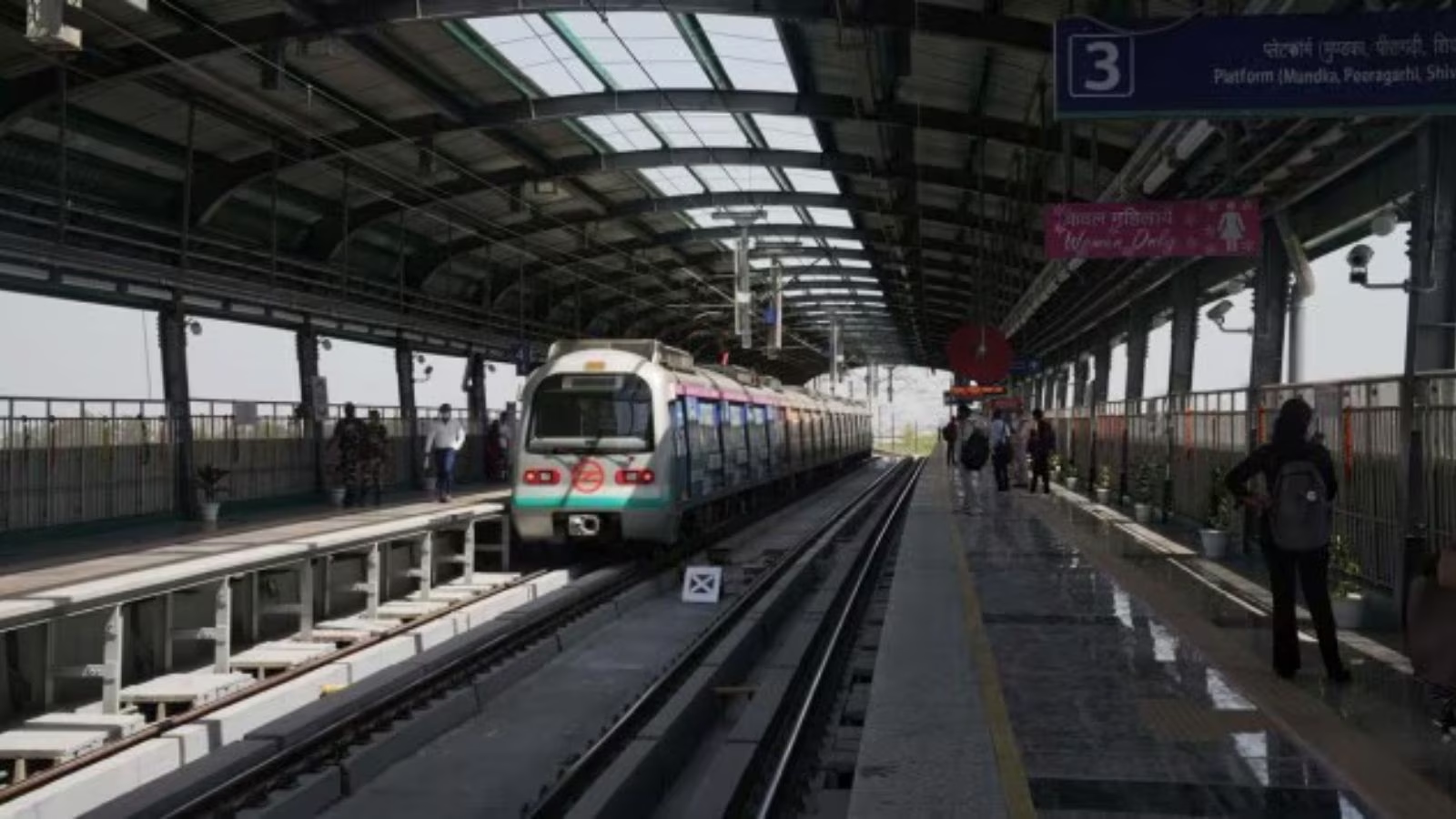
The Supreme Court has granted the Delhi Metro Rail Corporation (DMRC) the green light to begin construction on two critical Phase IV corridors that pass through the ecologically sensitive Morphological Ridge.
The clearance comes under stringent environmental safeguards, potentially setting a new precedent for urban infrastructure projects within protected green zones. The new corridors from Saket G Block to Lajpat Nagar and Inderlok to Indraprastha — were sanctioned with a binding caveat: total compliance with a ten-point environmental code laid out by the Central Empowered Committee (CEC), a Supreme Court-appointed advisory panel. The corridors are expected to enhance the city’s public transport network by 2029, offering a low-emission alternative to road-based commuting.
At the heart of the Supreme Court’s approval is a robust environmental framework intended to balance infrastructure needs with sustainability. The Morphological Ridge, part of the ancient Aravalli range and a designated ecological preserve, will see a total of 28,685 square metres affected by the new metro lines. However, no work is to commence unless DMRC adheres strictly to the norms established by the CEC.
Among these stipulations are a mandatory clearance under the Delhi Preservation of Trees Act before any felling or pruning and a financial contribution equal to five per cent of the project cost towards conservation efforts led by the Ridge Management Board. Additionally, DMRC must plant 1,280 indigenous trees on non-forest land and ensure any transplantation is conducted under expert supervision.
The Inderlok to Indraprastha stretch will require the removal of 122 trees across 20,915 square metres of Ridge-like terrain. In contrast, the Saket G Block to Lajpat Nagar alignment, covering 7,770 square metres, has been redesigned to avoid tree felling, limiting interventions to the pruning of just six trees.
This development comes amid heightened scrutiny of past environmental violations by DMRC. A CEC audit highlighted a 2020 incident where metro construction was initiated on forest land without statutory approvals. Despite a formal notice issued to the project management, no accountability has been enforced so far. The CEC has now urged the Ministry of Environment, Forests, and Climate Change to initiate legal proceedings in the matter, signalling a tougher stance on future non-compliance.
In another case, the CEC noted the long delay in completing the Ridge Interpretation Centre near Patel Chowk, a project mandated by earlier judicial orders to promote public awareness of Delhi’s fragile urban ecology. While DMRC has now committed to completing the centre by April 2026, the delay remains a blot on its environmental stewardship record.
The larger picture, however, suggests cautious optimism. If executed responsibly, the metro expansion could offer a model for carbon-conscious infrastructure that serves both city dwellers and the planet. Public transport remains a cornerstone of any future-ready city, and Delhi’s effort to scale up its metro while adhering to environmental mandates offers a rare moment of alignment between development and conservation.
As Delhi continues its march towards becoming a greener, more connected capital, this case underlines the importance of institutional checks, civic responsibility, and unwavering commitment to ecological justice — all necessary ingredients for building truly sustainable and inclusive urban futures.
Also Read :Pune Metro Sees RS 21.6 Crore Revenue in 3 Months
Delhi Metro Phase IV to begin construction through ecologically sensitive Ridge land
