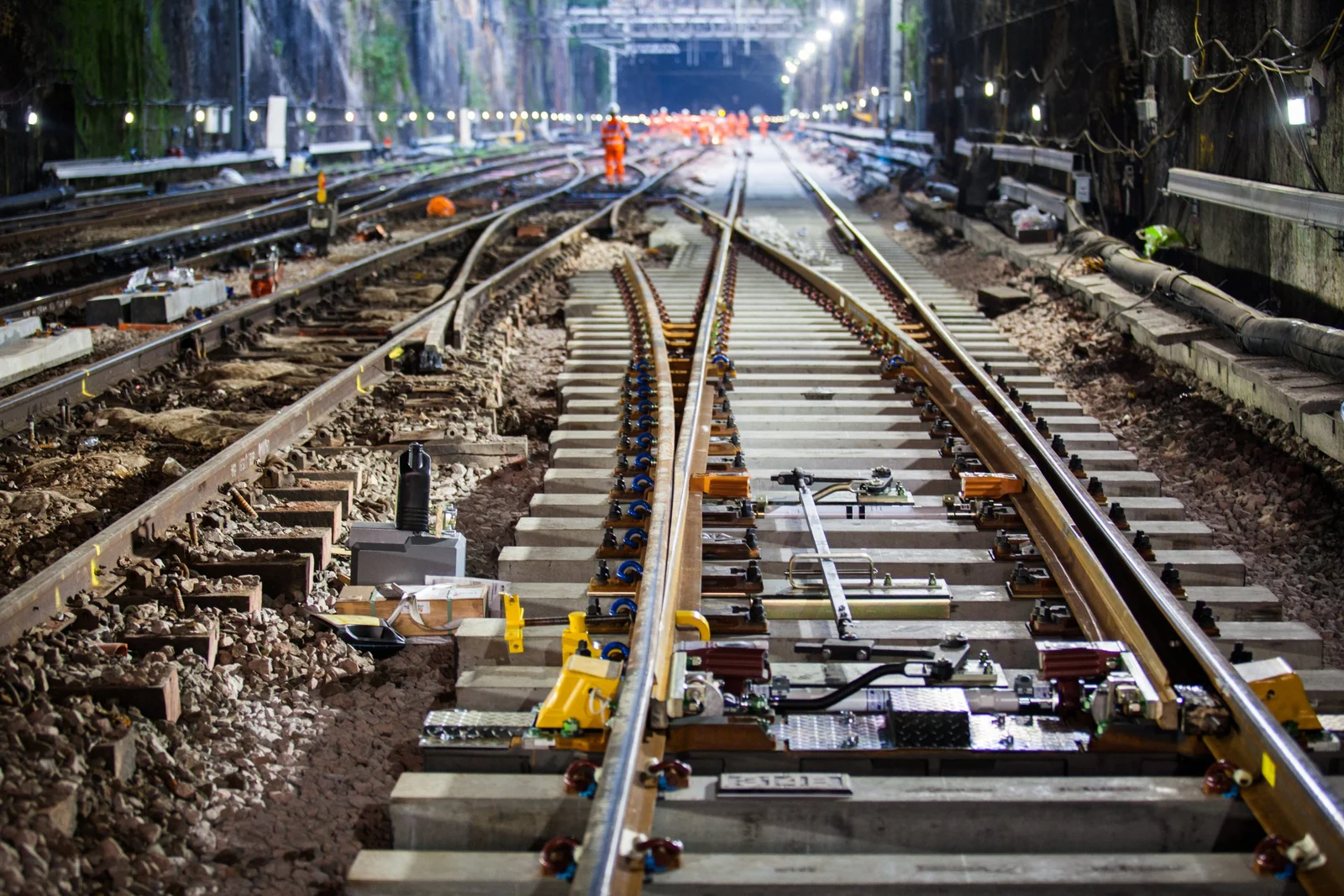
Delhi’s urban rail expansion has entered a new execution phase, with the metro authority inviting bids for specialised track components required for the Magenta Line extension under its ongoing network augmentation programme. The procurement is a critical step in advancing construction of new corridors aimed at improving connectivity and reducing reliance on road-based transport. The tender focuses on the design, manufacture and supply of standard gauge turnouts and crossover systems for a ballastless track structure. These components enable trains to switch tracks efficiently and are essential for maintaining operational flexibility in high-frequency metro systems. Officials indicate that the contract will be delivered within a six-month timeline, reflecting the accelerated pace of work under the current expansion phase.
The initiative forms part of Delhi Metro Phase 4, which seeks to extend the Magenta Line across key urban stretches. Once completed, the corridor is expected to link dense residential zones with central business districts, offering faster and more predictable commute options. Urban mobility experts highlight that such extensions are vital for cities like Delhi, where congestion and air pollution remain persistent challenges. Ballastless track technology, specified for this segment, represents a shift towards more durable and low-maintenance infrastructure. Unlike traditional ballasted tracks, these systems use a rigid concrete base, reducing wear and tear while enabling smoother train operations. Industry specialists note that although initial costs are higher, lifecycle savings and improved reliability make them suitable for heavily used metro corridors. The expansion of Delhi Metro Phase 4 is also expected to influence real estate and economic activity along the alignment. Improved accessibility typically enhances land values and supports transit-oriented development, where residential and commercial projects are planned around public transport hubs.
Developers increasingly view metro connectivity as a key determinant in project viability, particularly in peripheral and emerging neighbourhoods. From an environmental perspective, the project aligns with efforts to transition towards low-carbon urban mobility. By encouraging a modal shift from private vehicles to electric rail systems, metro expansion can contribute to lower emissions and improved air quality. Transport analysts point out that integrating new lines with existing networks and feeder services will be crucial to maximise these benefits. Recent progress on other sections of the Magenta Line underscores the broader momentum of the programme. As extensions are completed, the corridor is set to become one of the longest in the network, reinforcing its role as a major east-west connector. The adoption of driverless train operations further reflects a move towards advanced, technology-driven transit systems.
While procurement milestones mark steady progress, experts caution that timely execution and coordination across civil, electrical and signalling works will determine overall project outcomes. For a city navigating rapid urbanisation, the success of Delhi Metro Phase 4 will play a significant role in shaping sustainable mobility patterns and supporting inclusive urban growth in the years ahead.