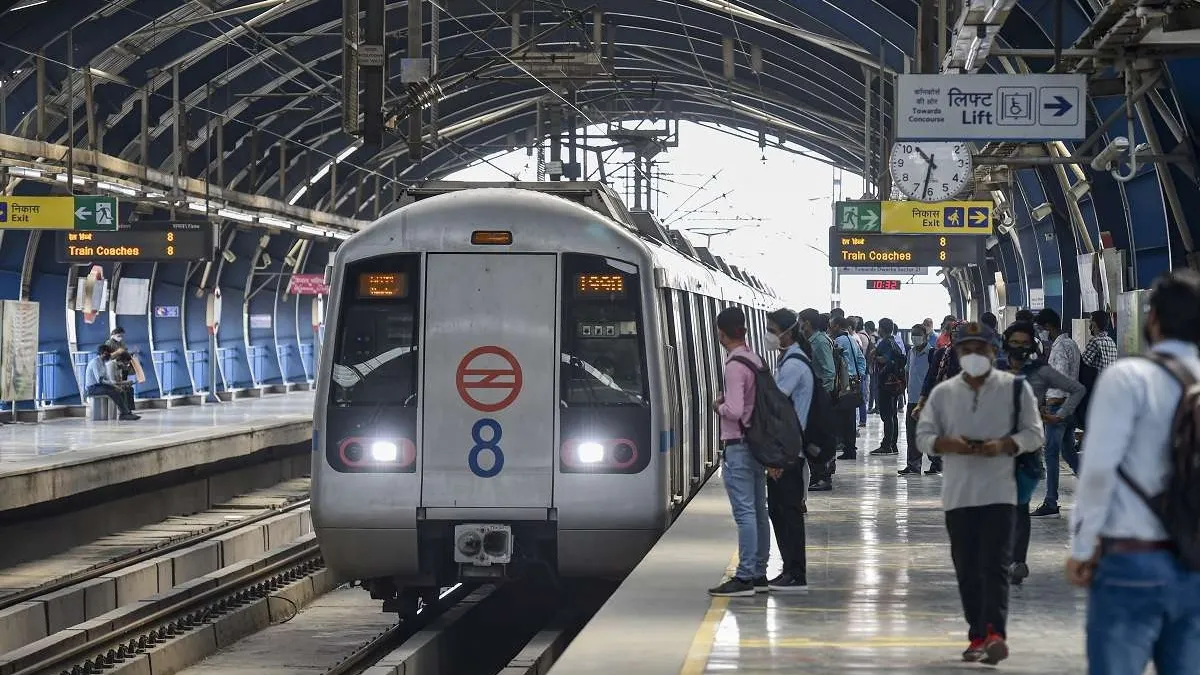
Delhi Metro Passenger Journeys Cross Record Levels
Delhi’s metro rail system recorded a sharp rise in ridership in 2025, underscoring the growing dependence on mass transit in one of the world’s most densely populated urban regions. With total Delhi Metro passenger journeys reaching nearly 236 crore during the year, the network continues to anchor daily mobility across the National Capital Region (NCR). The increase in Delhi Metro passenger journeys reflects both network expansion and a steady return of commuters to public transport following pandemic-era disruptions. Recent additions to the network have improved last-mile connectivity and reduced travel times, making metro services more accessible to a wider section of the population.
Transport analysts note that Delhi’s metro system now accounts for a significant share of urban rail usage in India, where metro networks have expanded rapidly across multiple cities. Despite this growth, the capital’s system remains the backbone of urban mobility, carrying a majority of the country’s metro passengers on a daily basis. Operationally, the network continues to demonstrate high efficiency, supported by a large fleet of trains and frequent service intervals. With thousands of daily trips and extensive route coverage, the system has maintained near-perfect punctuality levels, reinforcing commuter confidence. Experts suggest that reliability is a key factor driving sustained increases in ridership, particularly among office-goers and students. The rise in Delhi Metro passenger journeys also signals broader economic and spatial trends. As employment hubs expand beyond traditional city centres into peripheral zones such as Noida and Gurugram, metro connectivity has become critical in linking residential and commercial clusters.
This has implications for real estate markets, where proximity to metro stations increasingly influences property demand and pricing. From an environmental standpoint, higher metro usage contributes to reduced dependence on private vehicles, helping to curb traffic congestion and emissions. Urban planners highlight that each shift from road-based transport to electric rail can significantly lower per capita carbon output, making metro systems central to climate-responsive urban strategies. Peak ridership figures recorded during the year indicate that the network is approaching capacity on several corridors during high-demand periods. This trend has intensified the need for ongoing expansion and capacity augmentation under future phases of metro development. Industry observers emphasise that investments in additional lines, rolling stock and signalling upgrades will be necessary to sustain growth. The Delhi-NCR network, which integrates multiple metro systems across adjoining cities, is also evolving into a regional mobility grid. Such integration is expected to further boost Delhi Metro passenger journeys, particularly as seamless travel options improve across jurisdictions.
As cities across India look to scale up public transport, Delhi’s experience highlights both the opportunities and pressures of managing high-capacity transit systems. The next phase of growth will depend on balancing expansion with service quality, ensuring that rising ridership translates into more efficient, inclusive and sustainable urban mobility.