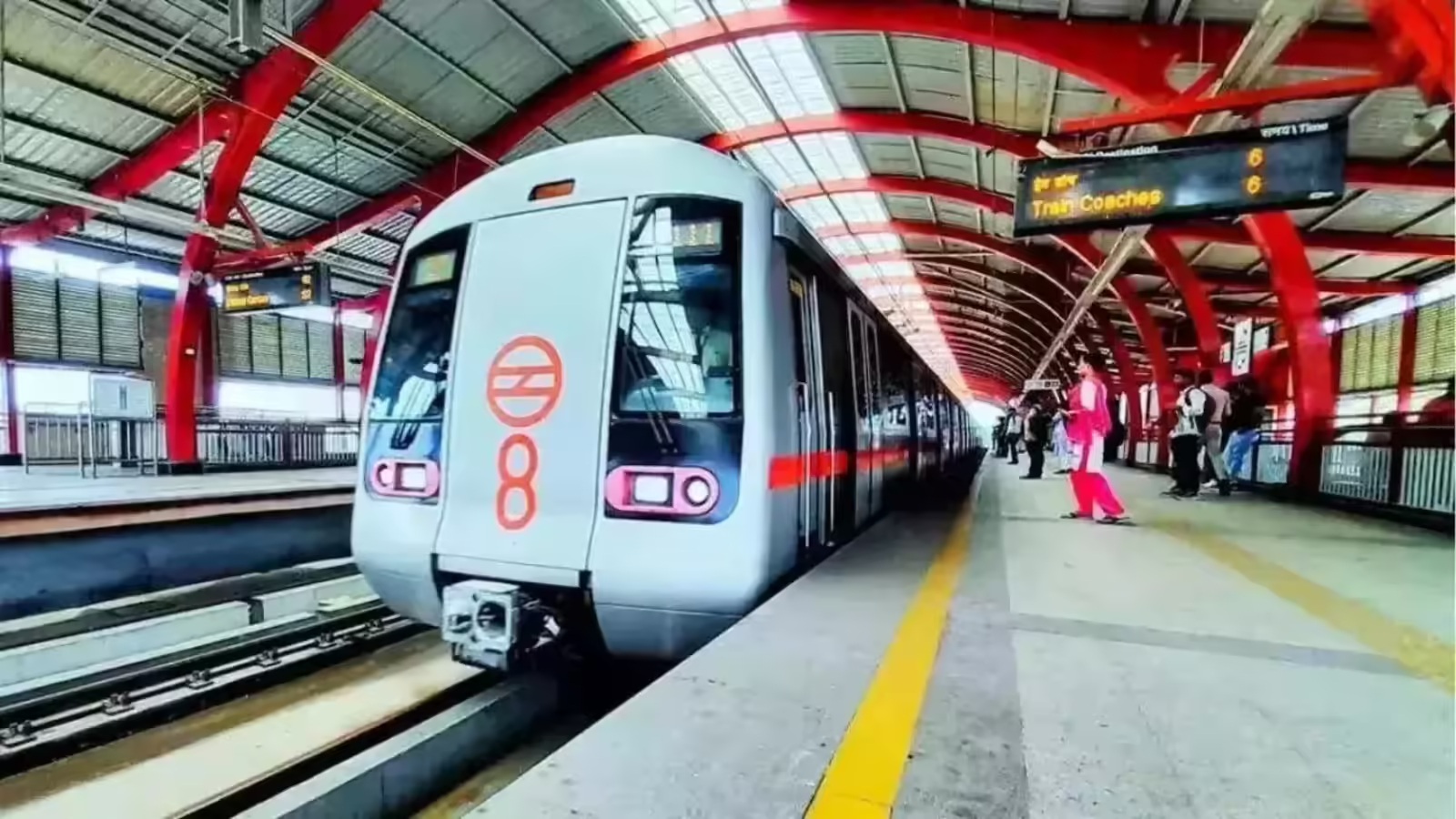
Delhi Metro Magenta Line Extension Technical Delay
Train movement on a recently launched section of the Delhi Metro Magenta Line extension experienced temporary delays on Thursday after a technical fault affected operations between two stations in north Delhi, according to officials monitoring the network. The disruption occurred on a stretch linking Majlis Park and Deepali Chowk, part of a corridor opened earlier this month as part of the capital’s expanding metro infrastructure. While services slowed on the affected segment, authorities indicated that trains on all other lines within the metro system continued to operate normally.
Operational teams were deployed to assess the fault and restore regular service frequencies. Transport officials advised passengers travelling through the affected corridor to expect extended waiting times while engineers addressed the issue. Incidents of this nature, experts say, highlight the complex technical systems that support modern urban rail networks and the importance of rapid response mechanisms to minimise disruption. The affected route forms part of the Delhi Metro Magenta Line extension, a key component of the system’s ongoing expansion strategy designed to improve public transport access across the northern and northeastern parts of the capital. The newly operational corridor spans several densely populated neighbourhoods that historically depended heavily on road transport. Urban mobility planners note that the extension is expected to significantly reduce travel time for commuters connecting residential districts such as Burari, Khajuri Khas, Bhajanpura and Yamuna Vihar with major employment and interchange hubs across the city. The corridor also improves integration with other metro lines, helping distribute passenger traffic more efficiently across the network.
The project forms part of a wider investment programme aimed at strengthening Delhi’s mass transit infrastructure. With rising population density and increasing pressure on road networks, metro expansion remains central to the city’s strategy for reducing congestion and improving air quality. Electric metro systems also support broader climate goals by shifting commuters away from private vehicles and diesel-powered transport. Transport analysts say new corridors frequently undergo operational adjustments during the early weeks of service as passenger demand patterns stabilise and technical systems are calibrated. Short-term disruptions are not uncommon during this phase, particularly on lines that incorporate multiple underground sections, interchanges and advanced signalling technologies. The Delhi Metro Magenta Line extension is expected to grow further as additional phases of construction are completed over the coming years. Planned segments will extend connectivity across the national capital region and link with strategic transport nodes including airport corridors and major commercial districts. Urban planners emphasise that reliable public transport networks remain essential for shaping sustainable and inclusive cities. By expanding rapid transit infrastructure to underserved areas, authorities aim to improve commuting efficiency, reduce environmental pressures and support balanced urban development.
As metro expansion continues, maintaining operational reliability alongside infrastructure growth will remain a key priority for transport agencies managing one of the world’s busiest urban rail systems.
Delhi Metro Magenta Line Extension Technical Delay