


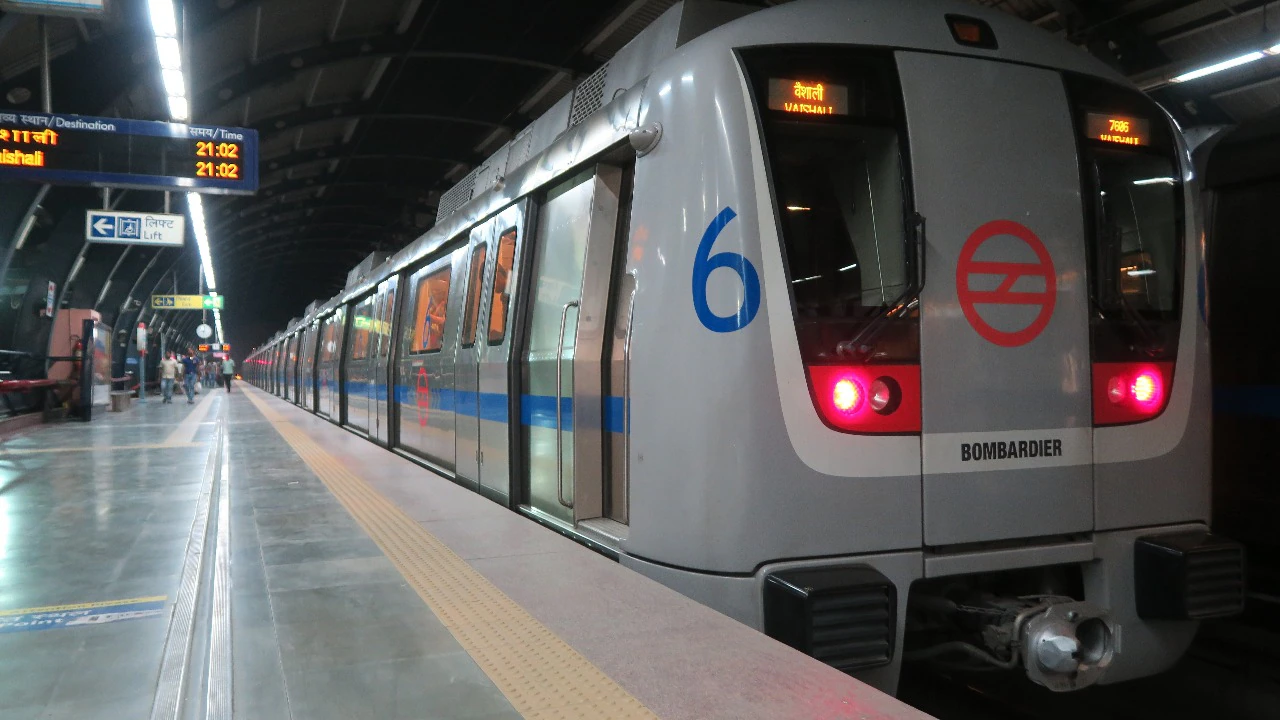
After nearly eight years, the Delhi Metro Rail Corporation (DMRC) has announced a revision in its fare structure, marking the first increase since 2017. The new fare chart, effective immediately, raises the minimum ticket price to Rs 10 and the maximum to Rs 60, depending on travel distance.
Officials stated that the revision was essential to address rising operational and maintenance expenses. Over the past eight years, the costs of electricity, manpower, spare parts, and other infrastructure requirements have steadily gone up, while fares remained unchanged. The new pricing aims to ensure financial sustainability while enabling further service upgrades. Under the revised structure, passengers travelling shorter distances will continue to pay Rs 10. For medium and longer journeys, fares will gradually increase in stages, culminating in a maximum ticket price of Rs 60. Earlier, the maximum fare was capped at Rs 50.
DMRC explained that the decision was taken after a detailed review of costs, ridership patterns, and the need for long-term investments. The metro network, which stretches across more than 390 kilometres and covers Delhi along with parts of neighbouring cities such as Noida, Ghaziabad, Gurugram, Faridabad, and Bahadurgarh, carries over 6 million passengers on peak days. The fare revision is expected to impact a large section of commuters, many of whom depend on the metro for their daily travel. Some passengers voiced concerns about the higher costs, especially those who use the service for long-distance journeys every day. At the same time, transport experts pointed out that the metro remains significantly more economical compared to fuel-driven private transport or app-based cabs, while also saving considerable travel time.
Officials highlighted that the additional revenue generated from the revised fares will help DMRC strengthen its infrastructure, modernise technology, and maintain world-class service standards. They added that without the fare adjustment, the corporation would face increasing challenges in meeting expenses and sustaining operations. The Delhi Metro has become the backbone of public transport in the National Capital Region, offering safe, reliable, and environmentally friendly travel. Despite the fare hike, it continues to be one of the most affordable metro systems worldwide, officials claimed. They also underlined that the metro helps reduce road congestion and vehicular emissions, making it a critical part of the city’s fight against air pollution.
This fare revision marks only the fourth major increase in the metro’s history since it began operations in 2002. Officials reassured passengers that fare changes are considered only when absolutely necessary, and the corporation is mindful of the financial burden on commuters. With this revision, DMRC aims to balance financial viability with public service, ensuring that the metro continues to serve as the lifeline of the national capital and its surrounding regions.
Also Read : Vande Bharat Express Trains Maintain 130 Kmph Speed Limit On Entire Route List
