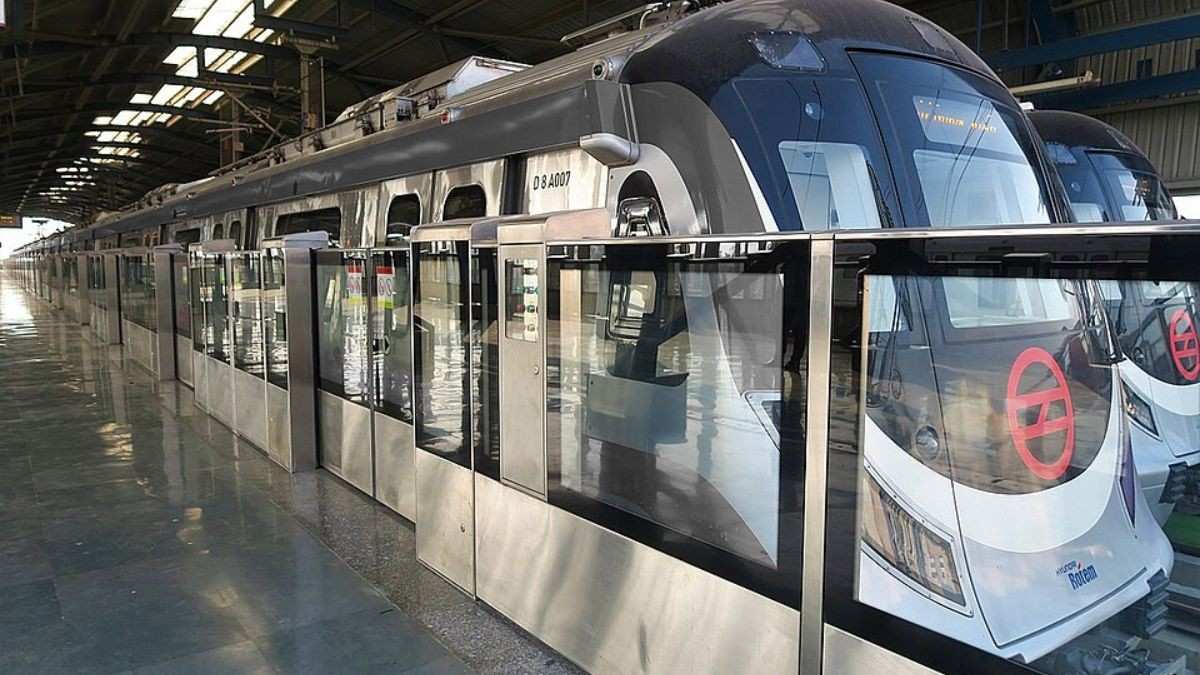
Delhi’s urban mobility network is set for another strategic upgrade as plans move forward to extend the Golden Line through an elevated corridor connecting Tughlakabad and Kalindi Kunj. The proposed expansion, spanning nearly four kilometres, is expected to significantly reduce travel time across South Delhi while strengthening connectivity along the Yamuna riverfront—an area witnessing steady residential and infrastructure growth.
The extension is being positioned as a response to rising commuter demand in southern parts of the capital, where daily travel is often slowed by congested arterial roads and limited east–west transit options. Once operational, the new stretch is projected to reduce end-to-end travel time between Tughlakabad and Kalindi Kunj to approximately 10–12 minutes, offering a reliable alternative to road-based transport that can take several times longer during peak hours. Urban transport officials involved in the planning process indicate that the corridor will be largely elevated, allowing construction to progress without major disruption to existing neighbourhoods or floodplains near the river. The alignment has been designed to integrate with existing stations on the Golden Line, with two additional stations proposed to serve emerging residential clusters and employment zones along the route. This approach reflects a broader shift towards incremental metro expansion that builds on operational assets rather than creating isolated links.
From a city planning perspective, the Golden Line extension is expected to play a role in rebalancing travel flows between Delhi and neighbouring urban centres. At present, commuters travelling from parts of Noida to South Delhi rely on indirect routes that involve multiple interchanges and long wait times. By strengthening cross-river and southward connectivity, the corridor could ease pressure on interchange-heavy lines and reduce dependency on private vehicles. Transport economists note that time savings of this scale have wider economic implications. Shorter commutes can improve workforce productivity, expand viable job catchments, and enhance access to education and healthcare. For households along the Yamuna riverfront, improved metro access may also influence real estate demand, encouraging more compact, transit-oriented development rather than car-dependent sprawl.
Environmental planners see additional value in the project’s potential to shift commuters away from high-emission road travel. Elevated metro corridors powered by electricity align with Delhi’s long-term climate resilience goals by lowering per-capita transport emissions while using land more efficiently. However, they stress that last-mile connectivity—through buses, walking paths, and cycling infrastructure—will be critical to realising these benefits fully. As detailed planning advances, attention will turn to construction timelines, station integration, and coordination with riverfront redevelopment efforts. If executed as intended, the Golden Line extension could serve as a model for how targeted metro investments can address congestion, support equitable growth, and reinforce a people-first approach to urban mobility in India’s largest cities.
Delhi Metro Golden Line Expansion To Cut Travel Time