


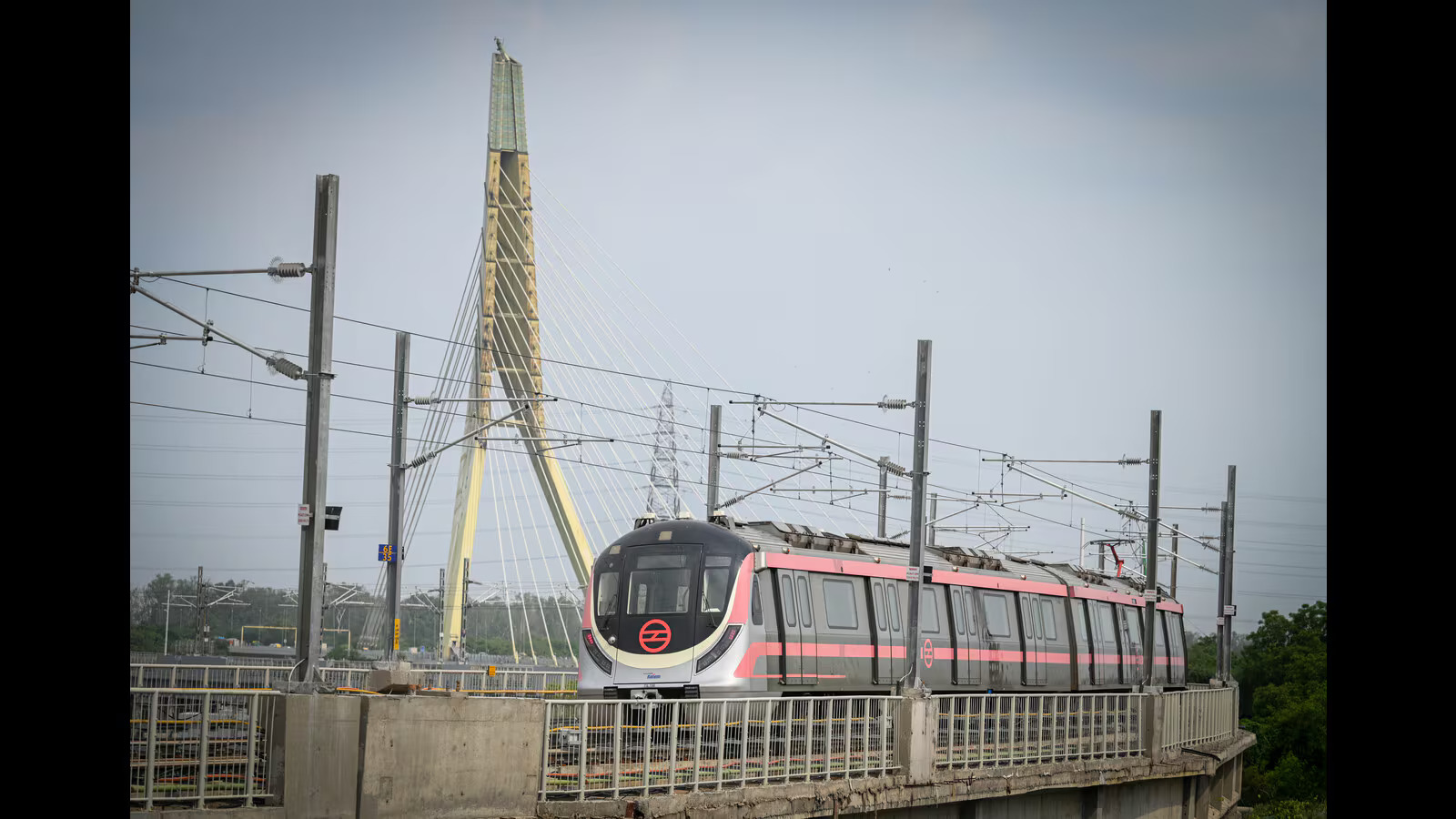
Delhi Metro Rail Corporation (DMRC) has addressed rainwater leakage from its elevated structures by shifting downtake pipes into road medians and installing shallow recharge pits, a move to prevent street flooding and align with sustainable water management practices.
In a recent submission before the National Green Tribunal (NGT), DMRC confirmed completion of the technical guidelines issued by the tribunal dated May 16, 2024. As argued, all previously side-mounted rainwater outlets are now rerouted to central medians, feeding into shallow 110 mm‑deep pits that facilitate percolation into subsoil rather than dumping onto roadways. These measures replace earlier practices where runoff from metro viaducts inadvertently contributed to urban waterlogging and traffic disruptions. The initiative responds to a 2022 plea filed by a Delhi resident alleging inefficient release of rainwater down metro pillars, which reportedly contributed to flooding and pothole formation under metro spans. The NGT constituted a joint technical committee involving the Public Works Department, MCD, DPCC and DMRC to assess solutions and recommend reuse strategies. That committee had emphasised that medians should remain permeable—with at least 110 mm soil depth and minimal paving—to function as effective recharge zones.
DMRC’s latest report states that engineers surveyed and retrofitted 961 viaduct spans, ensuring runoff pipes now drain into the medians. The recharge pits and pipe shifts were completed using a budget allocation of ₹89.5 lakh, disbursed last year, and further rainwater harvesting pits form part of all station designs from Phase 3 onwards. A senior DMRC infrastructure official confirmed that no metro span now discharges water onto the road surface, and there is no immediate need for additional large-scale harvesting infrastructure. Excess runoff still flows into side drains only if saturation exceeds percolation capacity. Urban infrastructure analysts note that this retrofit addresses two key issues: preventing soil erosion and avoiding surface flooding. By channeling rainwater into median recharge zones, DMRC is also contributing to groundwater replenishment—critical for a city facing urban flood risks and groundwater depletion.
Critics had previously highlighted recurring waterlogging near elevated metro corridors during monsoon spells, pointing to visible flow of water and spillover from outlet pipes. The new median-based system underscores Delhi Metro’s commitment to rectifying legacy design oversights and integrating green infrastructure responses. While the initiative is a positive development, experts recommend expanding this approach through tree-lined medians and modular greenery to further enhance urban cooling effects and support biodiversity. Delhi Metro officials indicate collaboration with municipal horticulture departments to integrate vegetation in median zones where feasible.
As Delhi continues its push towards low‑carbon, inclusive urban transit, DMRC’s water leak resolution strategy exemplifies sustainable engineering married with environmental responsibility. The challenge going forward will be to monitor long‑term performance and ensure these median recharge mechanisms remain functional and unobstructed across future monsoon cycles.
Also Read : Mumbai Rail Conducts Mega Fast Line Block Sunday
