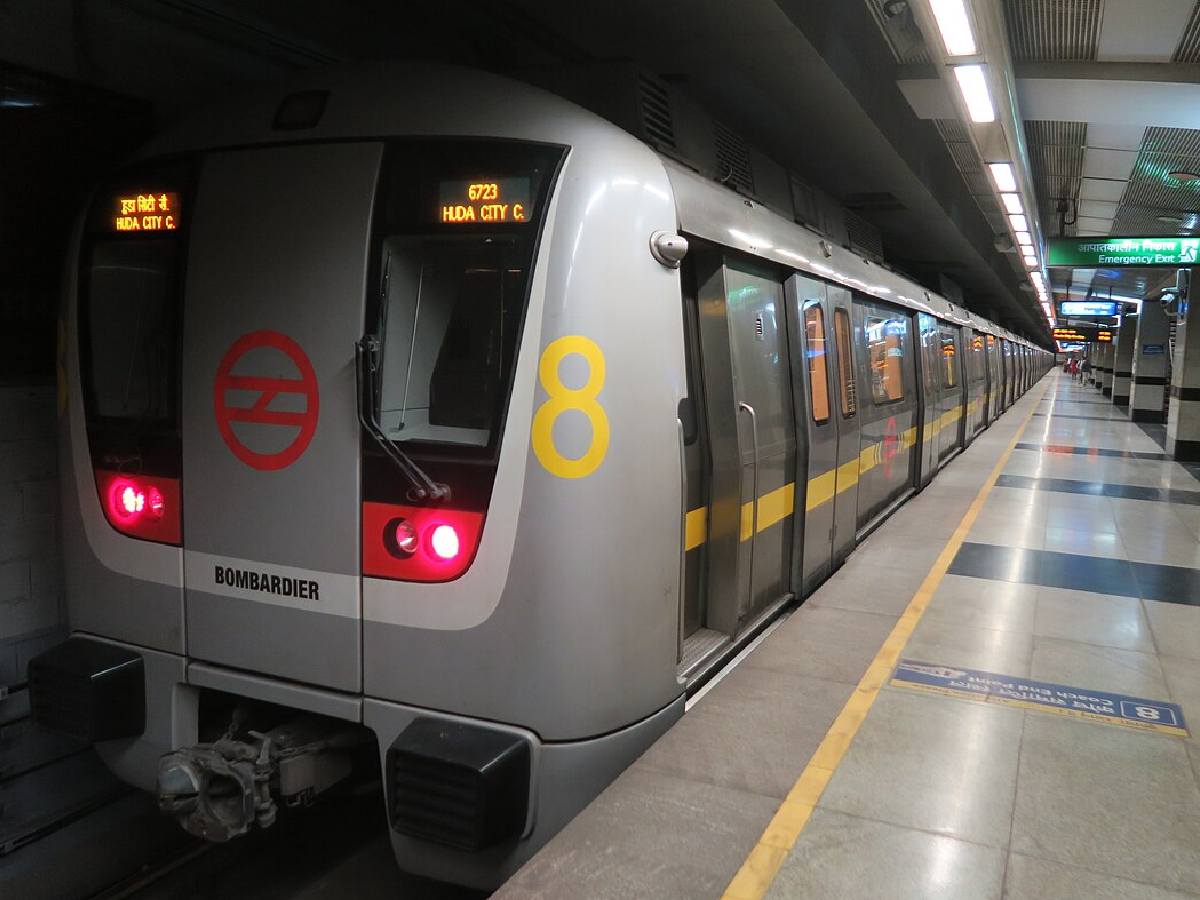
Delhi’s rapid transit system this week marked a quiet but significant milestone as the first train that launched the capital’s Metro era completed 23 years of continuous service. The commemorative run of the original trainset on its inaugural corridor offered more than nostalgia it underlined the long-term value of durable public infrastructure in shaping sustainable urban mobility.
Introduced in December 2002, the Delhi Metro fundamentally altered how the city moved, reducing dependence on private vehicles and easing pressure on road networks. Industry experts note that the survival and continued operation of the first train reflects not just engineering resilience, but a governance model that prioritised lifecycle planning, maintenance, and incremental upgrades often missing in large Indian infrastructure projects. The anniversary service retraced the Shahdara–Tis Hazari corridor in east and central Delhi, where Metro services were first opened to the public. Officials involved in operations said the choice of route was symbolic, highlighting how a modest stretch of track laid the foundation for what is now one of the world’s largest urban rail networks. Today, the system is central to the city’s economic productivity, enabling millions to commute efficiently across expanding residential and commercial zones.
Originally introduced as a four-coach train, the first Metro rake evolved alongside rising ridership. Capacity expansions over the years increased it to eight coaches, mirroring the city’s growth and the growing reliance on mass transit. Transport planners argue that such scalability is essential for cities aiming to balance population growth with lower emissions and equitable access to jobs and services.Operational data shared by officials indicates that the train has travelled close to three million kilometres and served tens of millions of passengers. Its reliability metrics remain well above minimum benchmarks, reinforcing the case for investing in quality rolling stock rather than short-term cost savings. Urban mobility analysts point out that dependable public transport systems are critical to encouraging commuters to shift away from private cars, a key step in reducing urban air pollution and carbon output.
Over time, the train has undergone multiple refurbishments, including a major mid-life upgrade. New safety systems, real-time passenger information, and energy-efficient technologies were added to align with modern standards. Notably, its regenerative braking system feeds power back into the grid, contributing to lower energy consumption an approach increasingly central to net-zero transport strategies.As Indian cities confront congestion, climate risks, and social inequities in access to mobility, the story of Delhi Metro’s first train offers a broader lesson. Sustainable urban transport is not only about expansion, but about designing assets that endure, adapt, and continue serving diverse populations. More than two decades on, the train remains a working part of daily life quietly demonstrating how long-term thinking can keep cities moving forward.
Delhi Metro First Train TS 01 Completes 23 Years With Special Run