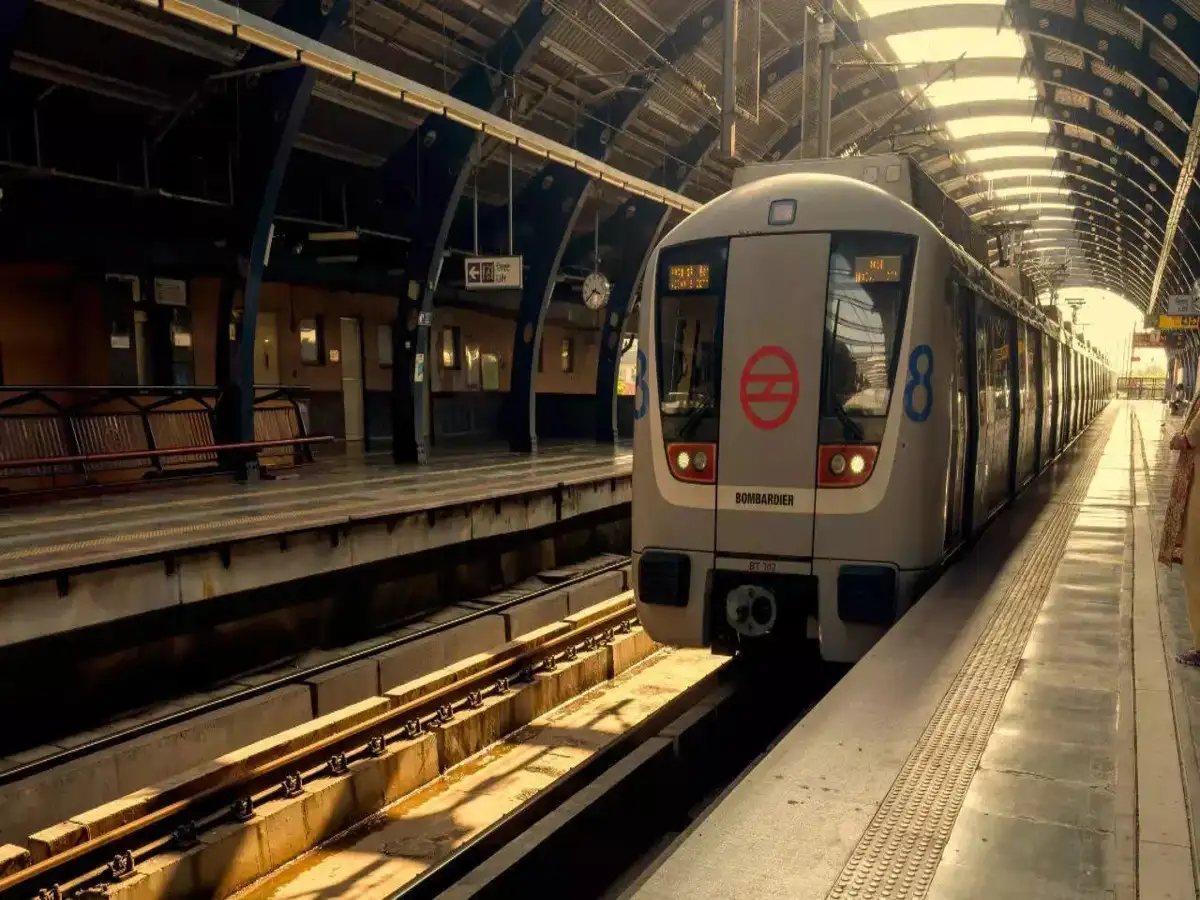
Delhi commuters are set to pay slightly more for their daily journeys as the Delhi Metro Rail Corporation (DMRC) has introduced a fare revision across all 12 operational lines from 25 August. The update, the first in eight years, has marginally raised ticket prices by between ₹1 and ₹4 for most routes, while the Airport Express Line has seen a ₹5 increase.
According to DMRC officials, the longest trip on the network, which earlier cost ₹60, will now be priced at ₹64. The adjustment comes after nearly a decade of stable pricing, the last revision having taken place in 2017. Authorities have described the increase as “minimal” given the rising costs of maintaining and expanding an extensive metro system that now spans 394 kilometres and connects 289 stations.
For a city where over six million passengers rely on the metro daily, the fare change has both financial and social implications. Urban mobility experts note that while the fare rise is modest, it highlights the ongoing tension between affordability and the need to sustain high-quality public infrastructure. The metro remains the most sustainable transport option in Delhi, providing relief from congested roads and reducing emissions by displacing thousands of private vehicles.
Officials further indicated that revenue from the fare revision will support operational efficiency and help in integrating newer, more energy-efficient trains and station facilities. Recent expansions have already added to the capital’s connectivity, and the focus is shifting towards seamless integration with airport infrastructure. In a parallel development, a detailed project report has been finalised for a dedicated metro link connecting Terminal 1 of Indira Gandhi International Airport to Aerocity. This line, set to become part of the upcoming Golden Line, is designed to facilitate faster transfers for passengers moving between domestic and international flights. Authorities said the link would connect Terminal 3 to Terminal 1 in under ten minutes, reducing reliance on road shuttles and cutting emissions further.
The plan was initially proposed by Delhi International Airport Limited, but after years of deliberation, DMRC has revived the idea and submitted a formal design blueprint. Transport experts believe that once implemented, the connection will transform passenger experience at one of the world’s busiest airports, while reinforcing Delhi Metro’s role as a backbone of sustainable mobility in the city. While the fare hike may be a small burden for some commuters, the long-term vision remains centred on balancing affordability with growth. With climate commitments and rising urban populations, expanding and maintaining eco-friendly metro infrastructure is crucial. As Delhi evolves into a megacity of global scale, strengthening mass transit remains essential for creating a greener and more inclusive urban future.