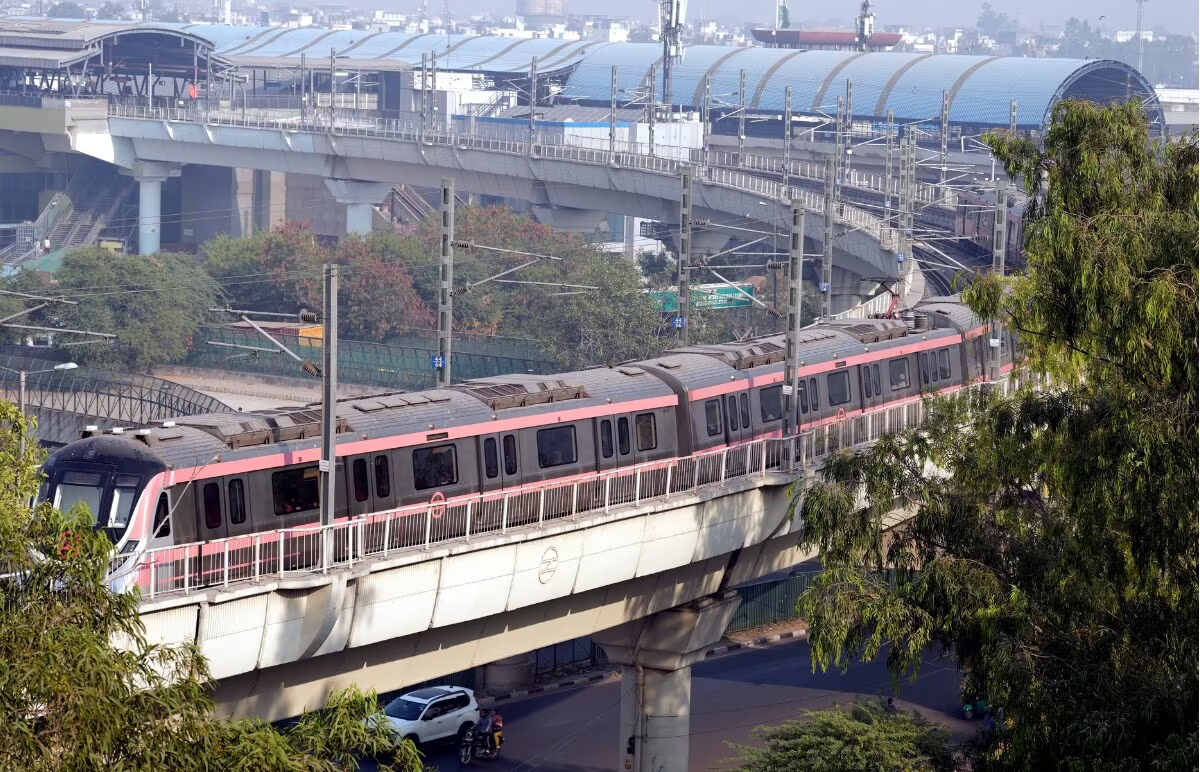
Delhi is moving closer to a significant upgrade in its core transit infrastructure as plans advance for a 9.91-kilometre underground extension of the Magenta Line between Ramakrishna Ashram Marg and Indraprastha. The corridor, designed to run beneath some of the capital’s most congested civic and cultural districts, is being positioned as a structural response to traffic bottlenecks, air pollution and unreliable surface mobility in central Delhi.
The proposed alignment includes nine underground stations serving administrative hubs, legal institutions, tourism precincts and high-density employment zones. Transport planners say the corridor will function as a strategic east–west connector, reducing dependence on road-based transport for commuters travelling across the city’s institutional spine. A senior metro official said the underground routing was selected to minimise disruption to heritage precincts, security zones and dense built-up areas. The design also avoids surface land acquisition, a key constraint in central Delhi, while protecting historic landmarks and government complexes from construction-related disturbance.
Central Delhi currently experiences some of the city’s heaviest traffic volumes, driven by government offices, courts, convention venues and major tourist attractions. Commuters in these zones largely rely on buses, taxis, auto-rickshaws and private vehicles, often leading to unpredictable travel times and chronic congestion. Urban mobility experts note that the absence of a direct metro corridor through this belt has long been a structural gap in Delhi’s transit network. From an environmental standpoint, the project is being framed as part of Delhi’s shift towards low-emission transport. By diverting a substantial share of daily trips from roads to rail, the extension is expected to reduce tailpipe emissions, lower fuel consumption and improve local air quality. Environmental planners caution, however, that the benefits will depend on fare integration, last-mile connectivity and service frequency once the corridor becomes operational.
The extension also carries implications for tourism and civic accessibility. Stations are planned near key landmarks including India Gate, the National War Memorial, Bharat Mandapam and the central secretariat zone, improving access for visitors, event delegates and public sector employees. Hospitality and retail analysts say enhanced metro connectivity in these precincts could support higher footfall, encourage mixed-use redevelopment and stabilise commercial real estate demand.
Real estate consultants add that improved transit access tends to raise land-use efficiency and incentivise transit-oriented development, particularly around underground station zones. “Well-integrated metro corridors reshape urban value maps. Central Delhi has seen limited new supply due to planning constraints, so improved mobility could unlock redevelopment potential in adjacent micro-markets,” said an infrastructure advisor. The corridor forms part of the wider Phase IV expansion of the Delhi Metro, which aims to strengthen inter-line connectivity and extend coverage into underserved districts. Once operational, the stretch is expected to reduce cross-city travel times, ease pressure on arterial roads and improve network resilience during peak hours and major civic events.
Construction is progressing in stages, with engineering teams focusing on tunnel boring, underground station boxes and utility relocation. Authorities say safety, structural integrity and minimal surface disruption remain top priorities, given the sensitivity of the urban environment along the alignment. As Delhi grapples with rising population density, climate stress and mobility inequality, the Magenta Line extension reflects a broader pivot towards people-first, rail-led urban movement. Its long-term impact will be measured not just in ridership numbers, but in cleaner air, reclaimed street space and a more equitable, climate-resilient transit ecosystem for the capital.
Delhi Metro Expansion Reshapes Central Mobility