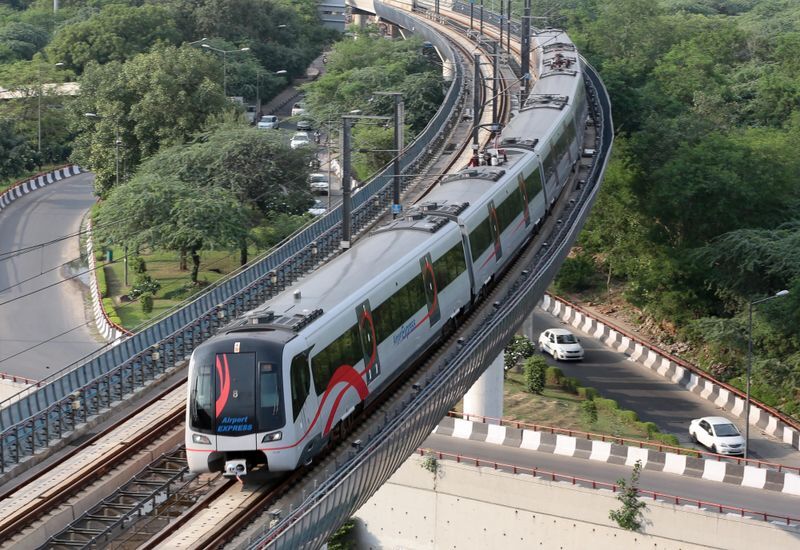
Delhi’s urban transport network has received a major boost with the launch of infrastructure projects valued at more than ₹18,000 crore, centred largely on expanding the capital’s metro rail system and improving connectivity across densely populated neighbourhoods.
The development package, unveiled in the national capital on International Women’s Day, includes the opening of new metro corridors and the initiation of additional transit routes intended to strengthen the city’s public transport backbone. The investment forms part of a broader strategy to ease urban congestion and support mobility in one of the world’s fastest-growing metropolitan regions. Two new corridors have already been commissioned under the Delhi Metro expansion, creating additional links across north and northeast parts of the city. The new routes — spanning approximately 12 kilometres between Majlis Park and Maujpur–Babarpur and around 9 kilometres between Majlis Park and Deepali Chowk — extend metro connectivity into areas that previously depended heavily on road transport.
Urban planners say the new lines could significantly reshape commuting patterns in neighbourhoods such as Wazirabad, Bhajanpura, Yamuna Vihar and Karawal Nagar, which have experienced rapid population growth but limited mass-transit access. By linking these areas to the wider network, the Delhi Metro expansion is expected to shorten travel times, reduce road traffic pressure and improve connectivity to employment hubs across the city. In addition to the operational corridors, authorities have initiated work on three further metro routes under the next phase of network development. These upcoming corridors are designed to integrate outer districts with the existing grid, creating a more continuous and resilient urban transit system capable of supporting Delhi’s long-term population growth.
Public transport infrastructure has become a central element of urban policy in Delhi, where rising vehicle ownership and road congestion continue to challenge mobility and environmental goals. Experts note that expanding high-capacity rail systems is among the most effective ways to manage travel demand in dense cities while lowering emissions associated with private vehicles. The metro system already carries millions of passengers daily, functioning as the backbone of the capital’s mobility ecosystem. Extending the network deeper into residential clusters can also support transit-oriented development — a planning model that encourages compact neighbourhoods, pedestrian accessibility and mixed-use growth around transit hubs.
Officials associated with the programme say the latest infrastructure rollout reflects the increasing emphasis on building safer and more accessible public transport, particularly for women commuters. Improved connectivity and well-lit transit stations are often seen as critical factors in encouraging broader public transport usage. Beyond mobility, the projects underscore how large-scale infrastructure investments are shaping the economic geography of the capital. New metro stations frequently stimulate commercial activity, real estate development and service sector growth in surrounding areas.
As the city continues to expand outward, transport planners view metro connectivity as essential for maintaining economic productivity while improving quality of life. With further corridors already planned, the latest investments suggest that mass transit will remain a cornerstone of Delhi’s long-term urban development strategy.