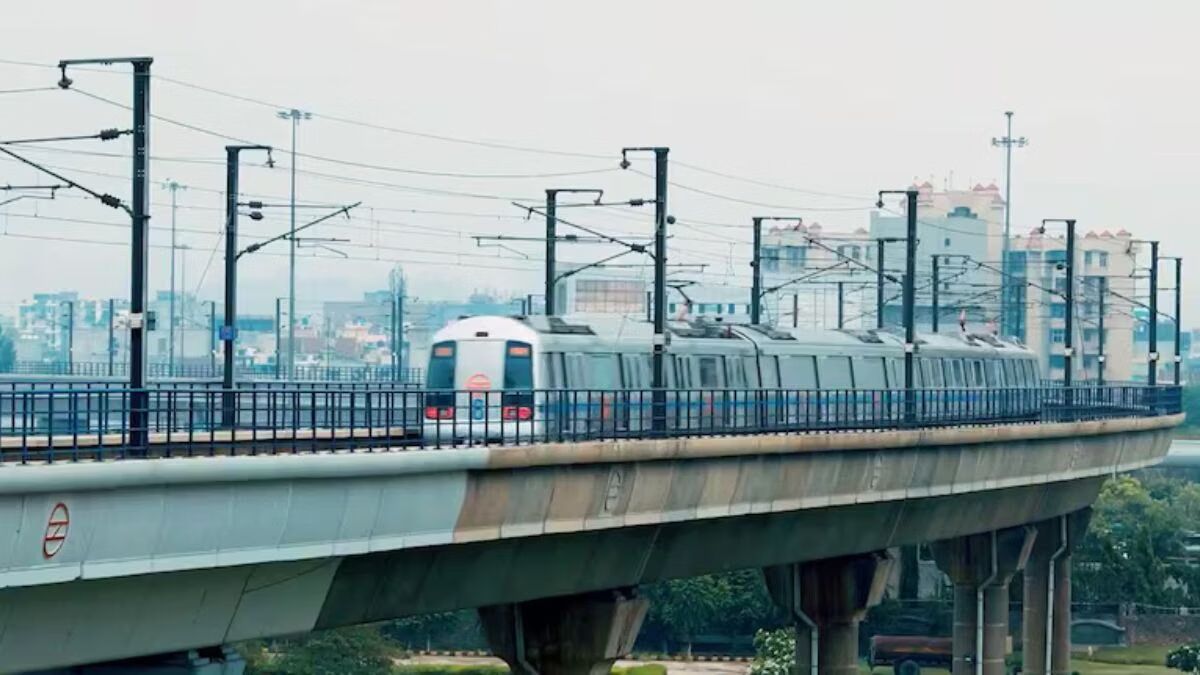
Delhi Metro Expansion Anchors ₹33500 Crore Infra Push
India’s capital is set for a major boost to its transport infrastructure as a package of projects worth about ₹33,500 crore moves forward, with the Delhi Metro expansion emerging as the central component of the programme.
The initiative includes the launch of new metro corridors and the foundation of additional routes designed to strengthen connectivity across the rapidly growing National Capital Region. A significant portion of the investment is directed toward expanding the Delhi Metro network, widely regarded as the backbone of urban mobility in the capital. Two new metro corridors are scheduled to be opened, while foundation stones will be laid for additional lines under the next phase of network development. The newly operational corridors include a 12.3-kilometre extension of the Pink Line between Majlis Park and Maujpur-Babarpur and a 9.9-kilometre stretch of the Magenta Line connecting Deepali Chowk with Majlis Park.
These additions are expected to improve transit access across north, east and northwest Delhi, linking dense residential neighbourhoods with major transport nodes. Urban transport planners say the Delhi Metro expansion is crucial for managing the city’s growing population and traffic congestion. As Delhi’s metropolitan region continues to expand into surrounding districts and satellite cities, the demand for efficient mass transit systems has intensified. Metro corridors provide high-capacity transport while reducing dependence on private vehicles and road-based travel. Beyond the two corridors being inaugurated, authorities will also begin work on three additional metro routes under Phase V-A of the network plan. These include a corridor linking Ramakrishna Ashram Marg with Indraprastha, another connecting Aerocity to Indira Gandhi Airport Terminal-1, and an elevated route between Tughlakabad and Kalindi Kunj.
Together, these corridors add around 16 kilometres of new track to the system’s future expansion pipeline. Infrastructure analysts view the programme as part of a broader urban development strategy focused on integrated transport networks. In dense megacities like Delhi, metro systems play a critical role in reducing road congestion, lowering pollution levels and supporting transit-oriented development around station areas. The investment package also includes the redevelopment of government residential colonies and other urban infrastructure initiatives across the city. These projects aim to modernise housing and public facilities while complementing improvements in mobility infrastructure.
For commuters, the expanded metro network could significantly shorten travel times between northern and eastern parts of the city and strengthen connections to key employment zones. Improved transit links are also expected to support economic activity by making commercial districts more accessible and encouraging development near metro stations. Transport experts note that Delhi’s metro system has already become one of the largest rapid transit networks in the world, carrying millions of passengers daily. Continued investment through projects such as the Delhi Metro expansion will be essential to maintain mobility efficiency in a metropolitan region where urban growth and vehicle ownership continue to rise.
As construction progresses on upcoming lines and stations, the success of the expansion will depend on seamless integration with buses, regional rail and emerging rapid transit systems across the wider NCR. If implemented effectively, the new corridors could help shape a more sustainable and transit-oriented urban future for the capital.