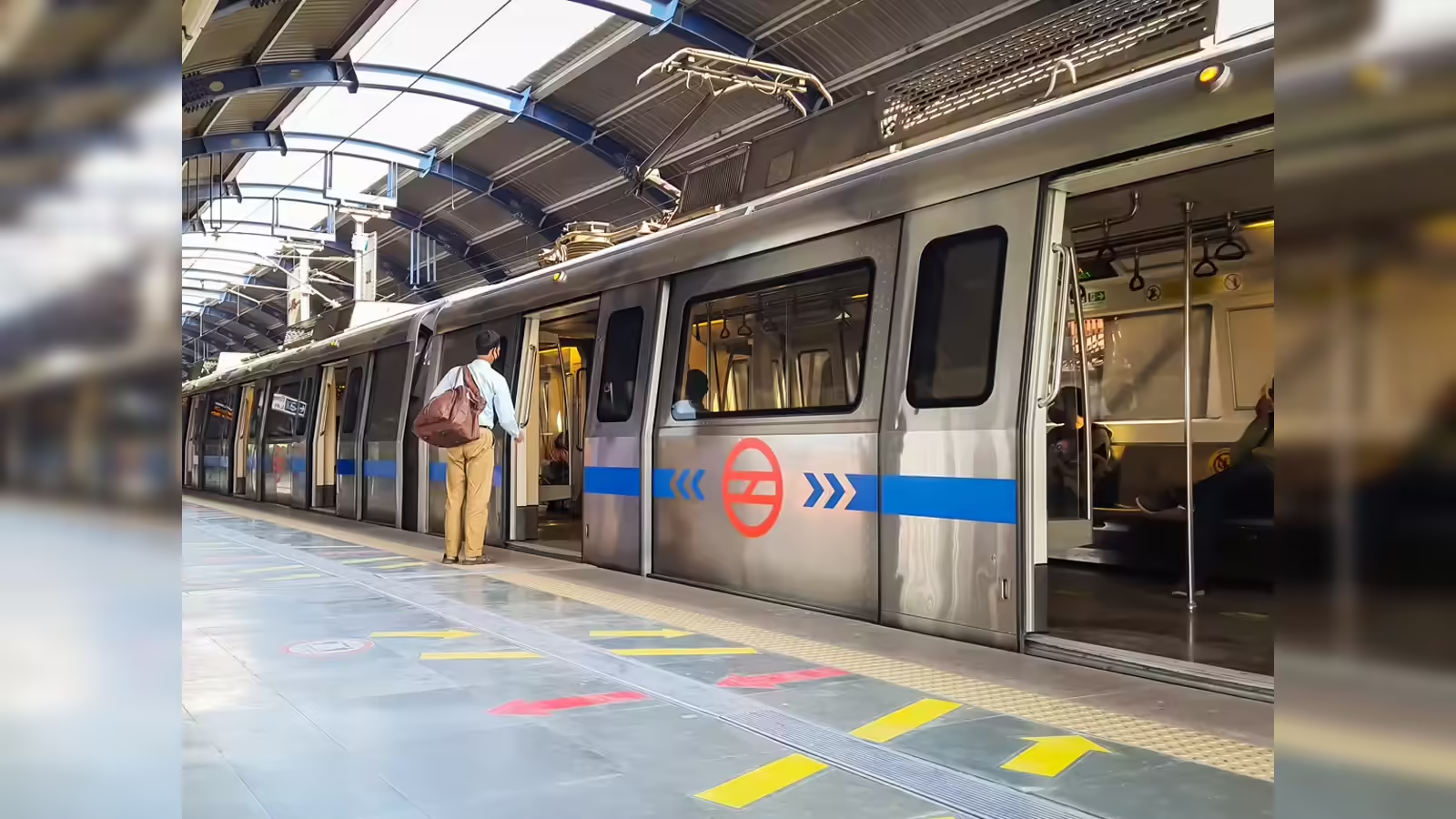
Delhi’s mass rapid transit network is embedding artificial intelligence into daily operations, signalling a shift in how public infrastructure is managed in one of the world’s busiest urban corridors. The Delhi Metro Rail Corporation (DMRC) has rolled out AI-enabled systems across passenger services, safety monitoring and operational planning, positioning the network as a test case for AI in public transport.
At the commuter interface level, DMRC has introduced an AI-based virtual assistant that allows passengers to interact in natural language rather than through fixed menu commands. The tool processes conversational queries, recognises approximate station references and supports multiple languages, widening access for first-time users and non-English speakers. By integrating voice capability and contextual error correction, the system reduces friction in journey planning across a network that carries millions each day. Transport analysts say such AI adoption improves inclusivity and reduces cognitive load for passengers, particularly in a city where travel patterns are complex and multimodal transfers common. Real-time fare information, route mapping and service updates are now delivered through adaptive algorithms rather than static databases.
Operationally, the most visible application of Delhi Metro AI is in crowd management. Platform displays on select corridors now show estimated coach occupancy before trains arrive. Depending on the line, this is calculated either through load-based measurement systems that assess carriage weight or through AI-powered video analytics that count passenger volumes via CCTV feeds. The objective is to distribute boarding patterns and ease peak-hour congestion.
Security systems have also moved towards predictive monitoring. Intelligent video software scans live feeds to detect unusual crowd density, track intrusions and unattended baggage. Alerts are automatically routed to station control rooms, enabling faster intervention. At baggage screening points, upgraded scanners use machine learning models to flag potentially hazardous objects, supplementing manual checks.
Urban mobility experts note that these deployments extend beyond convenience. Efficient crowd flow reduces dwell time and energy use, indirectly supporting lower-carbon transport outcomes. Better surveillance analytics also minimise disruptions, which can have cascading economic costs in high-density business districts. The corporation is further expanding digital integration through its mobile application, which now includes parking availability, digital payments and on-site commercial services. Officials indicate that future upgrades may include automated grievance systems capable of processing complaints and triggering backend action without manual routing.
A proposed centralised data hub is expected to consolidate operational datasets for predictive maintenance and policy modelling. For a city confronting pollution, traffic congestion and rising commuter demand, the integration of Delhi Metro AI underscores a broader trend: infrastructure is no longer defined solely by steel and concrete but by data architecture. The next phase will test whether algorithm-driven systems can scale transparently and equitably as Delhi’s urban footprint continues to expand.
Delhi Metro Expands AI Driven Services