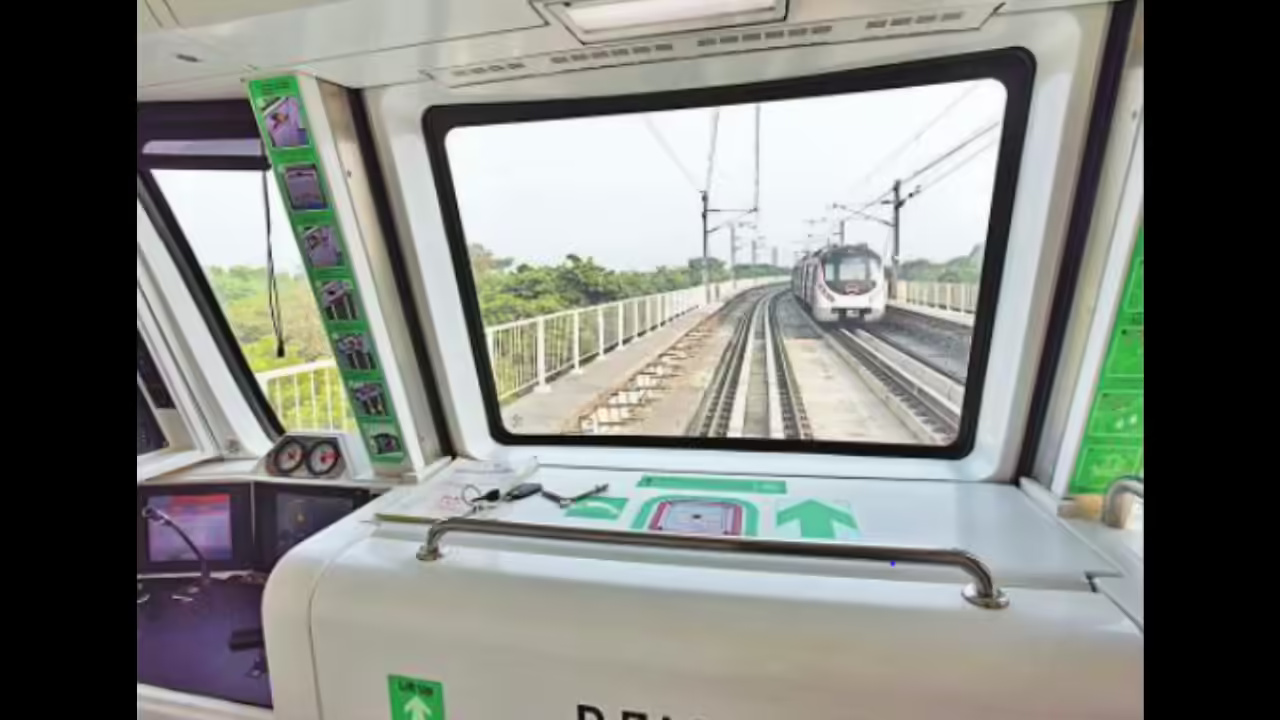
Delhi Metro Driverless Trains Planned For New Corridor
Delhi’s urban transport network is preparing for a significant technological upgrade as authorities move ahead with plans to expand the Delhi Metro driverless network under the system’s Phase IV development programme. The initiative includes the addition of new train sets for a key corridor extension, reinforcing the city’s shift towards automated metro operations aimed at improving efficiency, safety and long-term capacity. Officials associated with the project indicate that 90 new standard-gauge metro cars will be introduced as part of the expansion. These vehicles will operate in fifteen six-coach train formations and are expected to serve a corridor linking Inderlok and Indraprastha, a strategic stretch within the broader network upgrade plan.
The Delhi Metro driverless network is designed to operate using advanced signalling and automation systems that allow trains to function without onboard drivers while maintaining continuous centralised supervision. Such technology, widely adopted in several global metro systems, is intended to improve service reliability while optimising operational efficiency. Transport planners say the project is also supported through international financing arrangements that help fund large urban infrastructure programmes. Funding partnerships of this kind have historically played a role in the capital’s metro expansion, enabling the city to build one of the largest rapid transit networks in the world. The upcoming corridor will form part of a wider extension of an existing metro line, which is expected to eventually become the longest route in the Delhi network. Urban mobility experts note that longer continuous corridors allow passengers to travel across multiple parts of the city without transfers, reducing commuting time and improving overall system convenience. Infrastructure analysts say the continued expansion of the Delhi Metro driverless network reflects the increasing importance of automation in large transit systems. Automated operations can enable shorter intervals between trains, improve scheduling flexibility and support higher passenger volumes during peak hours.
The expansion also highlights how metro rail systems are evolving to support the demands of rapidly growing urban populations. Delhi’s metro network already serves millions of daily passengers and remains one of the most critical components of the capital’s public transport ecosystem. Urban planners emphasise that metro rail networks play a central role in reducing dependence on private vehicles, helping cities cut traffic congestion and lower carbon emissions. Electrified rail transport is widely viewed as a cornerstone of climate-conscious urban mobility strategies. The upcoming corridor will also feature complex engineering elements, reflecting the technical challenges of building transit infrastructure in dense urban environments. Stations across the existing network already include some of the deepest underground facilities and high-elevation structures designed to navigate crowded city landscapes. For commuters, the continued rollout of the Delhi Metro driverless network is expected to improve service frequency and network connectivity as new sections become operational. For planners, it represents another step toward building a modern, automated and sustainable transit system capable of supporting Delhi’s long-term urban growth.
As Phase IV progresses over the coming years, the project will further expand the reach of automated metro technology, shaping how millions of residents travel across the capital’s evolving metropolitan landscape.