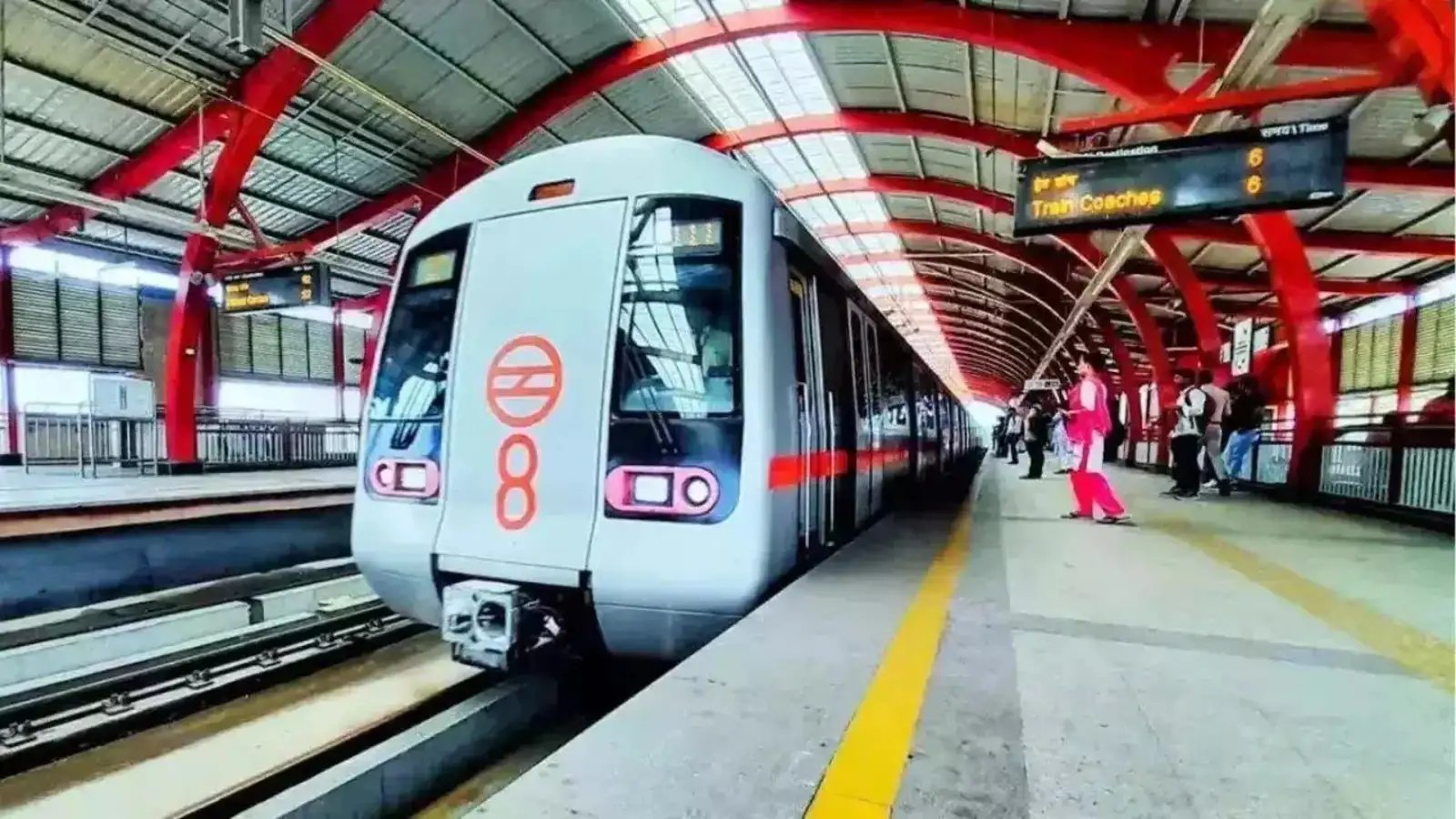
Urban mobility planners in the national capital are exploring a new connector beneath an elevated metro corridor in south Delhi, a move aimed at easing congestion and improving public transport access in one of the city’s densely built neighbourhoods. Authorities have begun preparing a feasibility assessment for a road link that would run below the metro structure, potentially strengthening last-mile connectivity between a major arterial road and a key transit station. The proposed metro viaduct road would extend for roughly 900 metres and connect Maa Anandmayee Marg with Harkesh Nagar Metro station. The Public Works Department has initiated the process of preparing a detailed project report to examine the engineering, traffic and urban design implications of constructing the road under the elevated rail corridor.
Although modest in length, the project is considered strategically significant for the surrounding urban fabric. Maa Anandmayee Marg serves as an important north–south route linking south Delhi with adjoining districts in Haryana, while the nearby metro station forms a critical interchange point for residents, workers and industrial commuters travelling across the city’s southern corridor. At present, access between the arterial road and the station relies on a network of narrow internal streets that are frequently congested with mixed traffic, informal parking and pedestrian movement. Urban mobility experts say these fragmented routes create delays for commuters and add pressure to nearby neighbourhood roads. A metro viaduct road could offer a more direct approach to the transit station while dispersing traffic more efficiently. Officials involved in the early planning stages say the feasibility study will examine structural clearances under the metro line, traffic circulation patterns and pedestrian safety considerations. Integrating the proposed link with existing public transport systems is also expected to be a priority, particularly in areas where metro infrastructure intersects with residential colonies and industrial clusters.
South Delhi’s Okhla–Tughlakabad belt, located near the proposed corridor, has evolved into a complex mix of residential settlements, small-scale industries and institutional facilities. As economic activity and population density have increased, transport planners have been seeking ways to enhance connectivity without expanding the road footprint significantly. Building a metro viaduct road beneath existing infrastructure is increasingly seen as a space-efficient solution in land-constrained urban environments. Urban development analysts note that several Indian cities are experimenting with using the space under elevated transport corridors for mobility projects, pedestrian walkways, parking zones and public utilities. When carefully designed, such projects can improve circulation while also activating otherwise underused urban spaces. If the feasibility study confirms technical and operational viability, the connector could reduce detours currently faced by commuters travelling to the metro station. The project may also help ease congestion on nearby local streets, improving safety for pedestrians and cyclists who navigate the area daily.
For Delhi’s expanding transit network, initiatives like the proposed metro viaduct road illustrate how transport agencies are beginning to integrate infrastructure layers more closely. As the city continues to invest in public transport and transit-oriented development, improving last-mile connectivity will remain a central challenge shaping the future of sustainable urban mobility.