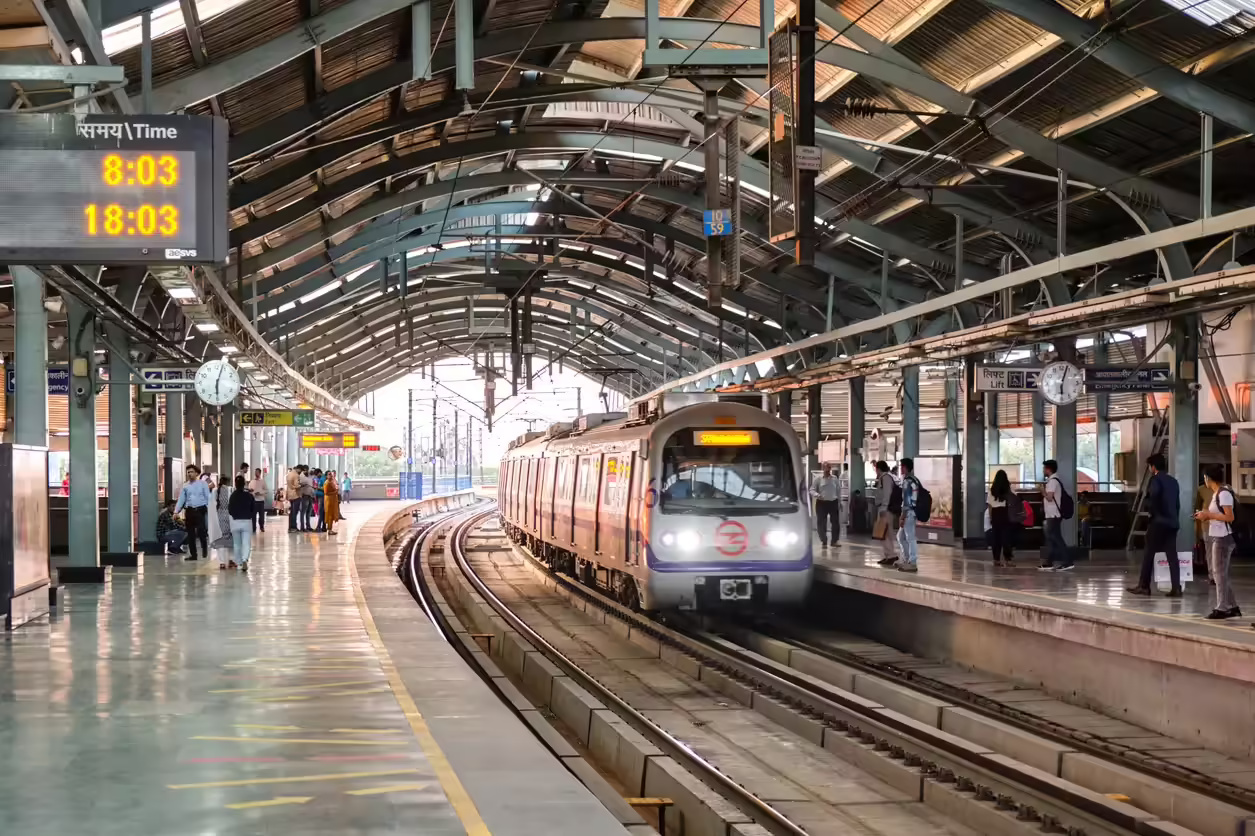
Delhi Metro Builds Interchange Connectivity Network
Delhi’s expanding metro network is set to become easier to navigate, with new infrastructure planned across multiple interchange stations to reduce transfer time and improve accessibility. The upgrades, part of the capital’s Phase III metro expansion, focus on integrating newer corridors with older lines—an essential step as passenger volumes continue to rise in one of the world’s largest rapid transit systems. The plan centres on strengthening interchange connectivity across 14 stations, where new corridors intersect with existing routes. These stations form critical nodes linking circular metro lines with radial ones, allowing passengers to move across the city without long detours.
Urban transport experts say such integration is key to improving network efficiency, especially in dense cities where multimodal travel is the norm. To enable smoother movement, the project includes a mix of pedestrian infrastructure such as foot overbridges, underground walkways, ramps, and mechanised travelators. Together, these elements will span several kilometres, designed to minimise physical strain and walking distances within large stations. At high-traffic locations, extended corridors equipped with moving walkways are expected to support passengers carrying luggage or navigating tight schedules, including those connecting to airport services. In stations where structural differences exist—such as elevated lines intersecting with underground corridors—design solutions are being tailored to site conditions. This includes long escalators, graded ramps, and dedicated pedestrian pathways that ensure continuity without disrupting passenger flow. In fully integrated stations, seamless transitions between lines aim to eliminate the need for exiting and re-entering fare zones, improving commuter convenience and reducing congestion at entry points. Urban planners highlight that such investments go beyond passenger comfort.
Efficient interchange design can significantly increase public transport adoption by making journeys more predictable and less time-consuming. This has wider implications for reducing road congestion, lowering transport-related emissions, and supporting more sustainable urban growth patterns. For a city like Delhi, where air quality and traffic density remain persistent challenges, improving metro usability is closely tied to environmental and public health outcomes. Another notable feature is the introduction of intuitive navigation systems within interchange zones. Colour-coded pathways and clear directional signage are being deployed to assist first-time users and reduce confusion in complex station layouts. This aligns with global best practices in transit design, where ease of navigation is considered central to user experience. Officials indicate that the upgrades are also aimed at future-proofing the network. As new metro phases are planned and additional corridors come online, the ability to handle higher passenger volumes at interchange points will become increasingly important. Well-designed interchanges can serve as anchors for transit-oriented development, influencing real estate patterns and encouraging denser, mixed-use growth around stations.
The Delhi Metro interchange connectivity upgrades mark a shift towards more integrated and user-focused transit infrastructure. As implementation progresses, the effectiveness of these interventions will be measured not just in reduced transfer times, but in how seamlessly the network supports the daily movement of millions across the city.