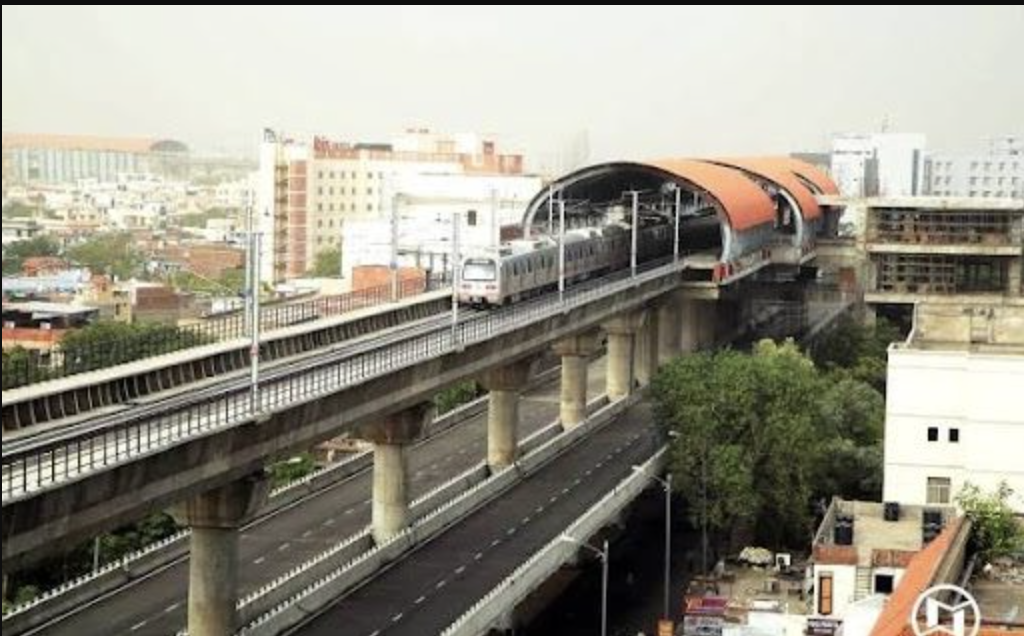
Delhi’s urban transport landscape is entering a new phase as the city prepares to operationalise multiple double decker viaducts that integrate metro rail infrastructure with elevated roadways. The projects, now at advanced stages of construction, are part of the capital’s long-term strategy to manage congestion, optimise limited road space, and improve public transport access across densely populated neighbourhoods.
The first of these structures, located in northeast Delhi, is ready to support metro train movement on its upper deck as safety inspections and trial runs reach completion. While rail operations are technically prepared, work is continuing on the lower-level road ramp that will allow vehicles to use the structure. Officials indicated that pending environmental clearances had delayed this component, but construction is now underway and expected to conclude within the year. Once operational, the corridor will complete a key missing link on an orbital metro route, improving cross-city connectivity without requiring passengers to travel through the city centre. Urban planners view the double decker viaduct model as a pragmatic response to Delhi’s spatial constraints. By stacking transport infrastructure vertically, the city avoids extensive land acquisition while reducing disruptions at street level. This approach is particularly significant in older, high-density areas where widening roads or adding new corridors is both socially and environmentally costly.
A second, longer double decker viaduct in north-west Delhi is also progressing steadily. Foundation works and elevated span installation are currently underway, with the structure expected to be ready for use later this year. This corridor forms part of a larger metro expansion that will open in stages, extending rail access to growing residential and commercial zones while easing pressure on arterial roads. The most ambitious of the projects is a third double decker viaduct under construction in south Delhi, which will be the longest of its kind in the city. Integrated piers supporting both road and rail infrastructure are being built simultaneously, reflecting a shift towards coordinated urban design rather than sequential construction. Experts note that such integration reduces construction timelines, limits carbon-intensive rework, and improves long-term asset performance.
These viaducts are central to the current phase of metro expansion, which envisages more than 100 kilometres of new corridors and dozens of stations across the capital. Alongside large corridors, smaller lines designed for short-distance urban travel are also being introduced, signalling a move towards more demand-responsive public transport planning. From a sustainability perspective, transport analysts highlight that prioritising metro expansion over road-only solutions can deliver long-term emissions benefits. Elevated rail corridors powered by electricity, when combined with efficient last-mile road design, help shift commuters away from private vehicles while maintaining mobility.
As construction advances on remaining corridors approved for the next phase, attention is now turning to timely execution and integration with bus services, walking infrastructure, and urban redevelopment plans. If aligned effectively, Delhi’s double decker viaduct programme could become a reference point for other Indian cities grappling with growth, congestion, and climate resilience.
Delhi Metro Builds Double Decker Viaduct Network