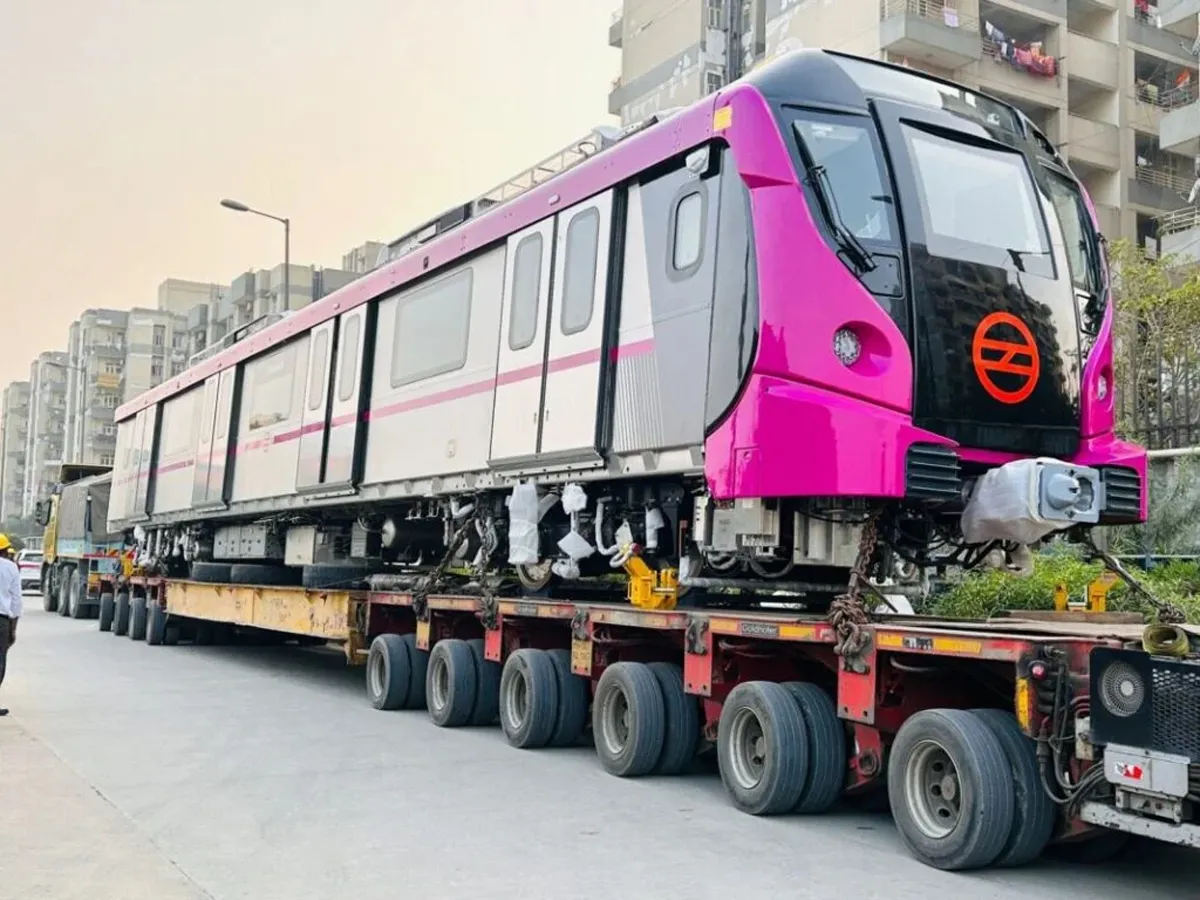
Delhi Metro has initiated major civil construction on an 8.385-kilometre elevated corridor of its Golden Line under Phase IV, marking a significant milestone in the capital’s evolving mass transit expansion. The new stretch, connecting Saket G-Block with Lajpat Nagar, is the first non-priority Phase IV corridor to move into full-scale construction, underlining renewed momentum in Delhi’s long-term mobility strategy and South Delhi’s infrastructure-led transformation.
The ground-breaking activity follows the completion of preparatory surveys and approvals, with the first test pile recently carried out near Saket. A senior official involved in the project described the exercise as the foundation for visible construction work, signalling the transition from planning to execution. Once operational, the corridor is expected to ease pressure on congested arterial roads and shorten commute times across some of South Delhi’s most densely populated neighbourhoods.The Golden Line corridor will feature eight stations, strategically placed to serve residential clusters, institutional zones, commercial centres and government offices. Urban planners note that areas such as Greater Kailash, Pushp Vihar and Saket have long faced limited last-mile rail connectivity despite high daily travel demand.
The new alignment is expected to bridge that gap, offering a reliable alternative to private vehicles and app-based transport services.Crucially, the corridor has been designed with network integration at its core. It will connect with the Magenta Line at Chirag Delhi and intersect the Violet and Pink Lines at Lajpat Nagar, which is set to emerge as a major interchange hub. Transport analysts suggest such interchange-led planning improves ridership efficiency, reduces travel costs for commuters, and strengthens the economic logic of metro investments.
Beyond mobility, the Golden Line reflects a broader urban development narrative. Public transport-led growth is increasingly viewed as essential to Delhi’s climate resilience goals, with metro expansion helping to curb vehicular emissions, reduce fuel consumption and support equitable access to jobs and services. A transport policy expert observed that elevated corridors, when carefully planned, minimise land acquisition while accelerating project delivery in built-up urban zones.
Delhi Metro already operates India’s largest metro network, and Phase IV aims to reinforce its role as the backbone of sustainable urban movement. While construction will inevitably cause short-term disruption, city officials emphasise that long-term benefits cleaner air, safer commuting, and inclusive access outweigh temporary inconveniences. As Delhi continues to grapple with congestion, pollution and spatial inequality, projects such as the Golden Line underscore how infrastructure investment, when aligned with sustainability and social inclusion, can quietly reshape the everyday experience of urban life.
Delhi Metro Begins 8385 Km Golden Line Phase Four Civil Works Segment