Delhi’s central administrative district is set to face temporary transport and access restrictions this week as authorities prepare for rehearsals and security arrangements linked to the annual Beating Retreat ceremony. The coordinated closures of select metro exits and arterial roads underline the complex challenge of managing national events within one of India’s most densely used urban cores.
Transport officials confirmed that specific exit gates at two of central Delhi’s busiest interchange stations will remain inaccessible during fixed afternoon hours on January 28 and 29. The closures are designed to manage pedestrian movement near ceremonial zones while allowing train services to operate normally. However, the restrictions are expected to affect thousands of daily commuters who rely on these stations for access to government offices, commercial hubs, and civic institutions.
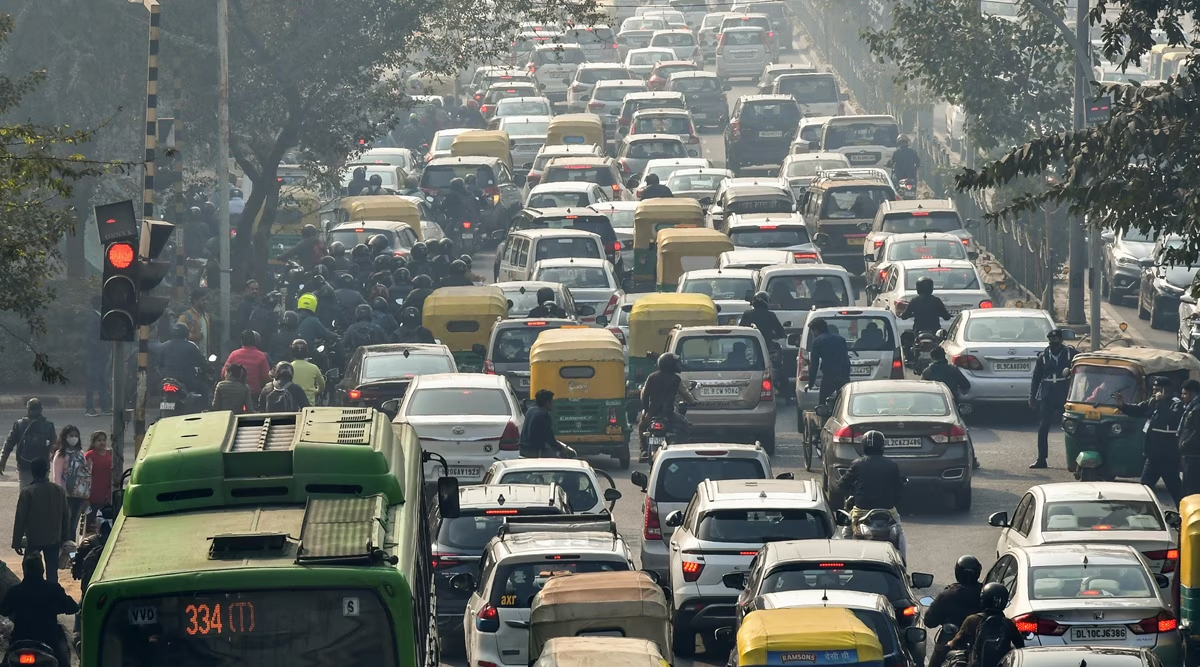
Alongside metro adjustments, traffic authorities are enforcing road curbs in and around Vijay Chowk during rehearsal windows. These measures, though limited in duration, highlight how ceremonial security protocols continue to reshape everyday mobility in the capital. For office-goers, service workers, and informal sector employees operating in central Delhi, even short disruptions can translate into longer commutes and lost productive hours. Urban mobility planners say such episodes reveal the delicate balance between national security requirements and people-first transport planning. Central Delhi is uniquely sensitive because it combines high-capacity transit infrastructure with symbolic public spaces and dense employment clusters. “Unlike peripheral event venues, this area cannot be sealed without ripple effects across the wider transport network,” said an urban transport expert familiar with city operations.
Authorities have increased security screening across the metro network until the end of the ceremonial period, advising passengers to factor in additional waiting time. While enhanced checks are standard protocol, transport analysts note that clear communication and predictable schedules are crucial to preventing congestion spillovers at adjacent stations and roads. From an environmental perspective, temporary road restrictions can have mixed outcomes. Reduced vehicular movement in controlled zones may lower local emissions, but diversion traffic often increases congestion and fuel consumption elsewhere. Cities pursuing climate-resilient mobility systems increasingly view such events as stress tests for public transport resilience rather than exceptional disruptions.
The situation also carries implications for central Delhi’s commercial real estate and institutional ecosystem. Government complexes, embassies, media offices, and service providers operate within a narrow mobility envelope that depends heavily on metro access. Even partial closures reinforce the importance of decentralised office districts and flexible work arrangements in reducing pressure on ceremonial cores. As Delhi continues to host large-scale national events within an evolving urban landscape, planners argue that lessons from each cycle should feed into better crowd management design, station exit planning, and multimodal coordination. The immediate focus remains on ensuring smooth rehearsals and public safety, but the longer-term challenge is clear: enabling the capital to celebrate national traditions without compromising everyday urban movement.
Delhi Metro And Roads Face Central Closures