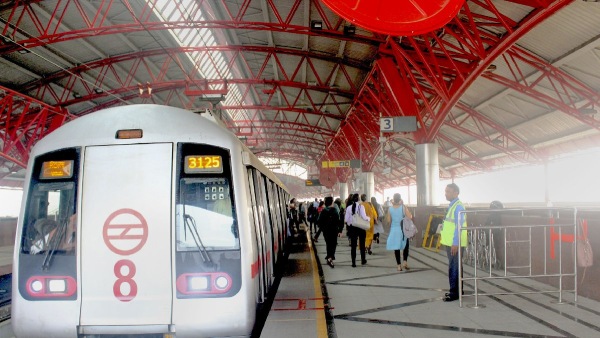
Commuters using central Delhi’s metro network will need to recalibrate travel plans this week as temporary access restrictions come into force around key government district stations. The Delhi Metro Rail Corporation has announced controlled movement at select stations to support security arrangements linked to the annual Beating Retreat Ceremony, a high-profile civic event that draws large public and official attendance.
According to officials familiar with the arrangements, specific exit routes at Udyog Bhawan and Central Secretariat metro stations will remain inaccessible during afternoon hours on two consecutive days. The restrictions are designed to regulate pedestrian movement near ceremonial venues and arterial roads, an approach commonly adopted during major national events in the capital’s administrative core. While train operations will continue as scheduled, commuters exiting towards Rafi Marg from the affected stations will be required to use alternate exits or nearby stations. Other access points within the same stations are expected to function subject to evolving security protocols, with on-ground staff guiding passengers during peak movement hours.
Urban mobility experts note that even short-duration access changes in central Delhi can have outsized ripple effects. The area hosts a dense concentration of offices, ministries, cultural institutions, and commercial establishments, many of which rely heavily on metro connectivity to limit private vehicle use. “The metro plays a critical role in keeping ceremonial zones accessible without choking surrounding roads,” said a transport planner involved in city mobility assessments. “Advance advisories are essential to prevent modal shift back to cars and taxis.”
The Delhi Metro advisory Beating Retreat also underscores how public transport agencies increasingly function as partners in citywide security and crowd management strategies. Coordinated planning between transit operators, civic authorities, and law enforcement has become a recurring feature of managing large-scale events in megacities, balancing safety requirements with commuter convenience. From an environmental perspective, maintaining uninterrupted rail services during such events helps limit additional emissions that would otherwise result from road diversions and traffic congestion. Analysts point out that predictable, well-communicated transit adjustments support climate-resilient urban systems by keeping public transport reliable even during exceptional circumstances.
For office-goers, service staff, and visitors to central Delhi, the advisory highlights the importance of time-buffered travel and flexible routing. Metro officials have advised passengers to monitor station announcements, follow guidance from personnel, and allow extra time when navigating restricted exits. As the city prepares for the ceremonial close of Republic Day celebrations, the Delhi Metro advisory Beating Retreat serves as a reminder of the operational complexity involved in running a high-capacity transit network through a secure administrative district. The effectiveness of these temporary measures will likely be judged by how seamlessly commuters move through the system with minimal disruption and clear information while ensuring public safety remains uncompromised.
Delhi Metro Advisory Highlights Event Day Disruptions