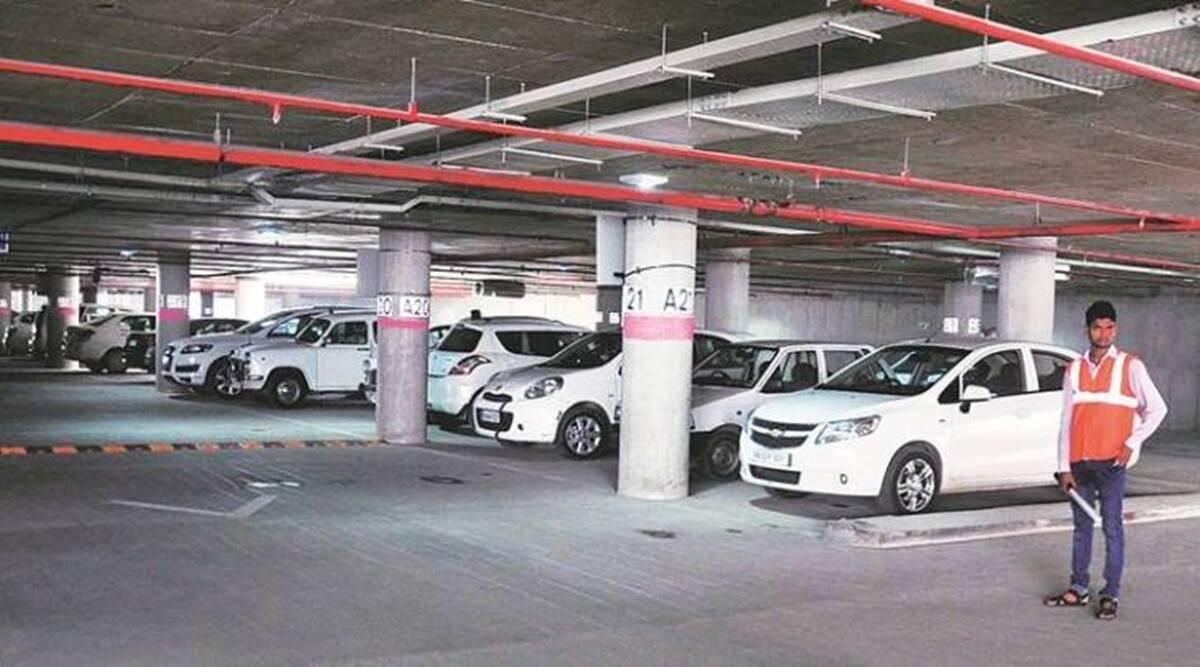
Delhi’s civic administration has proposed a ₹775 crore expansion of structured parking infrastructure, outlining plans for nine new multilevel facilities across key commercial and residential districts. The move comes as the capital grapples with rising vehicle density and shrinking curbside space, intensifying pressure on neighbourhood streets and market areas.
The Delhi MCD multilevel parking plan aims to create capacity for more than 4,400 additional vehicles, lifting the corporation’s total managed four-wheeler capacity by roughly 40 per cent. According to officials familiar with the submission placed before the city government, the proposed sites span central, west and east Delhi, targeting high-footfall markets and arterial corridors. The largest facility is proposed along Idgah Road in the Sadar Paharganj area, where a vacant municipal parcel is slated for redevelopment into a commercial-cum-parking complex. With provision for over 2,000 cars, the project alone accounts for nearly half of the total estimated investment.
Urban planners say such high-capacity nodes are intended to reduce illegal on-street parking that constricts carriageways and emergency access. In west Delhi, multiple smaller automated parking blocks are under consideration near cinema and retail hubs in Janakpuri and Vikaspuri, as well as along Club Road in Punjabi Bagh and near a major public hospital. East Delhi locations including Nand Nagari and Babarpur have also been identified, reflecting attempts to distribute infrastructure beyond established commercial centres. Delhi currently has more than 7.7 million registered vehicles, the highest in the country. Yet land availability remains constrained, particularly in planned colonies built decades ago when car ownership was significantly lower. Transport economists argue that structured parking, if integrated with pricing reforms and enforcement, can help rationalise road space and improve traffic flow.
However, the Delhi MCD multilevel parking plan also raises broader policy questions. Despite a notified parking management framework, several provisions related to dynamic pricing, demand-based allocation and pedestrian-first street design remain partially implemented. Experts caution that expanding supply without parallel public transport incentives could risk encouraging additional private vehicle use. Civic officials indicate that parking and conversion charges collected over the years may be channelled into funding the new facilities. Separately, a six-level parking structure at Nehru Place, developed by the city’s development authority at a cost of over ₹62 crore, is scheduled to be inaugurated. The 660-car facility includes electric vehicle charging points, automated ticketing and surveillance systems, signalling a gradual shift towards technology-enabled management.
For a city confronting air pollution and congestion, the effectiveness of the Delhi MCD multilevel parking plan will depend on how it aligns with metro connectivity, bus corridors and last-mile access. Urban mobility specialists suggest that parking infrastructure must support, not undermine, Delhi’s transition towards low-carbon transport and more walkable public spaces. As proposals move through administrative approvals, the challenge will be balancing immediate parking demand with long-term climate resilience and equitable street use.
Delhi MCD Plans Nine Multilevel Parking