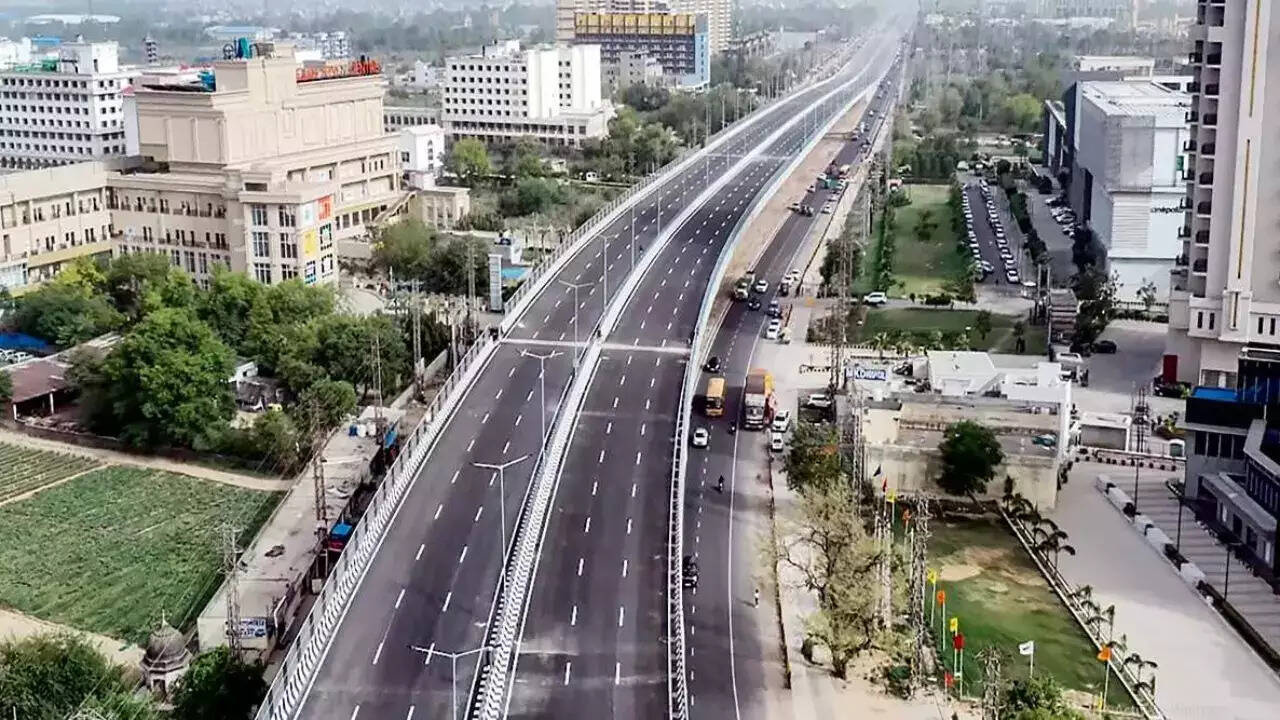
A major road infrastructure upgrade is set to reshape traffic movement in South Delhi, as authorities advance plans for a high-capacity elevated corridor along the Mehrauli–Badarpur stretch. The MB Road elevated corridor project, backed by a significant public investment, is expected to address long-standing congestion issues on one of the capital’s busiest urban routes. Designed as a multi-lane elevated structure with supporting underpasses, the project aims to improve traffic flow across densely populated neighbourhoods that have seen rapid growth over the past decade. Officials involved in the planning process indicate that existing road capacity has struggled to keep pace with rising vehicular volumes, resulting in frequent bottlenecks and extended travel times for daily commuters.
The MB Road elevated corridor will be developed in coordination with metro infrastructure, reflecting a broader push towards integrated transport planning. By aligning road expansion with existing and upcoming rail corridors, authorities are seeking to optimize land use and improve connectivity across multiple transport modes. Urban mobility experts view such integration as critical to reducing dependence on private vehicles and improving the efficiency of city-wide transport networks. In addition to easing congestion, the project is expected to deliver economic and environmental benefits. Smoother traffic movement can lead to lower fuel consumption and reduced emissions, particularly in high-density corridors where idling vehicles contribute significantly to air pollution. For businesses and residents, improved connectivity may enhance accessibility to commercial hubs and residential areas, potentially influencing real estate dynamics along the corridor. The design also incorporates safety and operational efficiency considerations, including grade separation at key intersections and improved traffic management systems. Planners suggest that these features could reduce accident risks and enhance overall travel reliability.
A subsequent phase of the project is expected to further expand capacity through additional elevated links, strengthening connectivity across adjoining zones. However, infrastructure specialists caution that large-scale road expansion must be complemented by parallel investments in public transport and pedestrian infrastructure. Without such measures, there is a risk that increased road capacity could eventually attract more vehicles, offsetting initial gains in travel time and congestion reduction. The project reflects a continuing trend in Indian cities where urban growth is driving demand for high-capacity transport corridors. At the same time, it highlights the challenge of balancing infrastructure expansion with sustainability goals, particularly in cities facing air quality concerns and limited urban space.
As implementation progresses, the effectiveness of the MB Road elevated corridor will depend on execution timelines, coordination between agencies and its integration with broader mobility strategies. For South Delhi, the project represents both an immediate response to congestion and a test case for how infrastructure investments can support more efficient and resilient urban development.