


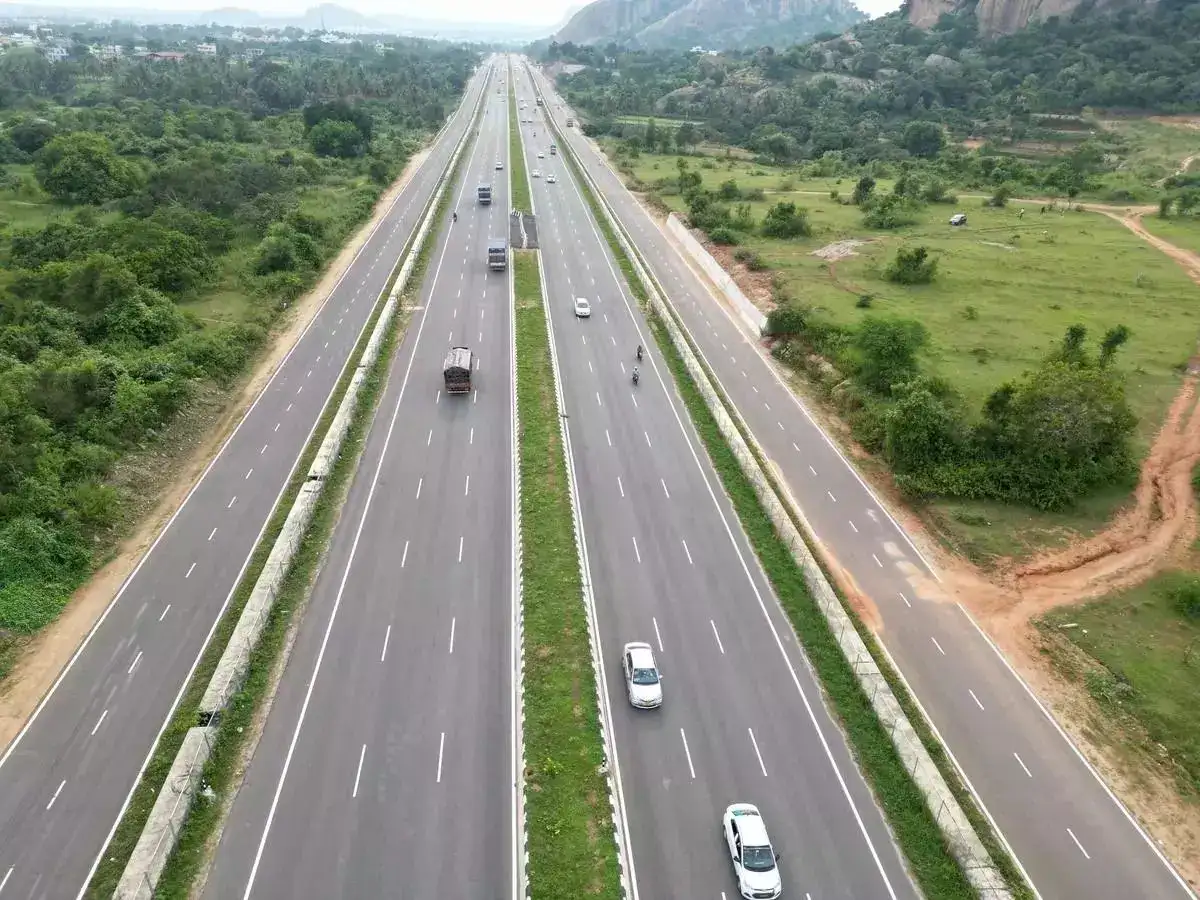
From September 1, commuters on the Delhi–Mathura Highway will face revised toll charges at the Sarai toll plaza near Faridabad. The National Highways Authority of India has announced that the updated rates will apply from midnight of August 31, marking the annual tariff adjustment that typically comes into effect at the start of September.
The new toll regime will largely impact frequent travellers and heavy vehicles. While cars, jeeps, and vans passing through once will continue paying ₹35, those opting for multiple crossings will now be charged ₹53 instead of the earlier ₹52. Similarly, light commercial vehicles will see their one-way fee set at ₹53, while larger vehicles including buses and trucks will now pay ₹106 for a single journey. Monthly passes across all categories have also been revised upward.
Highway officials argue that these periodic revisions are aligned with infrastructure upkeep and operational costs. The Sarai toll booth, situated at the Delhi-Faridabad border, funds the maintenance of the Badarpur flyover and connecting stretches that serve as a vital artery between the national capital and the industrial city of Faridabad. For many, however, the price hike comes at a time when daily commuting expenses are already mounting.
Also Watch: An Exclusive Interview with Sanjeev Jaiswal (IAS), CEO MHADA
Commuters have often voiced concerns about the environmental and financial implications of such toll revisions. Regular users of the highway stress that the incremental costs not only pinch household budgets but also discourage the adoption of eco-friendly practices such as carpooling and shared mobility if the benefits of lower commuting costs are eroded by toll hikes. Transport experts suggest that while toll revenues are essential for road upkeep, policymakers should simultaneously incentivise sustainable mobility, including electric vehicle adoption and mass transit integration, to balance economic and environmental priorities.
Every September, NHAI reviews and adjusts toll charges across highways to account for inflation-linked cost escalations. Last year, charges at the Sarai plaza had remained unchanged, but the 2025 revision reflects a modest increase across categories. Officials confirm that the revised rates will be applicable from September 1 without exceptions.For a city like Delhi, which is striving towards equitable and sustainable urban mobility, the challenge remains to ensure that road users are not disproportionately burdened while also guaranteeing that critical infrastructure receives the funds necessary for upkeep. Experts believe that a more transparent use of toll collections, such as earmarking a share for clean transport infrastructure, would help build commuter confidence and align highway economics with broader climate goals.As the new toll rates take effect, the debate on balancing commuter affordability, infrastructure sustainability, and environmental responsibility is likely to gain further traction in the National Capital Region.
