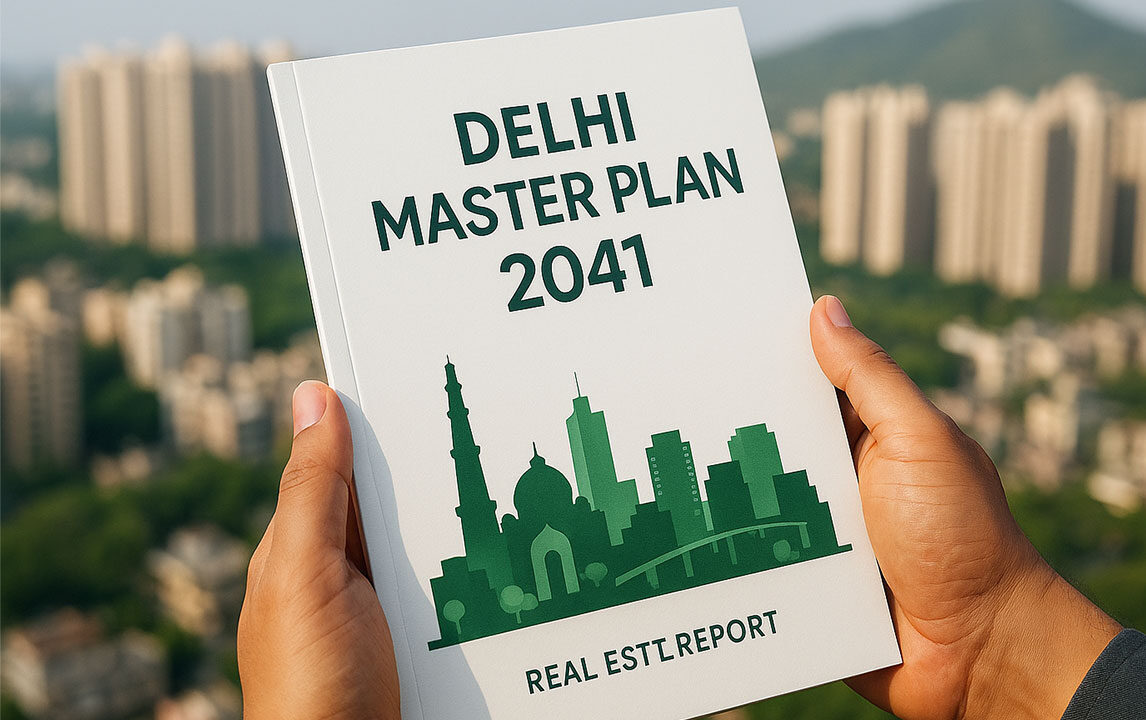
Delhi is preparing to adopt a new long-term urban blueprint that could shape how the capital grows, builds housing, and manages infrastructure over the next two decades. The proposed Delhi Master Plan 2041 is expected to replace the expired Master Plan 2021 and provide a comprehensive policy framework to guide land use, urban expansion, environmental management, and infrastructure investment across the city.
Officials indicate that the plan has been under preparation for several years and is now approaching final approval. Urban planners say the Delhi Master Plan 2041 will become the central planning document determining how neighbourhoods evolve, where new housing can be built, and how transport and civic infrastructure should expand to meet rising population pressures. The capital’s previous planning framework, which shaped development patterns for nearly two decades, expired earlier without an updated replacement immediately in place. This policy gap has slowed certain infrastructure initiatives and complicated approvals for large projects, particularly those involving land use changes or redevelopment of older urban areas.
Authorities suggest that the new plan will attempt to align land-use decisions more closely with public transport networks, especially the expanding metro system. Transit-oriented development, which promotes higher-density housing and mixed-use neighbourhoods around metro corridors, is expected to be a key planning principle under the Delhi Master Plan 2041. Urban development experts say this approach could help reduce car dependence, improve air quality and encourage more compact, walkable neighbourhoods. For a city grappling with traffic congestion and severe pollution, integrating mobility and land use planning has become a critical policy priority.
The proposed framework is also expected to address long-standing governance and infrastructure challenges across the capital. Public investment plans include major upgrades to roads, flyovers, metro connectivity, water supply, electricity distribution, sewerage systems and social infrastructure such as schools, clinics and parks. Government officials estimate that tens of thousands of crores in combined central and local funding are being directed toward such projects across multiple districts.
A notable feature of the plan involves bringing previously underdeveloped village areas and peripheral settlements into the formal urban planning system. Urbanisation of dozens of villages is expected to provide residents with paved streets, drainage networks, lighting, and improved access to public services such as healthcare and education. Planning specialists say this integration could also help formalise property ownership in older settlements and support more structured urban growth. Environmental management is another major component of the proposed framework. Delhi continues to face severe air pollution, waste management challenges and stressed water resources. The planning blueprint is expected to include measures aimed at improving waste processing, protecting green spaces and promoting cleaner urban environments.
For the real estate sector, the new plan could unlock long-delayed development opportunities by clarifying land-use regulations and redevelopment policies. Developers and investors often rely on master plans to assess where new residential or commercial projects can be undertaken. Urban policy analysts note that the success of the Delhi Master Plan 2041 will ultimately depend on implementation. As the capital continues to expand, the challenge will be balancing infrastructure growth, housing demand and environmental sustainability while ensuring that development remains inclusive across both established urban districts and newly urbanising areas.