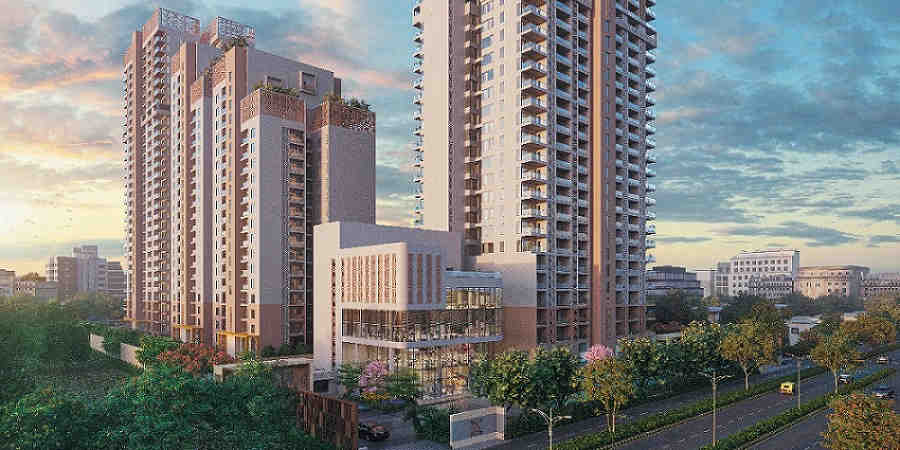
A wave of luxury towers rising across the national capital is reshaping the city’s long-standing residential character and pushing property values higher. Market data from the first half of 2025 indicates that high-end apartments in newly built vertical communities are recording some of the strongest price gains in the wider Delhi-NCR housing market, signalling a gradual shift away from the capital’s traditional low-rise residential model.
Across the broader region, residential values have climbed sharply over the past year, while rents have also moved upward. However, premium condominium developments within Delhi’s municipal limits have outperformed several established micro-markets in neighbouring cities, according to market observers tracking housing transactions and project launches.
Historically, large parts of Delhi’s residential fabric have been dominated by bungalows, government housing clusters and individually developed builder floors. But a combination of land constraints, rising land costs and changing buyer expectations is encouraging developers to experiment with high-density vertical projects offering integrated amenities. Industry analysts say these projects are increasingly appealing to households seeking modern facilities within established neighbourhoods rather than relocating to emerging suburbs. Large residential complexes now incorporate shared infrastructure such as fitness centres, landscaped open spaces, security systems and community facilities features that were once largely associated with planned developments in satellite cities.
Several large developers have launched premium projects in central and western parts of the capital, reflecting a broader confidence that demand exists for vertical luxury living within Delhi itself. Pricing trends in some recently launched projects show sharp appreciation since initial sales, with premium apartments now commanding prices comparable to established upscale districts. Rental demand has also followed the upward trajectory. Leasing activity in newly delivered towers indicates that large apartments in luxury condominium complexes are attracting tenants willing to pay premium monthly rents for access to secure campuses and lifestyle amenities. Real estate consultants say this trend is being driven by senior professionals, entrepreneurs and expatriates who prefer serviced environments over standalone residential units.
Urban planners note that the emergence of luxury high rise housing in Delhi also raises broader questions about infrastructure readiness. High-density developments place additional pressure on transport networks, water supply and public utilities, requiring coordinated upgrades by civic authorities. At the same time, vertical housing can reduce urban sprawl if integrated with sustainable planning, transit connectivity and green building standards. Experts argue that the shift toward luxury high rise housing reflects both economic and demographic changes. Younger homebuyers increasingly prioritise managed communities, digital infrastructure and lifestyle amenities, while developers are responding by creating projects that combine residential, recreational and commercial spaces.
For policymakers and city planners, the trend signals a pivotal moment in Delhi’s urban evolution. If supported by careful planning, improved public transport and climate-sensitive building practices, the rise of vertical neighbourhoods could gradually reshape the capital’s housing landscape while accommodating population growth within existing urban boundaries.