Delhi Luxury High Rise Homes Reshape Capital Housing Market
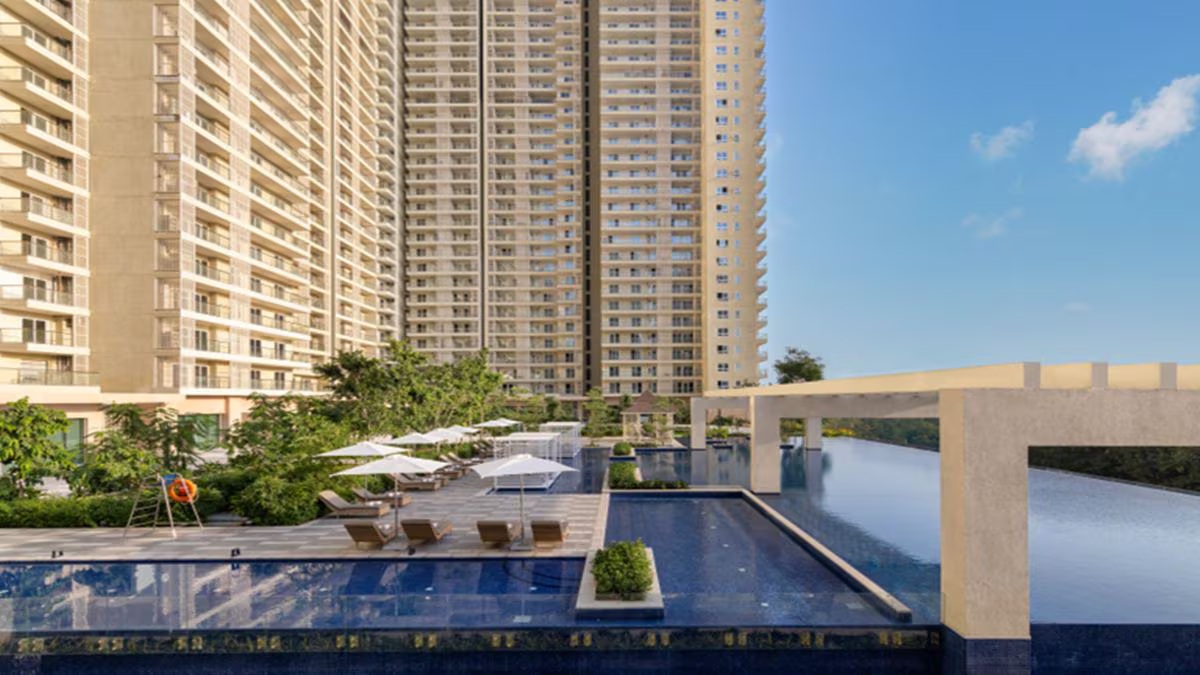
Delhi’s housing landscape is undergoing a structural shift as luxury condominium towers emerge across neighbourhoods historically dominated by independent houses and low-rise apartments. Rising demand for premium high-rise residences has pushed property values sharply upward across the capital region, with price appreciation significantly outpacing rental growth and signalling a new phase in the city’s real estate cycle. Industry estimates indicate that residential prices across the wider National Capital Region climbed roughly 27 percent year-on-year during the first half of 2025, while rental values rose by about 7–9 percent over the same period. Within this broader market movement, Delhi luxury high rise homes have emerged as one of the strongest-performing segments, particularly in established neighbourhoods where large integrated residential towers were previously uncommon.
Property analysts say this trend reflects a gradual transformation in how urban households view housing within the capital. For decades, Delhi’s residential identity centred on bungalows, farmhouses and builder-floor apartments. However, rising land constraints, shifting lifestyle expectations and a growing professional workforce are encouraging buyers to consider vertically integrated residential communities offering shared amenities and managed infrastructure. Several large residential towers launched in the past decade have witnessed steep price appreciation as demand accelerates. In one prominent development in West Delhi, apartments that were originally priced near ₹18,000 per square foot at launch have seen valuations rise to more than ₹32,000 per square foot in the resale market. Rental demand has also strengthened, with larger apartments in some developments commanding monthly rents exceeding ₹1.5 lakh. Urban economists say Delhi luxury high rise homes represent more than just a premium housing trend. They signal a broader shift in how the capital’s built environment is evolving as population density increases. Unlike traditional builder-floor housing, high-rise developments often incorporate centralised energy systems, shared green spaces, pedestrian zones and managed waste systems—features increasingly associated with sustainable urban living.
Developers are now expanding similar projects across central and western parts of the capital, including large mixed-use residential complexes that combine high-density housing with landscaped open areas and community infrastructure. Some upcoming developments are being planned on multi-acre sites with several residential towers offering larger apartment configurations designed for multi-generational households. Urban planners note that such projects also create a new category of residential investment in the capital. Historically, investors seeking condominium-style living gravitated toward neighbouring cities like Gurugram or Noida, where large integrated housing complexes were more common. The emergence of similar developments within Delhi allows buyers to remain closer to established neighbourhood networks while accessing contemporary housing formats. Market observers believe the shift could gradually influence how land is redeveloped across older urban districts. Redevelopment of underutilised industrial land, ageing housing clusters and brownfield sites could open opportunities for vertical residential projects that accommodate more residents while preserving urban green space.
For policymakers and planners, the challenge will be ensuring that the growth of luxury high-rise housing aligns with infrastructure capacity, transit connectivity and climate resilience goals. As the capital’s residential skyline evolves, balancing density with livability will remain central to shaping a more sustainable urban future.