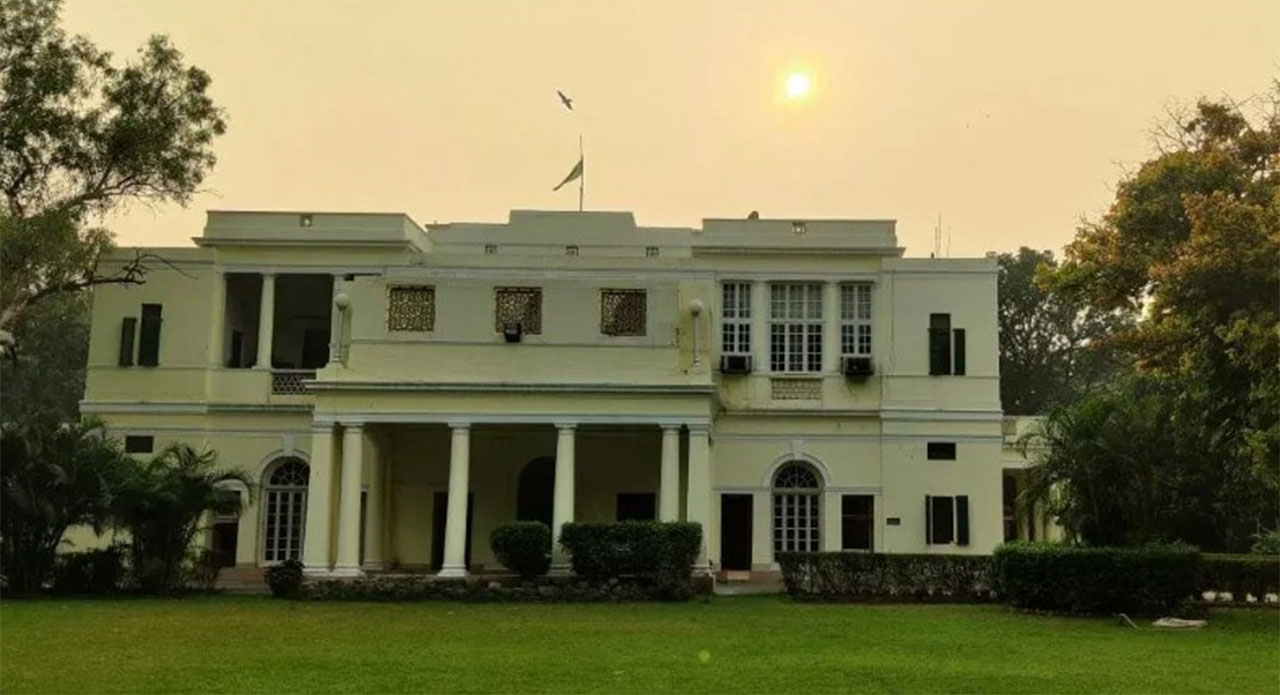
A private residence owned by a leading telecom entrepreneur in Delhi’s Lutyens’ Bungalow Zone has once again drawn attention to the extraordinary land values and policy sensitivities surrounding India’s most tightly controlled residential district. Located on Amrita Shergill Marg, the property sits within a planning enclave where supply constraints, heritage protections and political significance converge to create one of the country’s most expensive housing markets.
The Lutyens’ Bungalow Zone, designed in the early 20th century as part of the imperial capital layout, comprises roughly 1,000 low-density plots spread across central Delhi. Strict development controls limit subdivision, height and structural alteration. Fewer than 100 bungalows are believed to be in private hands, with the rest occupied by senior government functionaries. The businessman acquired the approximately two-acre parcel in the early 2000s in what was then considered one of the capital’s largest residential transactions. Since that acquisition, land values in the Lutyens’ Bungalow Zone have multiplied several times over, according to market analysts tracking ultra-prime sales. Current indicative valuations for comparable plots often range between ₹150 crore and ₹400 crore, depending on frontage, road width and built form.
The residence itself reflects a colonial architectural vocabulary consistent with the neighbourhood’s design language: expansive lawns, deep verandahs, high ceilings and restrained façades. While internal specifications remain private for security reasons, luxury homes in this precinct typically incorporate landscaped gardens, multiple reception areas and staff quarters integrated within the compound. Real estate consultants describe the Lutyens’ Bungalow Zone as a market defined less by transaction frequency and more by land scarcity. Transfers are rare and often negotiated discreetly. Urban planners note that regulatory safeguards have preserved tree cover and low built density, contributing to a microclimate that contrasts sharply with denser parts of Delhi.
At the same time, the concentration of wealth within the enclave has prompted periodic debate over land use efficiency in a city grappling with housing shortages. Critics argue that such low-density zoning limits broader access to central urban land. Supporters counter that the district’s heritage character and institutional role justify stringent controls. The Lutyens’ Bungalow Zone also illustrates how land policy shapes capital allocation. With subdivision restricted and redevelopment tightly monitored, appreciation is driven largely by location and historical prestige rather than additional floor area.
This has positioned the area as a long-term store of value for industrialists and political leaders alike. Urban sustainability experts observe that conservation-based zoning, when managed transparently, can coexist with broader housing strategies elsewhere in the city. The challenge for Delhi’s planners is balancing preservation of historic districts with equitable housing supply across expanding urban corridors. As India’s metropolitan land markets mature, the Lutyens’ Bungalow Zone remains a case study in how scarcity, regulation and symbolism combine to create enduring real estate value beyond conventional metrics.
Delhi Lutyens Zone Anchors Elite Housing Market