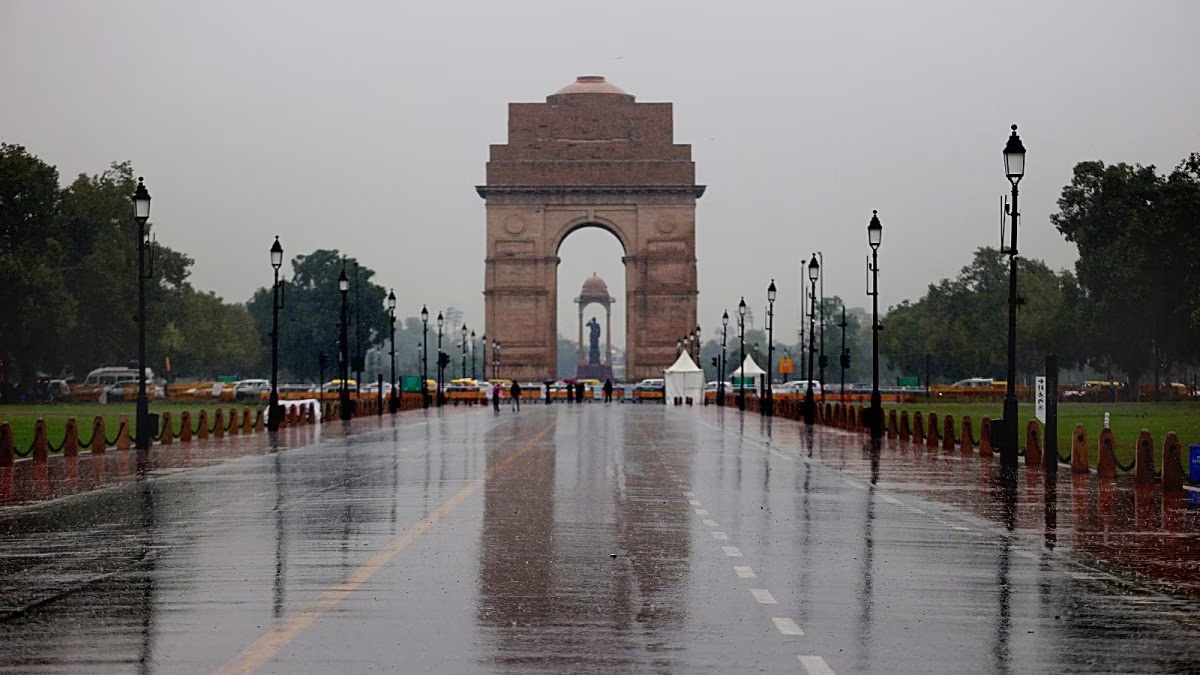
A spell of light rainfall in Delhi early Sunday brought a brief pause to rising temperatures across the national capital, offering residents cooler conditions after several days of warmer weather. The showers, accompanied by gusty winds and lightning in parts of the city, also had a mild impact on air quality levels, highlighting how short weather events can temporarily influence urban environmental conditions. Meteorological observations early in the morning recorded relatively mild temperatures across the city, with readings in the low twenties before sunrise. The showers dampened roads across central and southern districts while commuters navigated wet streets during the early hours of the day.
Weather officials said the light rainfall in Delhi was accompanied by gusts of wind reaching moderate speeds across several monitoring stations, including areas near the city’s main airport zones and northern neighbourhoods. Such short rain events are typical during seasonal weather transitions and can help reduce accumulated heat in the urban environment. The showers followed a period of rising daytime temperatures in the capital. Observational stations across Delhi had recorded maximum temperatures above 30 degrees Celsius in several locations a day earlier. Weather data from different monitoring points indicated slight variations across the city, reflecting the influence of urban heat patterns created by dense built environments, road networks and limited green cover. Urban climate specialists say intermittent rainfall plays an important role in regulating city temperatures, particularly during early summer transitions. Rainfall cools surface temperatures and temporarily reduces particulate pollution suspended in the air. However, these benefits are often short-lived in large metropolitan areas where emissions from transport, construction and industry remain persistent.
Air quality readings during the morning hours placed the city’s Air Quality Index within the moderate category. While this level represents an improvement compared to severe pollution episodes frequently experienced during winter, environmental analysts note that moderate pollution can still affect individuals with respiratory sensitivities. According to pollution monitoring guidelines, air quality levels within this range may cause breathing discomfort for people with asthma or heart conditions, especially during prolonged exposure. Public health experts therefore emphasise the importance of sustained air quality improvements through emission control and urban planning measures. Weather officials have also indicated the possibility of thunderstorms, lightning and isolated hail events in the coming days as atmospheric conditions remain unstable. Such weather activity can temporarily disrupt traffic and urban mobility but often provides cooling relief before the onset of sustained summer heat. Urban planners increasingly view rainfall events not only as weather phenomena but also as stress tests for city infrastructure. Drainage networks, roads and stormwater systems must cope with sudden downpours without causing waterlogging or transport disruption.
As Delhi moves deeper into the warmer months, experts say the interaction between temperature, rainfall and pollution will continue to shape daily life in the city. For residents, brief spells of light rainfall in Delhi may offer momentary relief, but long-term improvements in urban climate resilience will depend on greener infrastructure, better air quality management and more adaptive city planning.