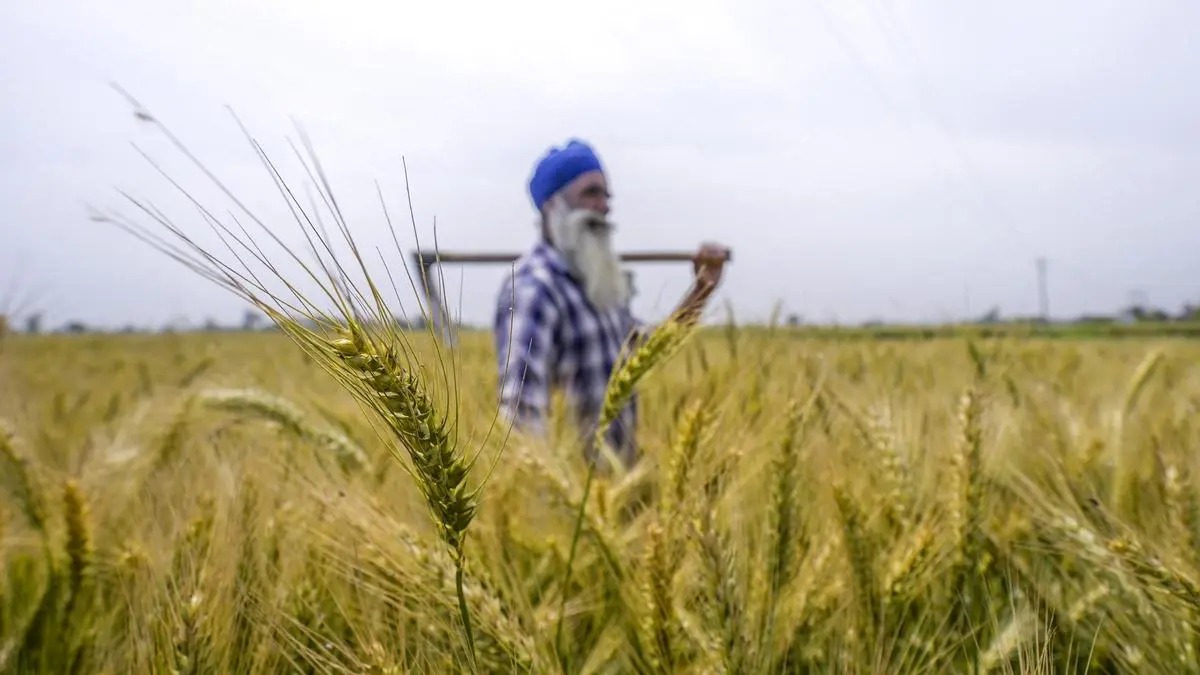
Delhi launches farm revival plan targeting 100 climate-hit rural districts
A six-year farming scheme has been launched in Delhi targeting 100 rural districts across India, identified for their poor crop yields, limited irrigation, and low access to credit. Aimed at promoting sustainable agriculture, the programme merges 36 existing government schemes into one coordinated mission. Officials say the plan will prioritise areas vulnerable to climate change while focusing on water conservation, diversified cropping, and agro-ecological farming. The Cabinet’s green signal is seen as a long-overdue step to prevent farm distress, boost food security, and make Indian agriculture more climate-resilient.
The mission will initially roll out in drought-prone and low-productivity districts, where conventional practices have failed to reverse farm decline. Officials say the selected regions have faced persistent ecological and economic stress, with soil degradation, erratic rainfall, and over-reliance on mono-cropping patterns among the causes. The new plan aims to change this by enabling integrated land and water-use planning, increasing access to technology, and providing incentives for farmers to adopt climate-smart techniques. Experts view this as a foundational shift, offering rural India a model for sustainable agricultural livelihoods amid worsening climate challenges. Alongside state participation, the mission will have knowledge support from NITI Aayog and research institutions to ensure region-specific interventions. Districts will be mapped based on indicators such as yield gaps, credit use, rainfall variability, and input dependency.
Officials will coordinate action on watershed management, farmer producer organisations (FPOs), compost use, and micro-irrigation systems. By mainstreaming agroecological methods, the scheme could also reduce chemical runoff into nearby water bodies, promote carbon sequestration, and enhance food diversity — aligning with both sustainability goals and nutritional equity in rural diets. Another key focus will be improving the outreach of existing schemes that often fail to reach marginalised farmers. Financial support, skill training, and market access will be linked to outcomes like increased soil fertility, improved irrigation efficiency, and reduced carbon footprints. Officials say the intent is to shift away from subsidy-driven models towards capacity-building, with results monitored digitally. The convergence of programmes under a single umbrella is expected to cut bureaucratic delays and fund leakages that have historically limited rural agricultural reforms.
As climate threats deepen across Indian farming zones, experts say this timely initiative could set a precedent for inclusive, equitable rural development. However, success will depend on the ability of local institutions to implement reforms transparently, involve women farmers, and respect traditional knowledge systems. In the long run, integrating climate adaptation with food systems is not just about securing crop yields — it is central to building future-ready, zero-carbon, and self-reliant Indian villages.