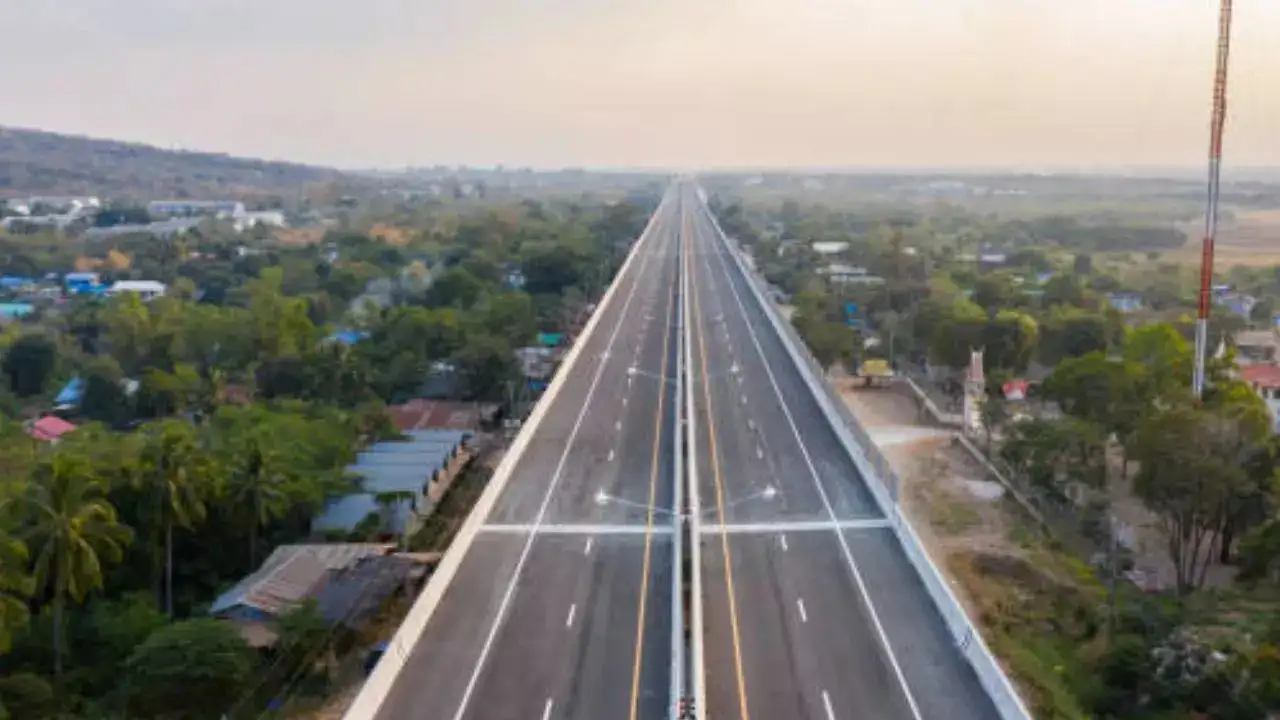
Delhi Kota Expressway Section To Open After Diwali Cutting Travel
Delhi’s long drive to Kota is set to shrink to just four hours, as the Rajasthan portion of the Delhi-Mumbai Expressway nears readiness for public use. Officials have confirmed that the section is expected to open after Diwali, easing one of the busiest road corridors in northern India and creating faster access between the capital and Rajasthan’s educational hub.
The 1,386-kilometre Delhi-Mumbai Expressway, billed as India’s longest and most ambitious road project, began construction in 2019 with a target completion date of 2023. However, the deadline has been pushed to 2026 due to complex engineering requirements and environmental considerations. The Rajasthan portion stretches 373 kilometres, and nearly 35 kilometres remain under construction. Once this section opens, travellers will bypass the congested two-lane highway that currently forces detours near Sawai Madhopur, reducing both travel time and traffic snarls.
Officials from the National Highways Authority of India (NHAI) said that while a direct link to Mumbai is likely to be operational next year, full connectivity will only be achieved later. A critical component still pending is the planned 4.9-kilometre tunnel through the Mukundra Hills Tiger Reserve, whose construction is slated to begin after February 2026. This tunnel is expected to be one of the most significant environmental and engineering challenges of the project, requiring careful balance between ecological preservation and infrastructure needs.Adding to delays, the relocation of a 765-kV high-voltage transmission line between Baran and Jaipur required extensive planning and staged shutdowns.
Monsoon rains this year also disrupted supply chains and damaged portions of the under-construction route. Despite these hurdles, NHAI officials have assured that the four central lanes of the expressway’s eight-lane design will open initially, following a safety audit. The expressway has been built with the capacity to expand to twelve lanes in the future, ensuring long-term scalability.Currently, a portion of the Rajasthan section between Sohna and Bhandarej near Dausa has already been operational, offering a preview of the benefits the full stretch will bring. Officials have capped the speed limit for light vehicles at 120 kmph, though there is scope for this to be increased to 140 kmph, making it one of the fastest corridors in the country.
Transport economists say that the expressway will play a pivotal role in boosting regional connectivity, reducing logistics costs, and facilitating seamless freight movement. The Delhi-Mumbai Expressway is also being highlighted as a step towards greener highways, with energy-efficient lighting, rainwater harvesting systems, and provisions for electric vehicle charging infrastructure. Experts emphasise that the expressway, when fully functional, could significantly reduce vehicular congestion, resulting in lower carbon emissions and improved air quality for cities along the route.For residents of Kota and Delhi, however, the immediate benefit is clear: faster, safer, and smoother travel. As the countdown to its partial opening begins, this segment of the Delhi-Mumbai Expressway offers a glimpse into the future of road transport in India, combining speed with sustainability and laying the foundation for more equitable, eco-conscious infrastructure.