


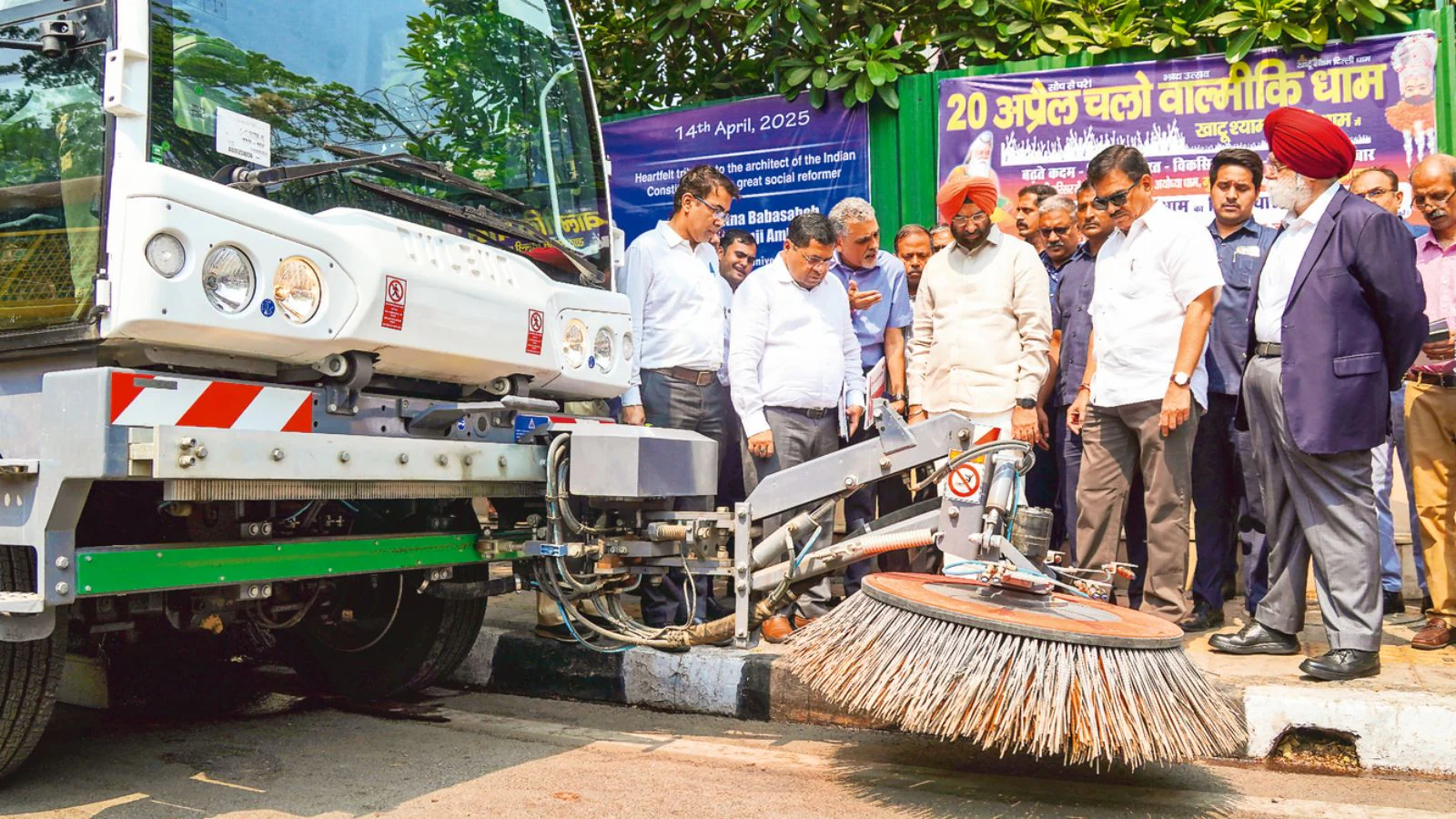
The Delhi government has launched a 20-day citywide cleanliness campaign while instituting a ban on single-use plastic items in key public spaces including markets, schools, and religious places.
The initiative marks a determined push to transform the capital into a model for eco-conscious urban management. The campaign, described by senior officials as one of the most intensive efforts in recent years, began following a high-level coordination meeting involving district authorities, municipal departments, and law enforcement agencies. With the onset of this drive, Delhi now becomes one of the few Indian metros to synchronise civic, administrative, and environmental efforts into a united urban renewal mission.
Aimed at reinforcing the principles of the Swachh Bharat Abhiyan, the campaign will intensify sanitation activities across the city. Cleaning operations will now be carried out twice a day—in the morning and evening—to reduce litter, control dust, and improve the aesthetics and hygiene of the public realm. Marketplaces and areas historically known as waste accumulation hotspots are being prioritised. These locations will be subjected to rigorous monitoring by senior officials, with accountability mechanisms in place to penalise violations, particularly the defacement of public walls. The ban on single-use plastics, though long advocated by environmental experts, has finally been enforced with administrative backing. It now covers commercial zones and institutional locations where waste generation tends to be highest. Authorities are focusing particularly on polythene bags, disposable cutlery, and plastic packaging, all of which have contributed significantly to Delhi’s solid waste burden and clogged drainage systems.
In tandem with the plastic ban, the government is mandating all garbage trucks to operate under strict schedules, ensuring covered transport and regular waste collection. Sanitation of public toilets, drains, and sewers has been brought to the forefront, with district-level monitoring units empowered to make real-time interventions where necessary. Dust-prone areas, especially near construction zones and high-traffic corridors, are slated for immediate greening through the planting of native and pollution-resilient tree species. Each administrative zone is being asked to nominate one locality as a “model area” that will serve as a benchmark for sanitation, public awareness, and ecological aesthetics. These pilot zones are expected to demonstrate the long-term benefits of sustained public participation and civic responsibility in urban maintenance.
The government has emphasised that strict action will be taken against those who violate the rules laid down during the drive, particularly defacement through graffiti or poster-pasting on public property. Offenders will face financial penalties and, where applicable, legal action under municipal laws. Officials leading the campaign indicated that this initiative aligns with a broader vision of environmental justice and inclusive growth, where public health, sanitation, and ecological protection are central to the urban development agenda. By targeting both waste reduction and behavioural change, the campaign seeks to recalibrate how citizens interact with their environment.
Public participation, the cornerstone of the drive, is being encouraged through awareness campaigns, school outreach programmes, and resident welfare associations. Authorities are also engaging market associations and faith-based institutions to ensure compliance and promote a culture of shared civic responsibility. While this campaign has been framed as a milestone moment in the city’s environmental journey, urban development experts caution that sustained commitment beyond the 20-day period is essential for enduring impact. Without consistent enforcement, behavioural change, and community engagement, such drives often risk becoming temporary interventions rather than systemic solutions.
Nevertheless, the initiative has already set a new tone for how Delhi plans to address its chronic urban waste and pollution challenges. It presents an opportunity for the capital to emerge as a national leader in sustainable and inclusive urban transformation—one where clean streets, responsible waste handling, and public dignity are the everyday norm, not the exception. As the campaign unfolds across neighbourhoods, markets, and civic corridors, Delhi’s push for a cleaner, greener, and more equitable future could become a template for other Indian cities navigating similar environmental and public health pressures.
Also Read : Adani Power Achieves Record Power Generation in FY25
