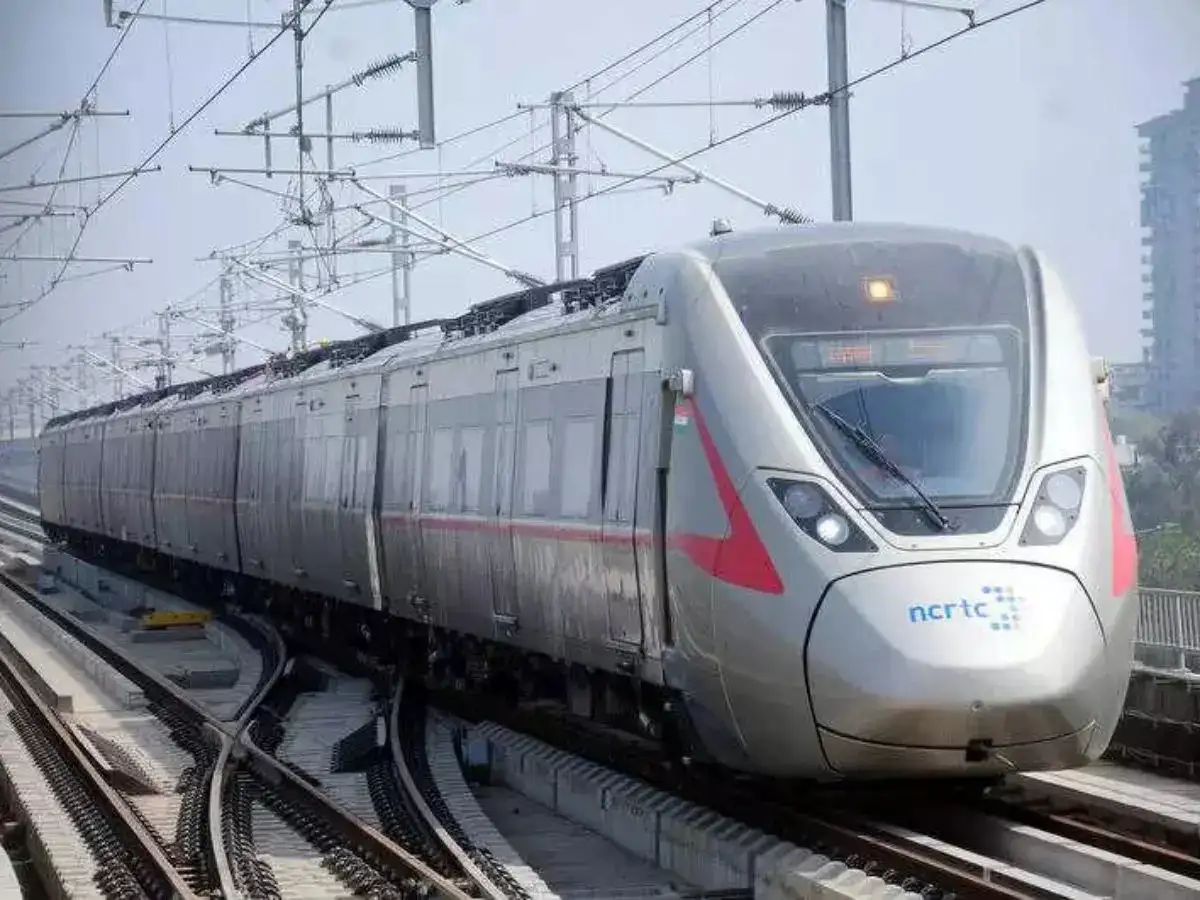
Delhi Karnal Rapid Rail Corridor Signals New NCR Mobility Era
Construction activity has begun on a high-speed regional rail corridor linking Delhi with Karnal, marking a major step in expanding rapid intercity mobility across northern India’s urban belt. The project, estimated at around ₹35,000 crore, is expected to dramatically reduce travel time between the two cities to roughly 90 minutes while strengthening regional connectivity and reshaping commuting patterns within the National Capital Region (NCR). Urban planners and mobility experts say the Delhi Karnal Rapid Rail corridor represents a crucial extension of the region’s emerging regional transit network. Designed to operate with semi-high-speed trainsets capable of reaching speeds of up to 160 kilometres per hour, the corridor aims to provide a reliable alternative to congested highways and traditional rail services that currently connect the capital with cities across Haryana.
Officials associated with the project say the initiative forms part of a broader regional strategy to integrate satellite towns into the economic ecosystem of Delhi. Rapid regional transit infrastructure is increasingly being seen as essential for balancing urban growth by enabling people to live in peripheral cities while accessing employment hubs in the capital and neighbouring districts. The new rail corridor will extend the fast-growing network of regional rapid transit systems already under development across the NCR. The first operational stretch connecting Delhi and Meerut has demonstrated the potential of high-speed regional rail to reshape commuting behaviour, particularly among daily travellers seeking faster and more predictable journeys. Transport specialists note that expanding such networks can help ease pressure on road corridors that currently handle significant intercity traffic. The Delhi-Panipat-Karnal axis is one of northern India’s busiest transport routes, serving industrial clusters, logistics hubs and rapidly expanding residential zones. Improved rail connectivity could help redistribute travel demand while lowering fuel consumption and transport emissions over time.
From an urban development perspective, infrastructure experts say the Delhi Karnal Rapid Rail corridor could trigger new transit-oriented growth around proposed stations. Cities along the alignment are expected to witness increased demand for housing, commercial activity and logistics infrastructure as accessibility improves. Regional authorities are also examining how integrated transport planning—including last-mile connectivity, multimodal transit hubs and sustainable urban design—can maximise the benefits of the new corridor. Experts say such planning will be essential to ensure that rapid rail investment translates into inclusive and environmentally responsible urban expansion. While the project is expected to take several years to complete, the launch of construction signals a broader shift in India’s approach to regional mobility. As metropolitan areas continue to expand beyond traditional city limits, rapid rail networks are increasingly being viewed as the backbone of future intercity travel.
For the NCR, the corridor represents more than a transport upgrade—it reflects a long-term effort to create a connected regional economy where mobility, sustainability and balanced urban growth move forward together.