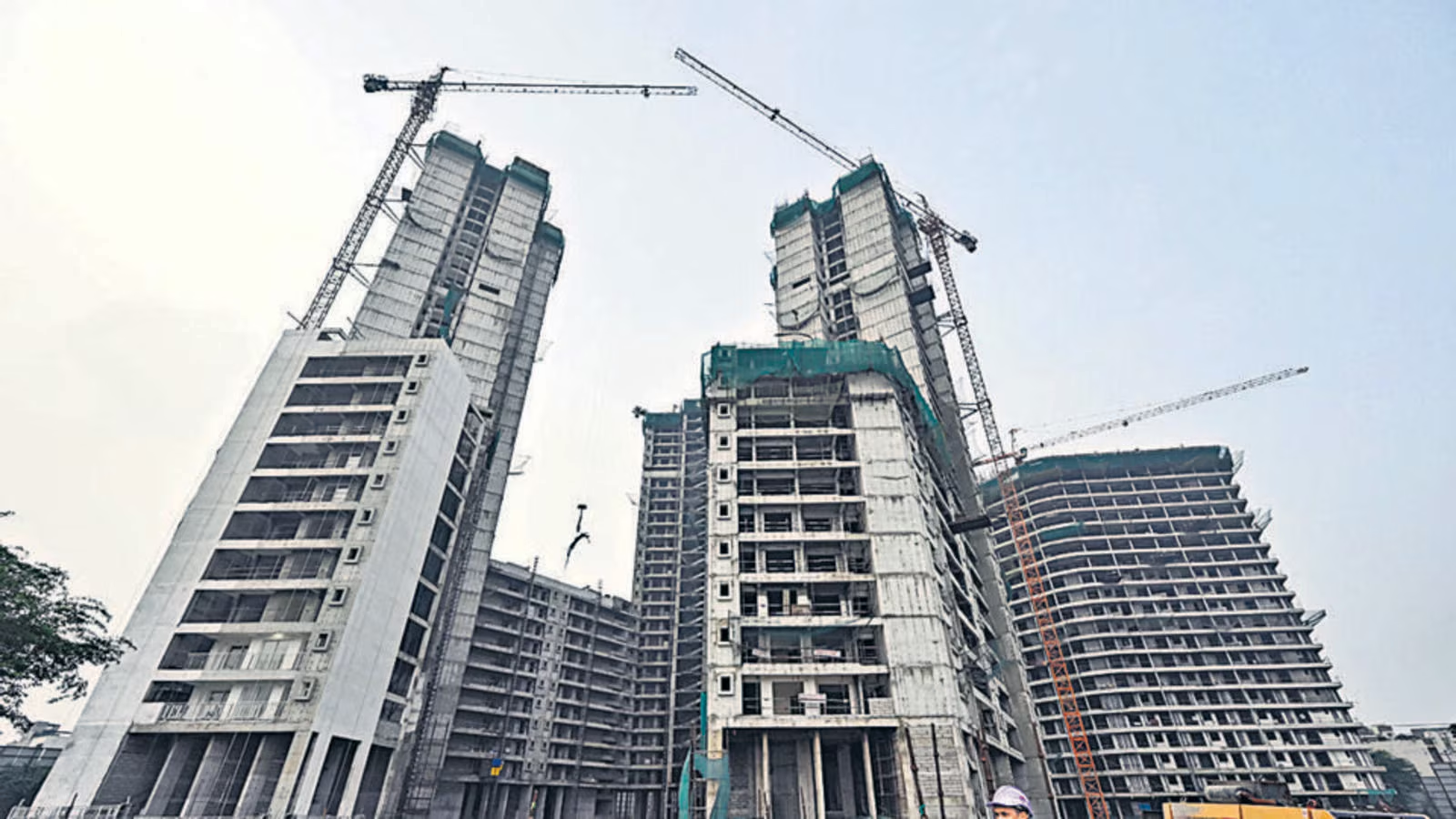
Delhi’s public housing strategy is entering a more vertical phase with the launch of the second tranche of apartments at a high-rise residential complex in Karkardooma, marking a notable shift in how the capital is addressing land scarcity, transit access and housing supply. The latest phase brings several hundred near-complete homes into the market, reinforcing the city’s experiment with dense, transit-oriented living in east Delhi.
The project, implemented by the city’s planning authority and executed under central public sector supervision, adds over 800 residential units to the eastern corridor. A majority of the homes are being opened to individual buyers through a time-bound allotment process, while a smaller share has been reserved for institutional allocation within the government ecosystem. Registrations are scheduled to begin later this month, with allotments expected to conclude within the current financial quarter.
At the heart of the development is a 48-storey residential tower rising well above Delhi’s traditional skyline. Urban planners say the structure represents a deliberate departure from horizontal expansion, responding to long-standing challenges around sprawl, infrastructure stress and long commute times. The location benefits from proximity to mass rapid transit, aligning the project with the city’s Transit Oriented Development framework, which encourages higher densities near transport nodes to reduce car dependence and emissions. Pricing for the apartments places the development firmly in the premium segment, reflecting both construction costs associated with high-rise engineering and its positioning within a planned, infrastructure-supported zone.
Buyers are required to pay a portion of the total cost upfront, with the balance linked to final completion and handover. Officials involved in the project indicate that construction is in its final stages, reducing delivery risks that often accompany public-sector housing schemes. Real estate analysts view the launch as a test case for whether state-led vertical housing can attract sustained end-user demand in a market dominated by private developers. East Delhi, traditionally characterised by mid-rise neighbourhoods, has seen limited supply of large-format, high-density residential projects. If absorbed well, the model could influence redevelopment strategies in other transit-rich but underutilised parts of the capital.
From an urban sustainability perspective, the project underscores the growing emphasis on compact growth over peripheral expansion. Higher residential densities, when paired with reliable public transport and local services, are widely seen as critical to reducing energy use and improving liveability in megacities like Delhi. As the city continues to balance affordability, infrastructure capacity and climate resilience, the performance of developments such as this will shape future policy choices. The coming months, as bookings progress and residents prepare to move in, will offer clearer signals on how vertical public housing fits into Delhi’s evolving urban fabric.
Delhi Karkardooma Project Signals Vertical Shift