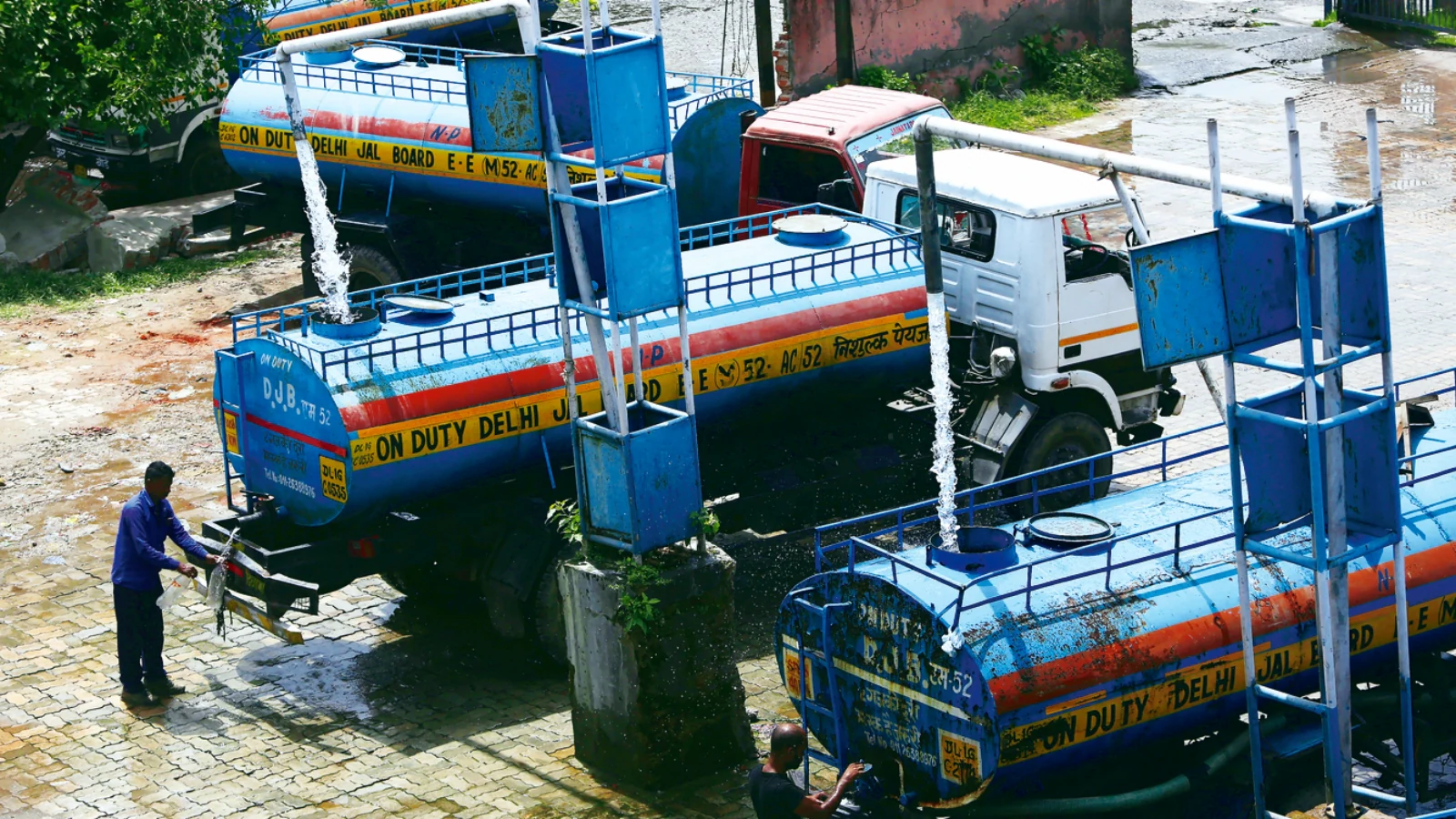
A recent audit of the Delhi Jal Board audit has brought renewed scrutiny to the capital’s water and sewerage systems, highlighting structural inefficiencies that continue to affect supply reliability, financial stability, and environmental outcomes. The findings come at a time when Delhi’s growing population and climate pressures are intensifying demand for resilient urban water infrastructure. The review indicates a widening mismatch between water demand and available supply over recent years, with shortages persisting despite ongoing infrastructure investments. Analysts attribute this to a combination of limited raw water sourcing, constrained treatment capacity, and delays in expanding distribution networks. For a city already facing seasonal stress, such gaps raise concerns about long-term water security.
Equally significant are the inefficiencies within the distribution system. Transmission losses have increased, pointing to ageing pipelines, leakages, and gaps in monitoring. In several parts of the city, daily water availability remains below recommended urban benchmarks, underscoring uneven access across neighbourhoods. Urban planners note that such disparities often disproportionately affect lower-income and informal settlements, complicating efforts towards inclusive service delivery. The Delhi Jal Board audit also highlights high levels of non-revenue water—losses that occur before water reaches paying consumers due to theft, leakages, or metering deficiencies. This not only reduces operational efficiency but also weakens the financial sustainability of the utility. Experts suggest that improving metering coverage and adopting digital monitoring tools could significantly reduce such losses while strengthening accountability. On the sanitation front, the audit points to critical gaps in sewage management. While treatment capacity exists, a substantial portion of wastewater continues to enter drainage systems untreated, contributing to river pollution. Additionally, inconsistencies in monitoring treated effluent quality indicate challenges in maintaining environmental compliance, particularly in meeting discharge standards.
Infrastructure planning and project execution have also come under review. Delays in key upgrades to treatment facilities and distribution networks suggest shortcomings in project design and implementation. Funding disruptions in major projects further indicate the need for more robust institutional frameworks and clearer execution strategies. Financial management remains another area of concern. Revenue collection has not kept pace with operational requirements, with a significant portion of water supply either unbilled or inaccurately measured. This has led to mounting liabilities, raising questions about the long-term viability of the utility without structural reforms. Urban policy experts argue that the issues identified in the Delhi Jal Board audit reflect broader challenges in managing water systems in rapidly expanding cities. Addressing them will require a combination of infrastructure investment, governance reforms, and technology integration, alongside a focus on demand management and conservation.
For residents, the implications are immediate—ranging from inconsistent water supply to environmental risks linked to untreated wastewater. For the city’s future, the audit underscores the urgency of transitioning towards a more efficient, transparent, and climate-resilient urban water system.