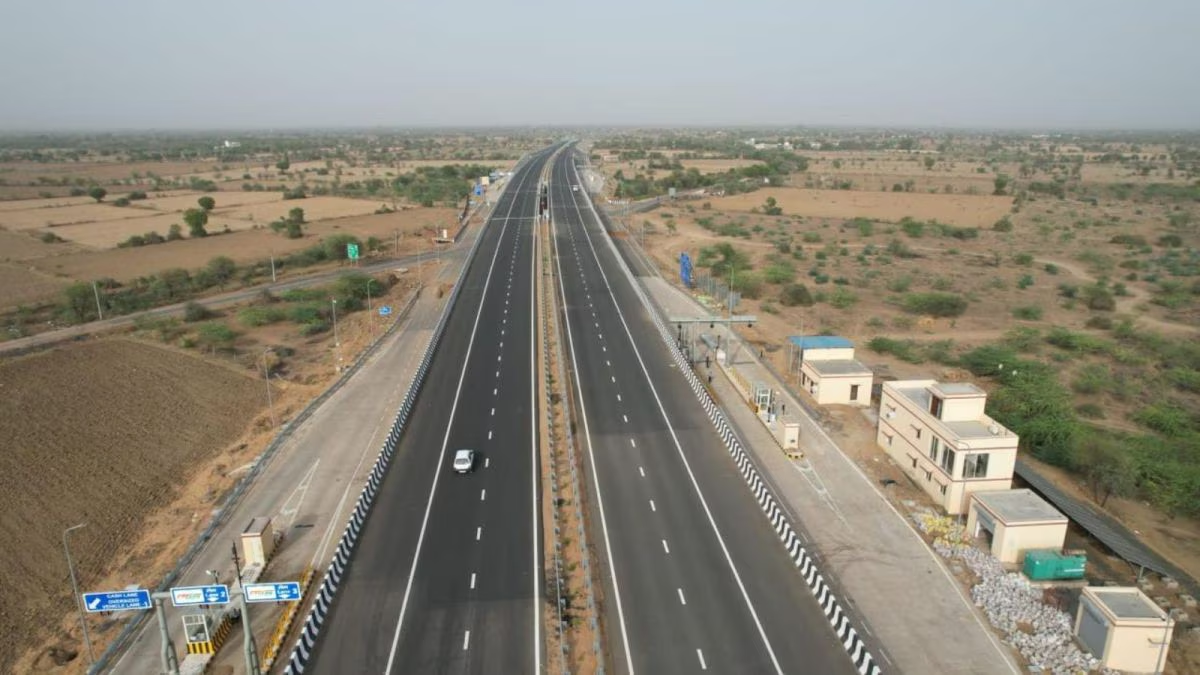
The critical Jaipur–Delhi highway corridor is poised for a capacity upgrade as multiple flyovers and bridges along National Highway 48 near completion, with authorities targeting the end of March for full operational readiness. The intervention is expected to ease chronic congestion, improve safety, and reduce travel time between Rajasthan’s capital and the National Capital Region.
Officials overseeing the project confirmed that nine grade separators and structures are being developed on the Gurgaon–Kotputli–Jaipur stretch of NH-48, a route that carries heavy commuter and freight traffic. Three flyovers and a new bridge have already been opened, while work continues at six remaining locations, including Bawal–Shahpura and key bridge sites near Sotnala, Neelka and Nijhar.
Once complete, the Jaipur Delhi NH48 upgrade is projected to bring end-to-end travel time down to approximately 4.5 to 5 hours under normal conditions. The corridor serves thousands of daily commuters, tourist vehicles and long-haul transport operators connecting Delhi to western and southern India.
Transport planners note that the Jaipur Delhi NH48 route has long struggled with bottlenecks at intersections and accident-prone ‘black spots’. The addition of flyovers and underpasses is designed to streamline traffic flow by separating local and through traffic, reducing conflict points that often trigger slowdowns and collisions. The upgrade also intersects with the broader regional mobility landscape. While the Delhi–Mumbai Expressway and its Jaipur link offer faster segments, peak-hour congestion near central Delhi often offsets time savings. Strengthening NH-48 provides an alternative high-capacity artery feeding into the capital’s southern entry points.
Logistics industry representatives say smoother highway movement can significantly lower fuel consumption, vehicle wear and delivery timelines. For businesses operating between Delhi-NCR and Rajasthan’s industrial clusters, even marginal time reductions translate into measurable cost efficiencies.
From an urban development perspective, improved highway reliability often stimulates peripheral real estate growth and warehousing activity. However, planners caution that faster corridors must be paired with road safety enforcement and sustainable design measures. High-speed highways without adequate monitoring can increase crash severity.
Climate resilience experts add that infrastructure expansion should incorporate drainage planning, reflective road materials and tree cover to mitigate heat stress on long asphalt corridors. As extreme weather events become more frequent, highway durability will depend on both engineering quality and environmental foresight. Authorities indicate that the remaining structures are progressing towards completion before the new financial year. If timelines hold, the Jaipur Delhi NH48 stretch could offer measurable relief to motorists ahead of the summer travel surge. For the Delhi–Jaipur economic corridor, the upgrade marks another step in strengthening inter-city connectivity a factor increasingly central to regional competitiveness, balanced growth and safer mobility networks.
Delhi Jaipur Corridor Set for Faster Travel