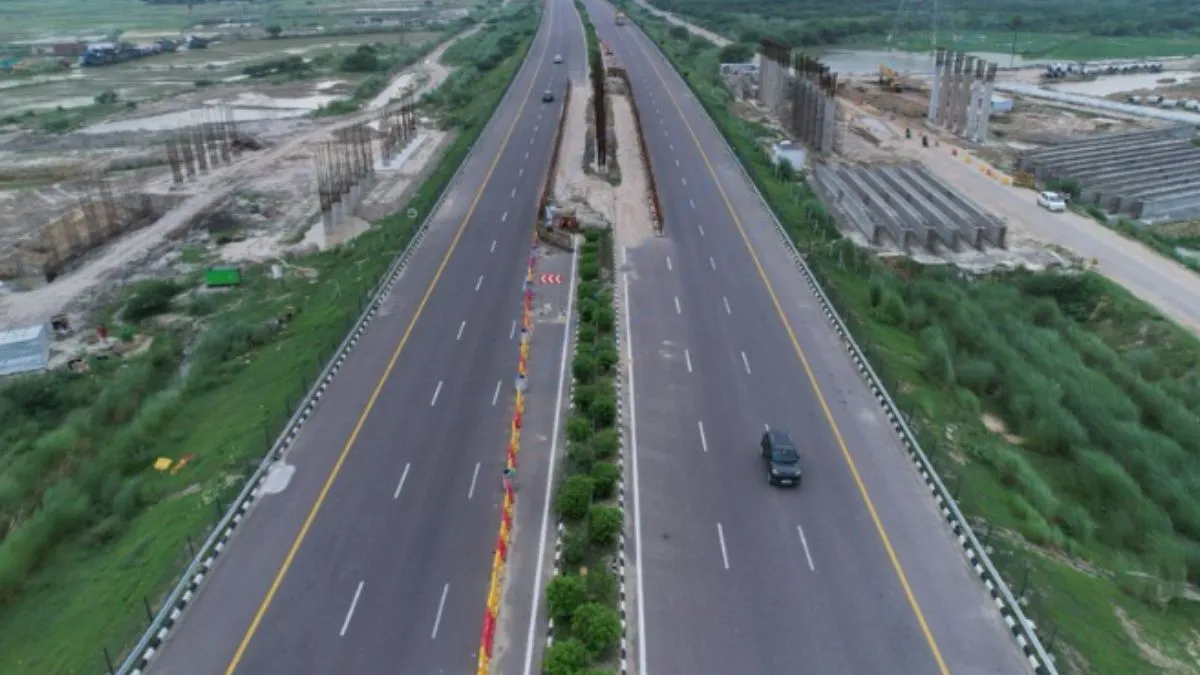
Motorists travelling between Delhi and Jaipur along National Highway 48 are likely to see shorter journey times from April, as a series of flyovers and bridges near completion are expected to ease long-standing choke points on the Gurgaon–Kotputli–Jaipur stretch. Highway officials indicate that once nine grade separators are fully operational, the Delhi Jaipur travel time via Kotputli could reduce to about 4.5 to 5 hours.
The corridor, one of north India’s busiest intercity routes, connects the national capital to Rajasthan’s capital through industrial towns such as Bawal, Behror and Shahpura. Frequent bottlenecks at traffic intersections and accident-prone junctions have historically slowed freight and passenger vehicles alike. According to project authorities, multiple structures are already open to traffic, while the remaining flyovers and bridges are targeted for commissioning by the end of March.Infrastructure planners say the works are designed to eliminate at-grade crossings and streamline vehicle movement through high-density settlements. By separating local and through traffic, the upgrades are expected to improve safety standards and reduce abrupt braking and congestion factors that contribute to emissions and fuel wastage.
At present, travellers opting for the Delhi–Mumbai Expressway and the Bandikui link route can reach the outskirts of Delhi in under four hours under optimal conditions. However, peak-hour congestion closer to central Delhi often adds substantial delays. The NH48 alignment converges near the same southern Delhi junction, meaning smoother highway flow could narrow the overall time gap between the two routes.Transport economists note that improved Delhi Jaipur travel time has implications beyond convenience. The corridor underpins tourism, logistics and regional trade between the National Capital Region and Rajasthan. Faster, more predictable journeys can reduce operating costs for transporters and enhance supply chain reliability for manufacturing clusters along the route.
Yet experts caution that highway expansion alone cannot address rising vehicular volumes. Delhi and Jaipur are both grappling with air quality challenges and rapid urban growth. Without complementary investment in rail freight, intercity bus systems and last-mile connectivity, improved highways may encourage additional private car usage.Highway officials maintain that the current upgrades also target safety black spots identified through accident data analysis. Grade-separated structures at Kotputli, Behror, Dahmi and other locations aim to lower collision risk by reducing conflict points between local and long-distance traffic.
As the March deadline approaches, attention will shift to traffic management during commissioning and long-term maintenance standards. If delivered as planned, the reduction in Delhi Jaipur travel time could strengthen economic linkages between the two cities. The broader test, however, will lie in balancing faster mobility with sustainable transport strategies that support cleaner air and resilient regional growth.
Delhi Jaipur Corridor Nears Faster Commute