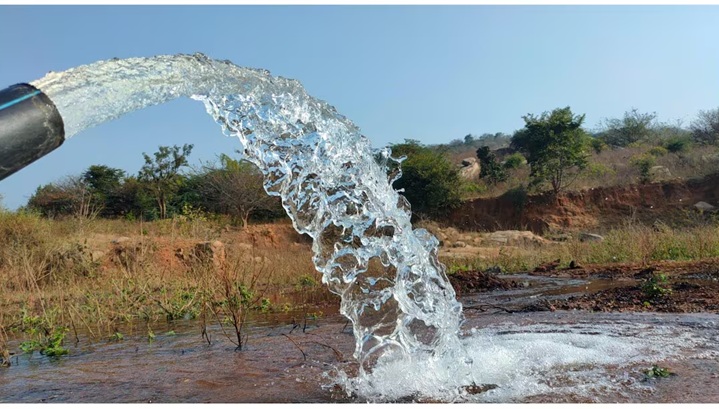
Large sections of the national capital are bracing for uneven water availability this week after simultaneous failures and planned shutdowns disrupted two of Delhi’s most critical water systems. The Delhi water supply disruption, affecting parts of south, southeast and north Delhi, has once again highlighted the vulnerability of ageing urban infrastructure in a city where water security underpins public health, real estate stability and economic productivity.
In north Delhi, damage to a high-capacity transmission line linked to the Haiderpur Water Treatment Plant has interrupted supply across multiple residential and mixed-use neighbourhoods. Senior utility officials said repair teams were deployed immediately, but the depth of the pipeline and site constraints have extended restoration timelines beyond a day. The affected belt includes dense housing clusters in Rohini and Rithala, along with adjoining industrial and peri-urban areas that rely on uninterrupted municipal supply for both domestic and commercial activity.
At the same time, a scheduled maintenance shutdown at the Sonia Vihar Water Treatment Plant has compounded pressure on the system. The plant, one of the city’s largest, feeds several south and southeast Delhi localities, including established residential districts, institutional zones and government housing. Urban planners note that when large plants are taken offline without sufficient decentralised buffering, the ripple effects travel quickly across the network, affecting households, offices and small businesses alike.
The Delhi water supply disruption arrives amid growing scrutiny of water quality governance in the capital. Environmental groups and public health advocates have flagged structural gaps in the city’s testing and monitoring framework, warning that supply interruptions can increase contamination risks when pipelines lose pressure or rely heavily on tanker alternatives. Industry experts point out that tanker dependence raises both cost and quality concerns, particularly for lower-income neighbourhoods and informal settlements that lack storage capacity.
From a built environment perspective, repeated disruptions are also shaping housing market behaviour. Developers and housing societies are increasingly investing in on-site storage, secondary treatment and rainwater harvesting to hedge against municipal uncertainty. While such measures improve resilience at the building level, urban economists caution that they also widen inequality between planned developments and older neighbourhoods with limited retrofit options.
Officials say emergency water tankers have been mobilised and residents advised to manage consumption until normalcy returns. However, infrastructure specialists argue that episodic repairs and shutdown advisories are no longer sufficient for a megacity facing climate stress, rising demand and public health risks. As Delhi expands and densifies, the episode reinforces the need for modernised pipelines, accredited water quality systems and decentralised treatment capacity. Strengthening these foundations will be critical not only to prevent future Delhi water supply disruption, but also to support a climate-resilient, equitable and liveable urban future.
Delhi Infrastructure Strain Triggers Water Supply Disruption