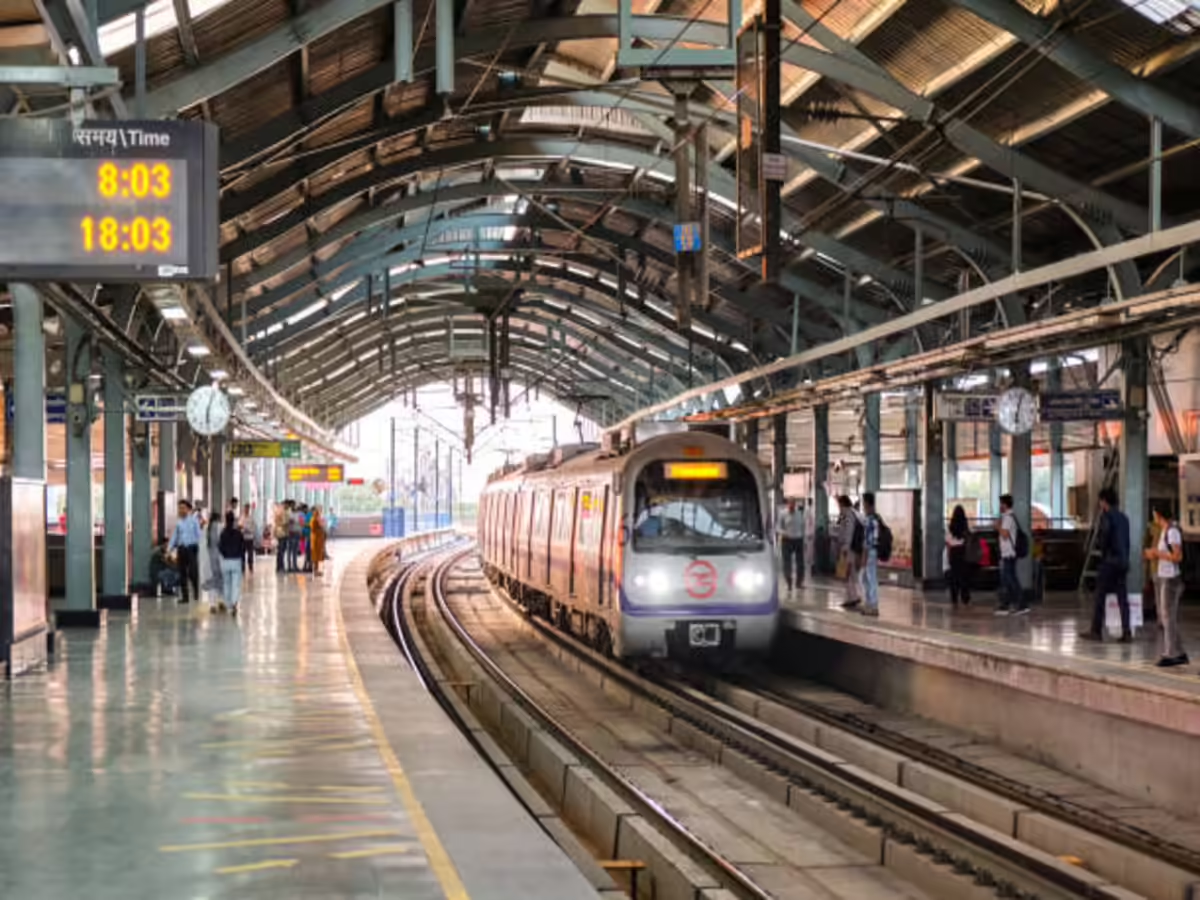
Delhi has taken a significant step in modernising its urban transit infrastructure with the commissioning of a major new electric receiving station that promises more reliable energy for its expanding metro network. The upgraded facility, inaugurated by the region’s chief executive at Park Street, underscores the intersection of urban growth, technical resilience and environmental stewardship in one of India’s fastest-growing cities.
The new electric receiving sub-station (RSS) is pivotal to powering multiple metro corridors, particularly as the system scales to integrate new lines under long-term plans. Urban planners and transit analysts say that dependable electricity supply is foundational for service frequency, safety systems and future network extensions all critical for meeting rising commuter demand while reducing dependence on private vehicles.City transport authorities note that the Park Street power hub was relocated and rebuilt over the past several years to align with broader urban redevelopment initiatives. Originally operational in the early 2010s to energise two metro lines, the facility had to be dismantled to accommodate central civic redevelopment plans. The reconstruction, completed late last year, incorporates modern switchgear, transformers and protective systems designed to improve energy continuity and operational monitoring.
For Delhi’s residents, this upgrade has tangible implications: fewer unplanned service interruptions, smoother interchanges between lines and support for upcoming corridors that will connect residential hubs with business districts. According to infrastructure experts, modern power infrastructure reduces technical bottlenecks that previously constrained peak-hour services, enabling more frequent trains and shorter waiting times. Beyond reliability, sustainability was a key consideration in the redesign. The RSS includes energy-efficient cooling and lighting systems and is being evaluated for green building certification. Planners also intend to add rooftop solar generation to supply a portion of the station’s own energy needs, reducing operational carbon emissions a milestone for sustainable transit electrification in dense urban zones.
Sector observers highlight that robust energy systems are central to future-proofing public transport. As cities like Delhi aim to cut greenhouse gas emissions and traffic congestion, electrified rail corridors powered by cleaner grids and renewable sources play a vital role in lowering per-commuter emissions while expanding equitable urban mobility. Financial analysts say that investing in core infrastructure such as RSS facilities can also improve investor confidence in public-private transit partnerships, as power risk is a common concern in large-scale transport projects. Enhanced reliability may unlock long-term financing for further metro expansion and associated transit-oriented development.
Delhi infrastructure boost with new metro power station