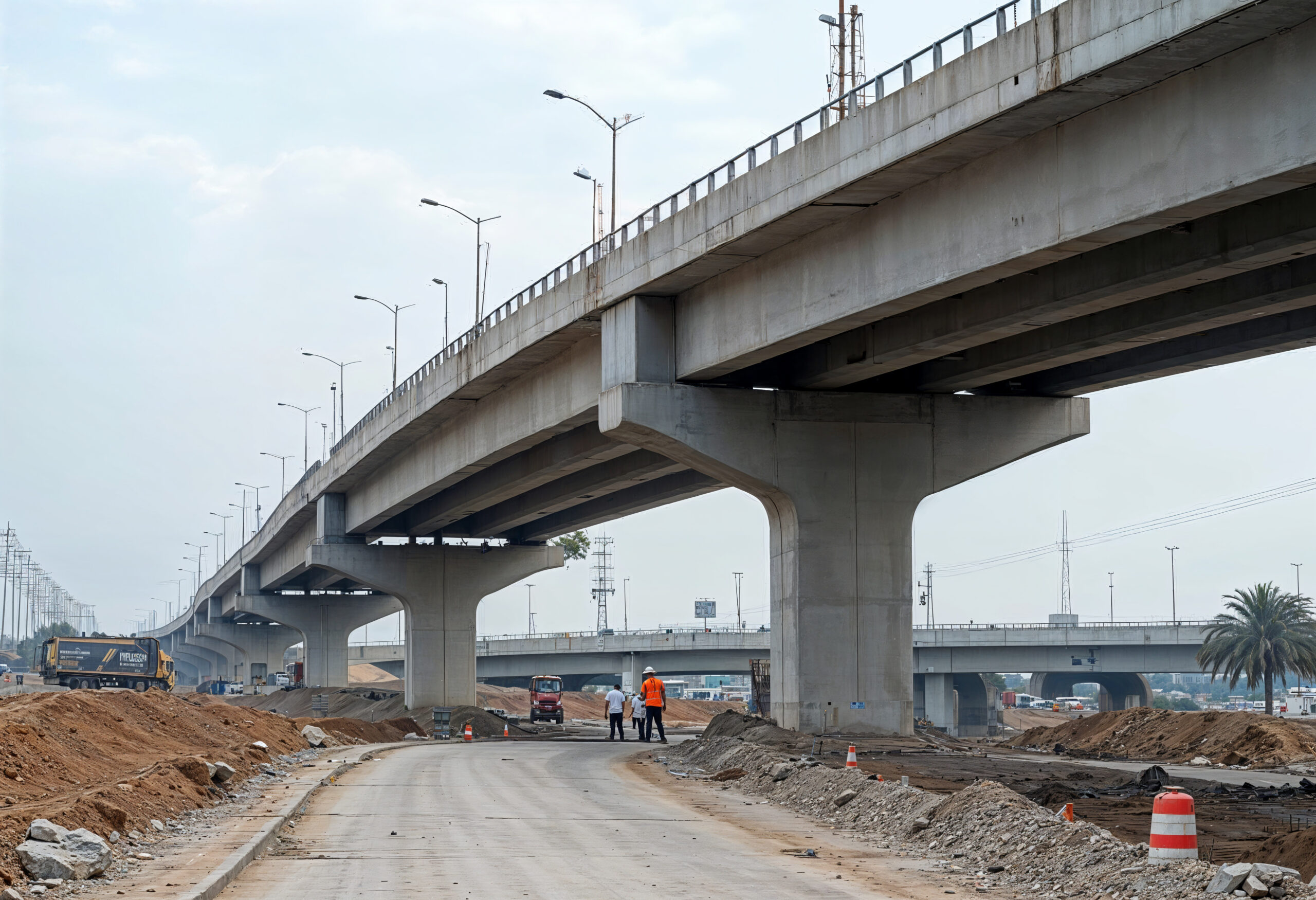
Delhi inaugurates UER II and Dwarka Expressway project
Delhi is ready for a transformative leap in urban mobility with the inauguration of two mega highway projects, the Dwarka Expressway and the Urban Extension Road-II (UER-II). Together valued at nearly ₹11,000 crore, the corridors are designed to relieve chronic congestion and offer faster, more sustainable connectivity across the National Capital Region.
The projects were officially opened in Rohini on Sunday, marking a milestone in India’s urban transport strategy. Officials emphasised that these highways are not just about speed and scale, but also about integrating sustainability into infrastructure. The UER-II, spanning 76 kilometres, has been developed as the capital’s third ring road at an estimated investment of ₹6,445 crore. Its design allows commuters to bypass the city’s already saturated inner roads, providing quicker links from Gurugram and western Delhi to northern corridors leading to Punjab, Chandigarh and Jammu. What sets this road apart is its environmentally conscious construction. Authorities confirmed that nearly 10 lakh metric tonnes of inert material recovered from legacy waste sites in Delhi have been repurposed for the project. This circular approach aligns with the broader push to make India’s urban expansion less resource-intensive and more climate resilient.
The second major project, the Dwarka Expressway, includes a 10.1-kilometre Delhi stretch featuring a 5.1-kilometre tunnel connecting directly to the Indira Gandhi International Airport. This unique feature is expected to cut travel time drastically for fliers, while easing load on the perpetually choked Delhi-Gurugram carriageway. The Haryana stretch of this corridor, covering 29 kilometres, had already been opened last year, and the full route now offers uninterrupted access between Mahipalpur and Kherki Daula. Transport experts note that the combined effect of these corridors will be felt beyond Delhi’s boundaries. By linking with expressways such as Delhi-Dehradun, Delhi-Meerut, Noida-Greater Noida and Yamuna Expressways, the highways are set to weave the National Capital Region into a more cohesive mobility network. The move is expected to accelerate freight movement, improve access to industrial zones and enhance reliability for daily commuters.
Significantly, the new corridors are part of a master plan that seeks to reclaim road efficiency while minimising environmental costs. The reliance on landfill biomining for construction materials signals a shift towards green engineering practices. Urban planners argue that such approaches, if scaled further, could turn India’s infrastructure surge into an opportunity for climate leadership. While mobility gains are immediate, the long-term challenge will be ensuring that these highways do not simply invite more vehicles, but also complement mass transit systems and sustainable city design. For a metropolis struggling with both pollution and congestion, the test of these new projects will lie in whether they genuinely shift Delhi towards cleaner, more liveable urban futures.